INTRODUCTION
This material continues the critique developed in “The Decline of Jerusalem-Centered Historiography.” It supplies the African and pre-Columbian chronological and conceptual foundations that demonstrate the chronological impossibility of nineteenth-century Jerusalem-centered origin claims for the mystery traditions. The African archaeological and textual record does not require imposition from the anthropogenesis in Genesis, Exodus, Leviticus, Numbers and Deuteronomy in the hebrew Bible; and cannot adequately provide an answer as to their existence or origin without subordinating the proper place of Africa’s history.
For centuries, Africa was treated as a derivative space, and even esotericists often privileged Biblical, or patriarchal (Edenic, antediluvian, Noachite, Sethite) or Central Asia origins while downplaying, ignoring the independent contributions of African Nile Valley civilizations. This article does not replace the claims of nineteenth-century esoteric writers with an argument of African primacy for global mystery traditions but highlights its place in the human narrative. This history takes us through Nabta Playa to predynastic ritualism, to Nubian divine kingship flowing north into dynastic Egyptian mysteries of Osiris, the Pyramid Texts, and temple cosmology.
In the philosophy of classical African traditions, a universal “divine spark” (e.g., Ka/Ba in Kemetic, Emi/Aṣẹ in Yoruba, Kra/Sunsum in Akan, nyama in Dogon, Ntù in Bantu) is inherent in every human, tracing to primordial creators or Supreme Beings, predating colonial influences. This primordial wisdom originates in ancient African oral and textual traditions (e.g., Kemetic Pyramid Texts c. 2400 BCE; Proto-Bantu c. 1000 BCE), preserved through migrations and initiatory systems like Ifá. The traditional philosophy emphasizes transformation and destiny as emphasized in the traditions of the Yoruba, strongly affirming equality and divine origin for all, scaling from the Nile to sub-Saharan expansions. These ideas are drawn exclusively from indigenous sources like Pyramid Texts, Ifá corpus, Akan proverbs, Dogon myths, and Bantu vital force concepts. The influence of African traditions on Greek thought through particularly Egypt are downplayed in historical narratives, particularly during the nineteenth-century, due to Eurocentric biases against indigenous African foundations, specifically the Nile Valley and Sahara.
NARRARIVES ON ORIGINS OF PRIMORDIAL WISDOM IN ANCIENT AFRICAN AND AMERICAN TRADITION

| Ideas and Roots | African Traditions | Citations |
|---|---|---|
| Primordial Wisdom in Kemetic Tradition | “I am yesterday, I know tomorrow…I am pure.” Egyptian texts describe the Ka (vital essence), Ba (mobile soul), and Akh (transfigured spirit), expressing a universal human capacity for divine transformation. | Ancient Egypt: Pyramid Texts & Coffin Texts (c. 2400-1800 BCE) |
| Universal Divine Spark in Kemetic Thought | The Ka and Ba are inherent in all humans, whether Egyptians, Nubians, Libyans, and foreigners, allowing anyone to become an Akh through ritual and moral alignment, not restricted by ethnicity. | Ancient Egypt: Old Kingdom Pyramid Texts; Middle Kingdom Coffin Texts |
| Origins of Kemetic Esoteric Knowledge | Ritual, cosmological, and funerary concepts emerge in Predynastic and Early Dynastic Egypt (c. 3500-2900 BCE), formalized in the Old Kingdom and expanded to non‑royals in the Middle Kingdom. | Ancient Egypt: Predynastic–Middle Kingdom archaeological and textual evidence |
| Primordial Destiny and Divine Spark in Yoruba | “A human being is born with a complete destiny and a portion of the divine asẹ.” Ori (inner head/destiny), Emi (breath of life), and Aṣẹ (divine power) come from Olodumare and are universal. | Yoruba: Ifá Corpus (Odu Ifá), oral tradition from Ile‑Ife (pre‑colonial, deep oral antiquity) |
| Universal Divine Essence in Yoruba Thought | Every person possesses Ori, Emi, and Aṣẹ from Olodumare, affirming a universal divine spark across all humans regardless of lineage. | Yoruba: Southwestern Nigeria/Benin oral traditions (pre‑European contact) |
| Origins of Yoruba Esoteric Wisdom | Ifá divination and cosmology derive from long‑standing oral traditions centered in Ile‑Ife, with roots older than the historical Yoruba states and preserved through priestly lineages. | Yoruba: Ile‑Ife oral histories and Ifá priestly transmission |
| Divine Soul in Akan Tradition | “All persons are children of Nyame.” Kra (divine soul) and Sunsum (personal spirit) express the universal divine origin of every human being. | Akan: Oral proverbs and traditions (proto‑Akan migrations c. 500-1000 CE) |
| Universal Spark in Akan Cosmology | Every person carries Kra from Nyame, the Supreme Being, as the bearer of destiny and divine essence. | Akan: Bono/Asante oral traditions (11th-17th centuries CE) |
| Origins of Akan Primordial Knowledge | Akan cosmology emerges from earlier proto‑Akan migrations and was preserved through oral tradition in pre‑colonial states such as Bono and Asante. | Akan: Early 20th‑century ethnographic accounts and oral histories |
| Cosmic Divine Seed in Dogon Tradition | Nommo beings establish cosmic order and place nyama (vital force) within all beings; humans contain twin spiritual principles reflecting primordial completeness. | Dogon: Oral myths from Bandiagara region (pre‑Islamic, recorded 1930s-1940s) |
| Universal Life Force in Dogon Thought | Nyama is the vital force permeating all existence, linking humans, animals, and the cosmos through a shared divine essence. | Dogon: Oral cosmology connected to pre‑colonial Mali traditions |
| Origins of Dogon Esoteric Lore | Dogon esoteric knowledge is transmitted through secret oral lineages, with roots predating their 13th–15th century migration to the Bandiagara cliffs. | Dogon: Pre‑colonial oral transmission |
| Vital Force as Primordial Essence in Bantu Traditions | Vital force (ntu/muntu) flows from the Supreme Being through ancestors to humans; all beings share this divine life‑principle in varying intensities. | Bantu‑speaking cultures: Proto‑Bantu expansion (c. 1000 BCE-500 CE) |
| Universal Divine Spark in Bantu Wisdom | Human beings possess ntu/muntu as a divine spark, a concept widespread across Bantu cultures and articulated in Luba philosophical traditions. | Bantu: Luba traditions; Tempels, Bantu Philosophy (1945) based on pre‑colonial thought |
ROOTS OF PRE-COLUMBIAN AMERICAN TRADITIONS

The roots of Primordial Wisdom in pre-Columbian American traditions teach the doctrine of a universal divine spark (e.g., maize-blood in Mayan, tonalli in Aztec, camay in Inca, wakʽą in Lakota, kachina essence in Hopi) animates all existence, originating from primordial creators (Tepeu/Gucumatz, Ometeotl, Viracocha, Taiowa, Wakan Tanka) in a unified cosmos. This primordial wisdom arises from creation myths preserved in oral narratives, codices, and rituals (e.g., Popol Vuh c. 16th from pre-Conquest; tonalpohualli c. 1325 CE; huaca pilgrimages c. 1200 BCE), emphasizing cyclical renewal, destiny, and harmony with nature. Its esoteric knowledge stresses interconnectedness and transformation (e.g., Hero Twins’ triumph in Mayan, tonal divination in Aztec, three-world balance in Inca, emergence worlds in Hopi, vision quests in Lakota), affirming divine origin for all beings in a pan-Indigenous continuum from Mesoamerica to the Plains. These ideas are drawn exclusively from pre-Columbian sources like the Popol Vuh, Florentine Codex, Andean huaca traditions, Hopi oral myths, and Lakota cosmological accounts, with indigenous narratives predating European contact.
| Ideas and Roots | Pre-Columbian Indigenous American Traditions | Citations |
|---|---|---|
| Origin of Primordial Wisdom in Mayan Creation | “This is the account of how all was in suspense, all calm, in silence; all motionless, still, and the expanse of the sky was empty.” (Divine creators Tepeu and Gucumatz consult in the primordial void to form the world through word and thought.) | Mayan (K’iche’): Popol Vuh (16th century transcription of pre-Columbian oral myth) |
| Universal Divine Spark in Mayan Thought | Humans formed from maize dough carry the divine breath and blood of the gods, enabling remembrance and worship: “Let us make him who shall nourish and sustain us! … They will walk and lie down in companionship with us.” | Mayan (K’iche’): Popol Vuh (creation of humans from maize, c. 14th-16th century CE) |
| Origins of Mayan Esoteric Knowledge | The sacred narrative originates from the primordial consultation of creator gods, preserved in oral and hieroglyphic traditions predating Spanish contact; embodies cosmic order and cyclical renewal. | Mayan: Highland Guatemala oral traditions (pre-16th century CE) |
| Primordial Destiny and Divine Spark in Aztec | “Tonalli…a vital animistic force or ‘freesoul’ that constitutes one of the three primary components of the human essence, derived from the sun, linking humans to the cosmic order.” (Bestowed by Ometeotl at conception through fire) | Aztec (Nahua): Florentine Codex (Sahagún, c. 1577, based on pre-Conquest accounts) |
| Universal Divine Essence in Aztec Thought | Every person receives tonalli (solar heat), teyolia (divine fire in the heart), and ihiyotl (passions from the liver) from the primordial dual god Ometeotl, animating all without distinction. The three-soul model is pre-Columbian. | Aztec (Nahua): Codex Mendoza & Florentine Codex (pre-1521 cosmology) |
| Origins of Aztec Esoteric Wisdom | Rooted in the Five Suns myth, where gods self-sacrifice to create worlds; preserved in calendrical tonalpohualli (260-day cycle) for divining destiny, predating European contact. | Aztec (Nahua): Tonalpohualli divination system (c. 1325-1521 CE) |
| Cosmic Divine Seed in Inca Tradition | “Camay…vitalizing life force, known by the Quechua verb, which could empower inanimate matter…Stones and places could become living shrines or huacas with superhuman powers.” (Infused by Viracocha in creation.) | Inca (Quechua): Huaca traditions & oral myths (c. 1438-1533 CE, older Andean roots) |
| Universal Life Force in Inca Thought | Camay animates all beings from the three worlds (Hanan Pacha, Kay Pacha, Uku Pacha), bestowed by creator Viracocha; present in humans, animals, and earth as sacred energy. | Inca: Andean Cosmovision (pre-Columbian oral cosmology, Lake Titicaca origins) |
| Origins of Inca Primordial Knowledge | Emerges from pacarinas (sacred emergence sites like Lake Titicaca); transmitted through huacas and initiatory pilgrimages for cosmic harmony, predating Inca Empire. | Inca: Proto-Andean migrations (c. 1200 BCE onward) |
| Divine Soul in Hopi Tradition | “Kachinas… spirits of ancestors and some other beings, with powers good and bad…intercede with the spirits of the other world in behalf of their Hopi earth-relatives.” (Emanate from Taiowa’s creation.) | Hopi: Oral myths & kachina carvings (c. 1100-1300 CE emergence) |
| Universal Spark in Hopi Cosmology | All life infused with essence from Sotuknang and Spider Woman; kachinas as messengers teach harmony, present in nature and humans as vital spirit from the underworld. | Hopi: Creation myths (pre-16th century oral tradition) |
| Origins of Hopi Esoteric Lore | Traced to emergence from underworld via sipapu; kachina cult teaches agriculture and law, originating from San Francisco Peaks visions during drought (c. 1300s CE). | Hopi: Mesa Verde migrations & rock art (c. 1100-1400 CE) |
| Vital Force as Primordial Essence in Lakota | “Wakʽą flows through the cosmos, animating all things…unified totality termed Wakʽą Tʽąkę (Wakan Tanka), the Great Mystery.” (Infuses nagi, niya, and sicun in every being.) | Lakota (Sioux): Oral cosmology (pre-19th century) |
| Universal Divine Hierarchy in Lakota Wisdom | Wakan Tanka manifests in sixteen primordial forces (e.g., Wi the Sun, Maka the Earth); every entity shares wakʽą as sacred essence, from humans to stones. | Lakota: Sun Dance & vision quest traditions (pre-Columbian roots) |
The African archaeological and textual record does not require imposition from the anthropogenesis in Genesis, Exodus, Leviticus, Numbers and Deuteronomy; and cannot adequately provide an answer as to their existence or origin without subordinating the proper place of Africa’s history.
| Archaeological Sites/Tradition | Date (BCE) | Ritual / Cosmological Elements Evidenced | Comparative Chronology (Near Eastern Traditions) | Citations |
|---|---|---|---|---|
| Nabta Playa astronomical complex (southern Egypt / northern Sudan) | ca. 4800-3000 | Stone circles and ceremonial structures aligned to seasonal cycles; cattle tumuli; early ritual landscapes expressing cosmological orientation. | These African ritual systems predate the earliest Levantine or Israelite traditions by several millennia. | Wendorf & Schild, Holocene Settlement of the Egyptian Sahara Vol. 1 (2001); Malville et al., Nature 392 (1998) |
| Ta-Seti / Qustul royal cemetery (Upper Nubia) | ca. 3300-3100 | Incense burners with early royal iconography (falcon imagery, palace façade motifs); elite funerary symbolism; early expressions of sacred kingship. | These Nubian traditions precede the emergence of Israelite religion by over a millennium. | Williams, The A-Group Royal Cemetery at Qustul (1986); O’Connor, Ancient Nubia (1993) |
| Predynastic & Early Dynastic Egypt (Naqada III – Dynasties 0–1) | ca. 3400-2900 | Development of divine kingship, ritual performance, sacred iconography, and early temple institutions; emergence of funerary transformation concepts. | Egyptian religious systems were already well developed long before the earliest Hebrew texts. | Wilkinson, Early Dynastic Egypt (2001); Emery, Archaic Egypt (1961) |
| Pyramid Texts (Old Kingdom) | ca. 2400-2250 | Earliest large religious corpus: spells for royal ascent, protection, and transformation; restricted ritual knowledge preserved in temple contexts. | Predate the earliest Hebrew writings by more than a millennium. | Faulkner, The Ancient Egyptian Pyramid Texts (2007); Mercer, The Pyramid Texts (1952) |
| Coffin Texts & Book of Two Ways (Middle Kingdom) | ca. 2050-1800 | Expanded access to afterlife knowledge; earliest known map of the afterlife; gates, guardians, and moral evaluation themes. | These African afterlife traditions precede Jewish mystical literature (e.g., Merkabah) by over a thousand years. | Faulkner, The Ancient Egyptian Coffin Texts (1973-1978); Lesko, The Book of Two Ways (1977) |
| Osirian Rituals of Abydos (Middle & New Kingdom) | from ca. 2050 onward | Ritual dramatization of Osiris’s death and restoration; public processions and restricted temple rites; themes of renewal, kingship, and cosmic order. | Classical authors (Herodotus, Diodorus, Plutarch) viewed Egyptian rites as antecedents to Mediterranean mystery traditions. | Schäfer, Die Mysterien des Osiris in Abydos (1904); Beinlich, Die “Osirisreliquien” (1984); Assmann, Death and Salvation (2005) |
AFRICAN CONTRIBUTIONS TO THE MYSTERY-TRADITION
The African Nile Valley produced the world’s earliest documented mystery systems with graded initiations, secret teachings, death-rebirth dramas, moral cosmologies, and hidden knowledge a millennia before any Semitic or Hebrew culture existed. The Osirian cults, already fully formed by 2500 BCE, are the acknowledged archetype for the later Phoenician Adonis, Greek Dionysian and Orphic mysteries; and even certain aspects of Mithraic rebirth imagery (in Plutarch, Isis and Osiris; Herodotus 2.42-49). Jewish esotericism (Merkabah mysticism, early Kabbalah) appears only from the first-century CE onward and borrows heavily from Hellenistic and Egyptian motifs (see Gershom Scholem, Major Trends in Jewish Mysticism, 1941; Origins of the Kabbalah, 1987).
Dunlap’s position was common to find from “Orientalist esotericists” of a Christian-oriented bent; and their research subordinated the facts surrounding the origins of the Ancient Mysteries traced to an original revelation from Adam through “ante-diluvian patriarchs.” It can now be strongly argued, that the position that the mystery traditions originated with the Jewish patriarchs, is not merely unsupported, but archaeologically impossible. It can be argued upon archaeological evidences, that African Nile Valley civilizations are a documented primordial source, not a late recipient of Hebrew mysteries.
While I cannot provide Heinrich Schäfer’s German work, since I cannot read German, there are other scholars, that have included some of these evidences through translations in their work on the mysteries of Osiris. The translations contain vivid accounts of the Egyptian mysteries, including Ikhernofret’s (ancient Egyptian treasurer of the twelfth Dynasty, under king Senusret III) role in organizing processions, repelling “enemies of Osiris,” and enacting the god’s passion (death, search, and resurrection), ritual symbolism and historical context. This can be seen through Jan Assmann’s work, Death and Salvation in Ancient Egypt (2005, English trans., pp. 142-145; also see The Construction of Monotheism: Dever, Stavrakopoulou, LePage, Blavatsky and Others), which discusses references to Schäfer. William Kelly Simpson provided one of the most accessible modern renderings of Schäfer’s work on the biographical narrative of an Osirian festival in The Literature of Ancient Egypt: An Anthology of Translations (pp. 425-427, 3rd ed., 2003). Others like Mark-Jan Nederhof also provide translations about Osiris’s resurrection and the theatricality of Osirian rites in Abydos (one of the oldest cities in Egypt) festivals.
PRE-EGYPTIAN, DYNASTIC AFRICAN COSMOLOGY, RITUALISM AND INFLUENCE
This section deals with pre-Egyptian and Dynastic influences. There is archaeological and ethnographic evidence for organized esoteric and initiatory systems before the unification of Egypt c. 3100 BCE. All dates are calibrated radiocarbon or archaeologically secured. These traditions pre-date Dynastic Kemet (Egypt) and are located entirely within the African continent, mostly in the Nile Valley and Sahara.
| Site/Culture | Date (calibrated BCE) | Evidence of Ancient Wisdom / Esoteric Practice | Significance for the History of Mystery Traditions | Citations |
|---|---|---|---|---|
| Nabta Playa (southern Egypt/northern Sudan) | ca. 4800-3000 | Megalithic stone circles and alignments; ceremonial structures; cattle tumuli; seasonal ritual gatherings. | One of the earliest known ritual landscapes in the Sahara, showing organized ceremonial practice and cosmological awareness in the mid-Holocene. | Wendorf & Schild (2001); Malville et al. (1998) |
| Gebel Ramlah (near Nabta Playa) | ca. 5000-4000 | Final Neolithic cemeteries with structured burial layouts; grave goods; earliest known infant cemetery; evidence of ritualized treatment of the dead. | Demonstrates complex funerary ideology and social differentiation among pastoralists of the Western Desert. | Kobusiewicz et al. (2010) |
| Tassili n’Ajjer & Acacus (central Sahara – Algeria/Libya) | ca. 9000-4000 | Early Holocene “Round Head” rock art; masked anthropomorphic figures; ritual scenes; later pastoral ceremonial imagery. | Provides some of the earliest visual evidence for symbolic, ritual, and possibly trance-related practices in Saharan Africa. | Mori (2000); Muzzolini (2000) |
| Dhar Tichitt-Walata (Mauritania) | ca. 1800-400 | Stone-built settlements; ceremonial enclosures; extensive tumulus fields; evidence of ancestor veneration. | Represents one of West Africa’s earliest complex societies with structured ritual landscapes and social hierarchy. | Holl (2004); MacDonald et al. (2009) |
| Kadruka & Kerma (Upper Nubia) | Kadruka: ca. 4500-3000 Kerma: ca. 2500-1500 | Kadruka: Neolithic cemeteries with grave goods and social differentiation. Kerma: monumental tumuli, temples, offering deposits, elite/royal ritual practices. | Shows the development of increasingly formalized funerary and elite ritual traditions in the Nile Valley prior to and parallel with early Egypt. | Honegger (2012); Welsby (1996) |
| Ta-Seti / A-Group (Qustul, Lower Nubia) | ca. 3300-3100 | Elite cemetery with decorated incense burners, processional motifs, and early royal iconography. | Represents one of the earliest expressions of elite ideology and ceremonial kingship in the Nile Valley. | Williams (1986); Gatto (2002) |
| Nekhen (Hierakonpolis) Predynastic | ca. 3800-3000 | Elite cemetery HK6 with animal burials; ritual precincts; ceremonial palettes; early falcon symbolism. | Major center of early ritual authority and elite ideology that directly precedes Dynastic Egyptian religious structures. | Friedman (2010); Hendrickx (2011) |
| Badarian culture (Upper Egypt) | ca. 4400-3800 | Carefully furnished burials; body orientation patterns; early symbolic grave goods; ritual treatment of the dead. | Earliest clear evidence of structured funerary belief systems in Upper Egypt, laying groundwork for later Predynastic ideology. | Brunton & Caton-Thompson (1928); Hendrickx & Vermeersch (2000) |

No trace of monotheism, patriarchal revelation, or Semitic influence appears in any of these African systems. Ancient religious and agricultural symbolism existed in Africa at Nabta Playa before the unification of Egypt and before the emergence of any Semitic culture. Cattle rebirth symbolism follows from Nabta Playa to Gebel Ramlah, Ta-Seti, Kerma and the Dynastic Apis cult, and it is an indigenous African motif that becomes central to later Egyptian mysteries. Divine kingship and resurrection ideology originated in Upper Nubia, and flowed northward into Lower Egypt, not the reverse.
Shamanic initiation, masking, and visionary practices, as in Tassili/Acacus rock art, are the oldest documented in the world and remained continuous in sub-Saharan Africa. This demonstrates several ancient traditions in the archaeological record with pre-dynastic Egypt roots — African, polyvalent, agriculturally-centered and astronomically oriented.
Pre-Egyptian African traditions had direct influences on the Egyptian temples which functioned like colleges, with archaeologically documented transmission from African cultures into Dynastic Egypt.
| Pre-Egyptian African Source | Date (BCE) | Specific Element Transmitted | Appearance in Dynastic Kemetic Temple Traditions (evidence) | Citations |
|---|---|---|---|---|
| Nabta Playa astronomical complex/observatory | ca. 4800-3000 | The Nabta Playa region 10,000 years ago was lush. Stone circles and astronomical alignments marked seasonal cycles; ritual use of cattle; ceremonial gathering places. | Development of solar and stellar calendrics in early Dynastic Egypt; ritual cattle symbolism in Hathoric and royal cults; orientation of temples and tombs to cardinal directions. | Belmonte (2001); Wendorf & Schild (2001); Malville et al. (1998) |
| Gebel Ramlah / Nabta Playa cattle burials | ca. 5000-4000 | Ritual deposition of cattle in tumuli; structured funerary practices among pastoralists. | Continuation of cattle symbolism in early Egyptian ritual (Hathor, Bat, Apis); ceremonial use of bovine imagery in elite and temple contexts. | Kobusiewicz et al. (2010); Applegate in Wendorf & Schild (2001) |
| Ta-Seti / Qustul royal incense burners | ca. 3300-3100 | Early royal iconography: falcon imagery, palace façade motifs, processional scenes. | Adoption of falcon kingship (Horus); emergence of serekh as royal emblem; early funerary and royal ritual symbolism in Dynasty 0–1. | Williams (1986); Wilkinson (2001); Dreyer (1999) |
| Tassili n’Ajjer & Acacus Mountains (Central Sahara) | ca. 9000-4000 | Rock art depicting masked anthropomorphic figures, ritual scenes, and symbolic body adornment. | Use of masks, crowns, and ritual performance in Egyptian temple festivals; iconographic parallels in early Predynastic ceremonial art. | Mori (2000); Sansoni (1994); Muzzolini (2000) |
| Badarian & Naqada I-II cosmology | ca. 4400-3400 | Structured burial customs; symbolic grave goods; early elite iconography; color symbolism. | Foundations of later Egyptian funerary ideology; emergence of Osirian concepts; development of elite ritual and symbolic color systems. | Hendrickx (2008); Patch (2011); Hendrickx & Vermeersch (2000) |
| Kerma & Upper Nubian tumulus traditions | Kadruka: 4500-3000 Kerma: 2500-1500 | Tumulus burials; elite grave goods; animal symbolism (lion, cattle, falcon). | Shared Nilotic iconography (lion, falcon); Nubian ritual influence on Egyptian royal and funerary symbolism, especially in later periods. | Honegger (2012); Török (2009) |
| Hierakonpolis Predynastic elite cult | ca. 3800-3000 | Ritual performance scenes; elite tombs with animal burials; early falcon cult. | Institutionalization of royal ritual; development of Sed-festival themes; early forms of sacred kingship that continue into Dynastic Egypt. | Friedman (2010); McNamara (2008) |
While this data does not demonstrate an “intentional” transmission of knowledge, it shows a history of cultural continuity, shared symbolism and long‑term regional influence.

Astronomical and cattle‑centered ritual practices first developed among mid‑Holocene pastoralists at Nabta Playa (whose stone circles, ceremonial structures, and cattle tumuli date to ca. 4800-3600 BCE). Elements of this symbolism of seasonal or solar orientation, sacred cattle imagery, and structured ritual space reappear in modified forms within early Nile Valley cultures such as the Badarian and Naqada traditions. These themes contributed to the religious vocabulary that later formulated in early Dynastic theology, including the Heliopolitan and Memphite cosmologies and the Pyramid Texts, where stellar ascent, solar rebirth, and bovine cults (Apis, Mnevis) become central motifs. Early expressions of divine kingship and elite funerary symbolism in the Ta‑Seti/Qustul region (ca. 3300-3100 BCE) find parallels in the emerging royal ideology at Hierakonpolis and in the first Dynasties of Egypt. This fed into the Horus-Osiris cycle drama performed at Abydos in Upper Egypt from the Middle Kingdom onward.
Central Saharan Round‑Head art preserves some of the earliest African imagery of masked ritual specialists and ecstatic performance, motifs that later reappear in modified forms in Predynastic Egyptian ritual iconography. Egyptian protective deities such as Bes and Aha share visual and functional traits with earlier Saharan masked ritual figures, suggesting long-term African transmission of knowledge in protective and liminal symbolism. While, Greco-Roman mysteries do not derive from Saharan prehistory, the Greco‑Roman Isis mysteries inherited these Egyptian themes of protection, rebirth, and ritual transformation, who were themselves influenced by much older African symbolic traditions. Then, there is the concept of moral cosmic balance with the primordial goddess MAAT. While Badarian symbolic practices show early concern with ritual identity and funerary preparation.
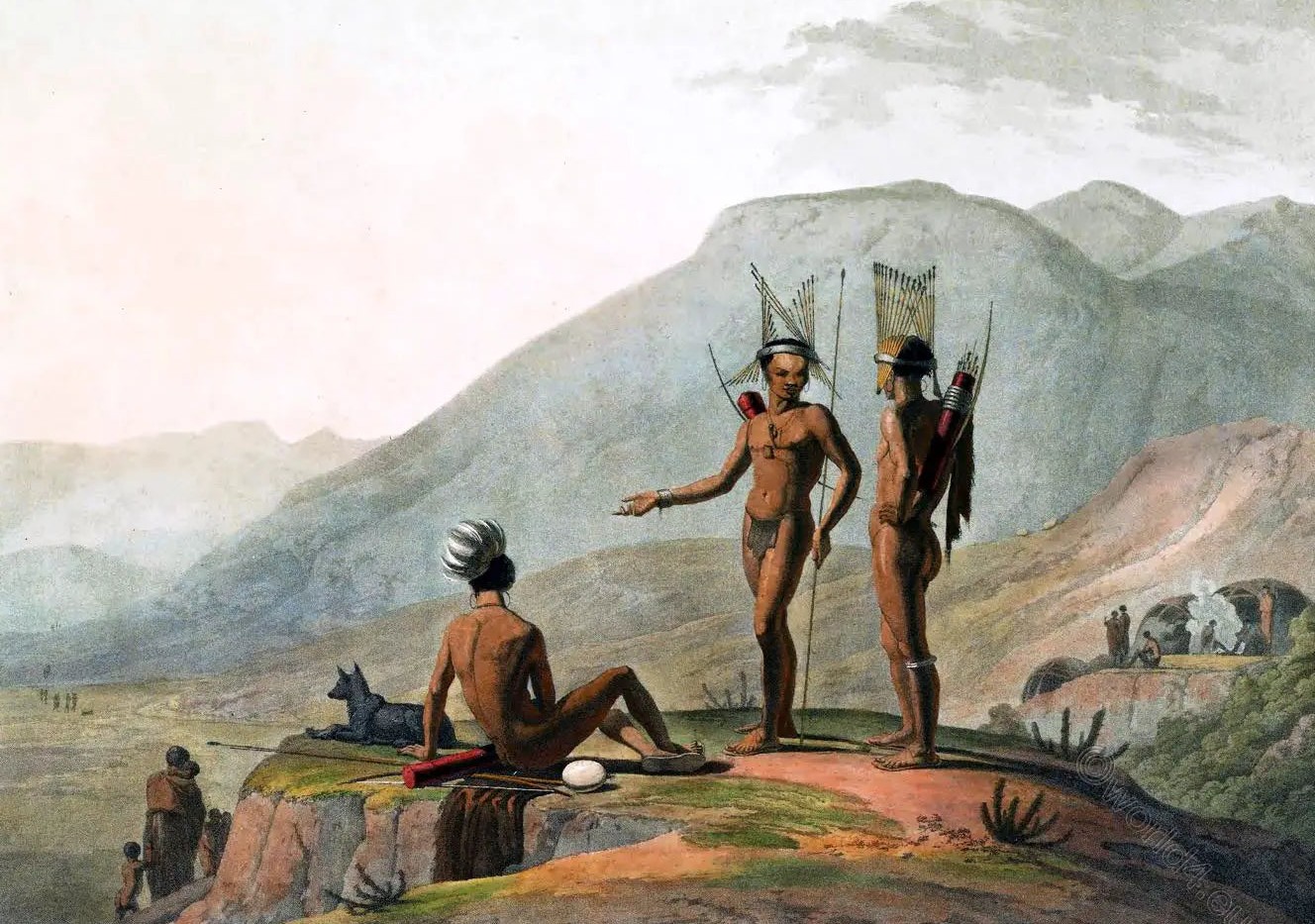
Full of star lore and star-death mythology, the Khoisan-speaking peoples (genetically and linguistically the oldest diverging human populations still extant) preserve some of the most ancient continuously practiced spiritual-esoteric traditions left in our world. The Khoisan traditions demonstrate continuity of the deepest African spiritual substrate. Genetic, linguistic, and ethnographic evidence places their cultural systems as preserving ancient African patterns; and those patterns may predate the emergence of Egyptian civilization. The Khoisan lunar-menstrual-death-rebirth tradition is defined as structurally identical to the Isis-Osiris myth cycle, not genealogical with views on death, female ritual agency, lunar periodicity and rebirth through ritual.
Khoisan ritual traditions, especially trance dance, lunar symbolism, and death‑rebirth narratives represent some of the oldest continuously practiced cosmological systems in Africa. These practices point to ancient mythic structures that long predate the emergence of complex societies in the Nile Valley. While not directly ancestral to the Nubian Neolithic, Ta‑Seti, or Predynastic Egypt, Khoisan cosmology preserves themes, such as a three‑tiered cosmos, lunar‑linked renewal, and animal‑centered ritual power, that resonate with symbolic patterns later expressed in Saharan pastoral cultures and early Nile Valley religion.
As populations moved northward during the mid‑Holocene, Saharan and Nilotic groups carried with them diverse ritual traditions, including cattle symbolism, celestial orientation, and concepts of cyclical renewal. These motifs appear archaeologically in the Western Desert (e.g., Nabta Playa), in early Nubian elite traditions (e.g., Qustul), and in Predynastic Egyptian ritual centers such as Hierakonpolis. Over time, this African symbolism was reworked into the distinctive religious systems of Dynastic Egypt, including the Osirian cycle, royal renewal rites, and the cosmological frameworks preserved in temple theology and funerary texts.
The consensus left on the subject is that important elements of early royal iconography originated in Nubia, not Egypt. The essential structures of Egyptian mystery religion such as stellar rebirth, moral justification, and secret initiation are already present in Predynastic and early Dynastic times and owe their origin to indigenous African developments, according to Jan Assmann. Assmann argued for continuity from Predynastic funerary practices to Dynastic mystery cults, emphasizing indigenous African (Nilotic) roots over Asiatic influences in Death and Salvation in Ancient Egypt (pp. 11-14, 2005). As David O’Connor and Andrew Reid argue in Ancient Egypt in Africa (2003), the religious and ideological foundations of Dynastic Egypt did not arise in isolation. Instead, Nubia and the cultures of the southern Sahara contributed key symbolic, ritual, and cosmological elements that were later formalized within Egyptian temple religion. These earlier African traditions provided part of the conceptual background from which Dynastic religious systems developed, even though Egyptian institutions ultimately reshaped and expanded these ideas into their own distinctive theological frameworks.
The temple colleges of the Dynastic period, including the ritual dramas at Abydos, the Pyramid Texts, and the theological systems of Heliopolis and Memphis, did not arise suddenly. Instead, they represent the formalization of religious ideas and ritual practices that had been developing across the Nile Valley and the Sahara for many millennia. Archaeological evidence from mid‑Holocene Saharan pastoral cultures, early Nubian ceremonial traditions, and Predynastic Egyptian ritual centers show a long, fluid development of cosmology, sacred kingship, and funerary ideology. Dynastic temple institutions therefore embody a deep African heritage, shaped by diverse communities whose symbolic and ritual repertoires gradually converged into the complex religious systems of Pharaonic Egypt.
These earlier African ritual and cosmological traditions form part of the deep cultural background from which Dynastic Egyptian temple religion emerged. Greek, Phoenician, and later Mediterranean writers consistently regarded Egypt’s priestly institutions as custodians of ancient wisdom, and many acknowledged Egyptian religious and philosophical systems as influential in shaping their own traditions. The Egyptian temple complexes represented an older, more elaborate ritual and cosmological framework that Mediterranean thinkers viewed as sacred.
REFERENCES
- Assmann, Jan. Death and Salvation in Ancient Egypt. Translated by David Lorton. Ithaca: Cornell University Press, 2005.
- Beinlich, Horst. Die “Osirisreliquien”: Zum Motiv der Körperzergliederung in der altägyptischen Religion. Wiesbaden: Harrassowitz, 1984.
- Belmonte, Juan Antonio. “On the Orientation of Old Kingdom Egyptian Pyramids.” Archaeoastronomy 26 (2001): S1-S20.
- Brunton, Guy, and Gertrude Caton-Thompson. The Badarian Civilisation and Predynastic Remains near Badari. London: British School of Archaeology in Egypt, 1928.
- Emery, Walter B. Archaic Egypt. Harmondsworth: Penguin, 1961.
- Faulkner, Raymond O. The Ancient Egyptian Pyramid Texts. Oxford: Clarendon Press, 1969; reprinted 2007.
- Faulkner, Raymond O. The Ancient Egyptian Coffin Texts. 3 vols. Warminster: Aris & Phillips, 1973-1978.
- Friedman, Renée. “Hierakonpolis.” In Before the Pyramids: The Origins of Egyptian Civilization, edited by Emily Teeter, 33-46. Chicago: Oriental Institute, 2011.
- Gatto, Maria Carmela. “The Nubian A-Group: A Reassessment.” Archéo-Nil 12 (2002): 47-64.
- Griaule, Marcel. Conversations with Ogotemmêli: An Introduction to Dogon Religious Ideas. London: Oxford University Press, 1965.
- Griaule, Marcel, and Germaine Dieterlen. Le Renard pâle. Paris: Institut d’Ethnologie, 1965.
- Hendrickx, Stan. “Badarian and Naqada Chronology.” In Egypt at Its Origins, edited by S. Hendrickx et al., 55-93. Leuven: Peeters, 2008.
- Hendrickx, Stan, and Pierre Vermeersch. “Prehistory: From the Palaeolithic to the Badarian Culture.” In The Oxford History of Ancient Egypt, edited by Ian Shaw, 17-43. Oxford: Oxford University Press, 2000.
- Holl, Augustin F. C. Holocene Saharans: An Anthropological Perspective. London: Continuum, 2004.
- Honegger, Matthieu. “Kerma and the Kingdom of Kush.” In Ancient Nubia: African Kingdoms on the Nile, edited by Marjorie Fisher et al. Cairo: American University in Cairo Press, 2012.
- Kobusiewicz, Michał, et al. “Gebel Ramlah: A Unique Prehistoric Cemetery Site in the Western Desert of Egypt.” Antiquity 84 (2010): 1-15.
- Lesko, Leonard H. The Book of Two Ways. Berkeley: University of California Press, 1977.
- MacDonald, Kevin, et al. “Dhar Tichitt and the West African Neolithic.” In The Cambridge World Prehistory, edited by Colin Renfrew and Paul Bahn. Cambridge: Cambridge University Press, 2014.
- Malville, J. McKim, et al. “Megaliths and Neolithic Astronomy in Southern Egypt.” Nature 392 (1998): 488-491.
- Mercer, Samuel A. B. The Pyramid Texts. New York: Longmans, Green, 1952.
- Mori, Fabrizio. The Great Civilisations of the Ancient Sahara. Rome: L’Erma di Bretschneider, 2000.
- Muzzolini, Alfred. “Saharan Rock Art.” In The Archaeology of Africa, edited by Thurstan Shaw et al., 347-371. London: Routledge, 1993.
- O’Connor, David. Ancient Nubia: Egypt’s Rival in Africa. Philadelphia: University Museum, 1993.
- O’Connor, David, and Andrew Reid, eds. Ancient Egypt in Africa. London: UCL Press, 2003.
- Patch, Diana Craig. Dawn of Egyptian Art. New York: Metropolitan Museum of Art, 2011.
- Sahagún, Bernardino de. Florentine Codex: General History of the Things of New Spain. Translated by Arthur J. O. Anderson and Charles E. Dibble. Santa Fe: School of American Research, 1950-1982 (based on the 1577 manuscript).
- Schäfer, Heinrich. Die Mysterien des Osiris in Abydos unter König Sesostris III. Leipzig: J. C. Hinrichs, 1904.
- Simpson, William Kelly, ed. The Literature of Ancient Egypt: An Anthology of Translations. 3rd ed. New Haven: Yale University Press, 2003.
- Tempels, Placide. Bantu Philosophy. Translated by Colin King. Paris: Présence Africaine, 1959 (original French edition 1945).
- Török, László. Between Two Worlds: The Frontier Region between Ancient Nubia and Egypt 3700 BC-AD 500. Leiden: Brill, 2009.
- Wendorf, Fred, and Romuald Schild. Holocene Settlement of the Egyptian Sahara. Vol. 1, The Archaeology of Nabta Playa. New York: Kluwer Academic/Plenum, 2001.
- Welsby, Derek A. The Kingdom of Kush: The Napatan and Meroitic Empires. London: British Museum Press, 1996.
- Wilkinson, Toby A. H. Early Dynastic Egypt. London: Routledge, 2001.
- Williams, Bruce B. The A-Group Royal Cemetery at Qustul: Cemetery L. Oriental Institute Nubian Expedition, Vol. 3. Chicago: Oriental Institute, 1986.
- Abimbola, Wande. Ifá: An Exposition of Ifá Literary Corpus. Ibadan: Oxford University Press Nigeria, 1976.
- Idowu, E. Bolaji. Olódùmarè: God in Yoruba Belief. London: Longmans, 1962.
- Rattray, R. S. Ashanti. Oxford: Clarendon Press, 1923.
- Rattray, R. S. Religion and Art in Ashanti. Oxford: Clarendon Press, 1927.
- Gyekye, Kwame. An Essay on African Philosophical Thought: The Akan Conceptual Scheme. Rev. ed. Philadelphia: Temple University Press, 1995.
