Stories of the Origins of the Protocols of the Elders of Zion
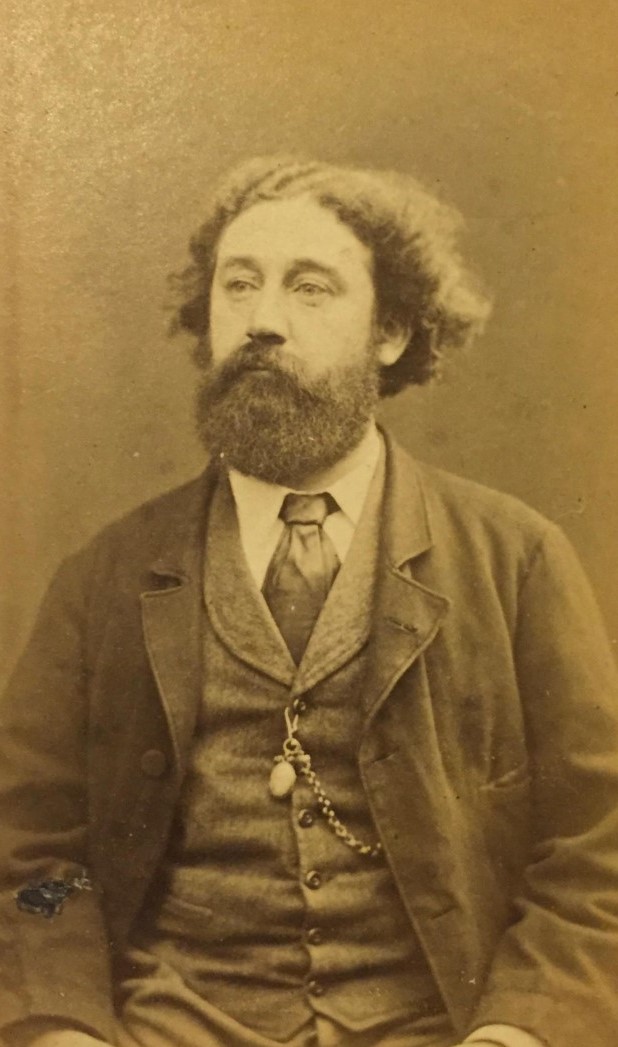
Maurice Joly, an ill-fated Parisian attorney during the reign of Emperor Louis Napoleon (Napoleon III) lived a life both comedy and tragedy. It is Maurice Joly who wrote the politically satirical Conversations between Machiavelli and Montesquieu in the Kingdom of the Dead or The Dialogue in Hell between Machiavelli and Montesquieu. Once loyal, after failing to attain higher office in the government of Napolean III after a decade, Joly turned into a vindictive, troubling and bitter enemy.
In 1865 of March, police seized 15 copies of The Dialogue in Hell between Machiavelli and Montesquieu, and another 23 copies April 25th that were due en route from Brussels to Paris in the bag of a merchant from Charleroi, Monsieur Grandjean.
THE PRAGUE CEMETRY AND CIRCULATION OF THE PROTOCOLS
Umberto Eco writes in his novel The Prague Cemetry, that “In the spring of 1865, Lagrange invited Simonini to the Luxembourg Gardens one morning and there on a bench showed him a crumpled book in a yellow cover, Brussels, 1864, without the author’s name, entitled “Dialogue in the Hell of Machiavelli and Montesquieu, or the Politics of Machiavelli in the Nineteenth Century.”
This was the Preface to that anonymous edition in 1864 entitled “Dialogue in the Hell of Machiavelli and Montesquieu“:
“This book describes the common features that are inherent in any government to one degree or another. In addition, the author set himself a more specific task: to depict the main features of the current political regime of France.
A worthy answer to the current state of affairs cannot be written in newspaper style, since the taste of the modern reader is too refined to perceive the crude anger of the day. The apparent success of some of the unscrupulous writings glorifying current politics is puzzling. However, the author dares to hope that the civic feeling among the people is still alive and that the day will come when heavenly punishment will overtake the creators of these low-grade panegyrics.
It is better to judge some phenomena and events from afar, from the outside. Viewing familiar objects from an unusual angle of view can sometimes make the observer tremble.
This book is written in secret writing, a cipher, the key to which the author deliberately conceals. The reader must find the hidden meaning on his own, without prompting. I venture to hope that the reading of this book will not be without some pleasure, but it should be read slowly, as befits the study of works devoted to subjects not too frivolous.
You should not ask whose pen these pages belong to. For certain reasons, the author chose not to disclose his name. And it doesn’t matter. This pamphlet is society’s response to the call of conscience. The author recedes into the background; he only writes down the thoughts that are in the air.”
The Conversations were distributed underground, and we know this author’s name is our Maurice Joly, that we have been discussing here. Eco’s The Prague Cemetry explores the nineteenth-century novels plagiarized in the forgery that inspired Adolf Hitler’s holocaust in Germany, The Protocols of Zion. Joly’s motivations for publishing the Dialogues, was to personally attack Napoleon III.
On April 24, 1865, the 6th Chamber of the Paris Court issued a ruling, finding Joly guilty of blasphemy, contempt and inciting of hatred against His Imperial Highness. Both the merchant (for six months) and Joly (for fifteen months) were sentenced to imprisonment and a fine of francs.
It is in the beginning of the twentieth-century, we find the circulation of the Protocols and other instigations in feuilletons (talk of the town supplements attached to political section of French newspapers) being forged through the use of Joly’s Conversations or Dialogues. It became second in print circulation to the Bible in Tsarist Russia.
Another important figure comes into play, and his name was Adolphe Crémieux, a fellow lawyer and mentor to Maurice Joly. Crémieux would have a falling out with Joly, although at the outset of their friendship, they both shared a hatred for Napoleon III. Crémieux moves on to become a key figure in the French Third Republic, unlike Joly.
Crémieux was a Jew, head of the Alliance Israélite Universelle and chief of the Grand Orient Lodge. He was in fact both headmaster of the Masonic Scottish Rite in France, and the Scottish Rite ‘Supreme Council’ in Switzerland, which he organized.
SERGEI NILUS AND THE ORIGINAL VERSION OF THE PROTOCOLS
There are multiple versions of the Protocols. The original version that appears in 1903 was titled The Protocols of the Sessions of the World Alliance of Freemasonry and the Sages of Zion, outlining not merely a Jewish conspiracy plot, but a Judeo-Masonic plot. Masonic lodges were considered the main front for the elders’ secret society of “Sages of Zion.”
It has been established, that almost half of the Protocols were plagiarized and paraphrased from Maurice Joly’s Conversations. The Protocols were said to be published in 1905 by Sergei Nilus (a mystic tsarist sympathizer), who distributed a number of versions in the first half of the twentieth-century. However, Italian researcher Cesare de Michelis had demonstrated that the Protocols of the Elders of Zion was first serialized from August 28 to September 7, 1903, in the St. Petersburg newspaper Znamya (“Banner”), owned by the notorious antisemite Pavel Krushevan. Multiple reliable sources explicitly describe Znamya as “a Black Hundreds newspaper.” Krushevan had incited the Kishinev pogrom just months earlier (April 1903) through his antisemitic journalism. He framed the Protocols as minutes from a supposed meeting of “Elders of Zion” and Freemasons. Znamya was the main point of propaganda for a violently anti-Semitic group called the Black Hundreds. The Times correspondent Philip Graves exposed the plagiarism in 1921. In the Protocols are spread three-hundred bits and pieces undoubtedly lifted from the Conversations, scattered throughout, which have been identified sometimes by a sentence or two, or by paragraph and phrases.
This history provides context to the prior century circulation of gossip and instigations against the Theosophical Society in Russia spread by the clumsy police and Synod in Russia, that the main front of the Theosophical Society was Masonry. It was explained that The Protocols of Zion is a major source of influence for the National Socialists and Fascists in Germany, Austria, Hungary and Italy. It provided them with justification to persecute, police and send esotericists to concentration camps.
Hermann Graml had stated in Antisemitism in the Third Reich (1992), that
“Hitler, like all the Nazis, was strongly impressed and probably continued to believe in the truth of the PROTOCOLS, although they were exposed as early as 1921 as a clumsy forgery on the part of the Tsarist secret police.”
HERMANN GRAML, ANTISEMITISM IN THE THIRD REICH, p. 76.
Adolf Hitler did not care if the Protocols were a forgery, and this did not stop their assault and censorship against esoteric groups. The history leading to the Holocaust was not just about Jews.
As established previously, there are in fact multiple stories for the origin source of The Protocols of Zion. None of those stories are definitively credible sources to draw a final conclusion as to the identity of its author.
The first, or original version of the Protocols in 1903 is titled The Protocols of the Sessions of the World Alliance of Freemasonry and the Sages of Zion. The work describes a Judeo-Masonic conspiracy (not simply a Jewish conspiracy) and claims that Masonic lodges are the main front for these “sages of Zion.”
THE STORY OF PAQUITA DE SHISHMAREFF AND YULIANA GLINKA
Aside from the story that the Protocols were produced by tsarist Russian intelligence services, there is another story about the origins of the Protocols involving the widow of a Russian officer killed fighting the Bolsheviks. This is the author of Waters Flowing Eastward (1931) who accused in an article of April 1921, that Jewish Zionist writer Asher Zvi Ginsberg was the author of the Protocols. The widow spoken of here is the American writer Paquita de Shishmareff. She wrote her works under the pen name, Leslie Fry and shares similarities with Fascist League member and author of Occult Theocrasy (published in 1933 shortly after her death), Edith Starr Miller (1887-1933).
Like Edith Starr Miller, who built on gossip before her, Shishmareff held, that the Protocols were evidence of a Jewish plot to destroy Christian civilization.
Asher Zvi Ginsberg had to sue Shishmareff to force her to rebuke the slanderous accusations. In her opus, Waters Flowing Eastward, another story of the origins of the Protocols are presented, now that she could not attach Ginsberg to her theory.
This last story involves the claim that in 1884 an anonymous Russian noblewoman, Yuliana (Justine) Glinka “promoted” the Protocols after stealing them from a Masonic lodge in Paris. Glinka was a maid of honor to the wife of the assassinated Tsar Alexander II. Paquita de Shishmareff was the source of this story and instigation, which attempts to connect Yuliana Glinka to Helena Blavatsky and Theosophy. It thereby offered a means for confirmation bias about the “secret chiefs” or clandestine network of sponsors involved in the early operations of the Theosophical Movement. Edith Starr Miller drew her “Occult Luciferian” Judeo-Masonic religio-political conspiracy from this story. The hostility towards Freemasonry in this history leads individuals to preferentially adopting and adapting the Glinka story.
In Shishmareff’s story, Glinka gave the manuscript to her uncle, General P. V. Orzhevsky, who tried, but did not succeed in showing them to Tsar Alexander III. According to this story, Glinka’s stolen manuscript eventually comes into the hands of Sergei Nilus in 1905 who publishes them.
The story that Yuliana Glinka is the source is an uncorroborated story of another story. No one has ever produced firsthand source proofs about that story.
Another detail about Yuliana Glinka and her connection to H.P. Blavatsky was that firstly, Blavatsky had several main assistants. However, there are no firsthand sources on Yuliana Glinka’s relationship to Blavatsky and its extent. It is true, that Yuliana Glinka was a devout spiritualist, though before ever knowing Blavatsky due to her family connections and personal interests. Yuliana Glinka’s main focus was not Theosophy, but the African voodoo tradition, Santeria.
Returning to Sergei Nilus, the story that Sergei Nilus was the author of the Protocols was put in repute by Cesare de Michelis. He demonstrated that the Protocols was first distributed in 1903, whereas the version of Sergei Nilus is published in 1905, and only forms one chapter in his book.
It is also likely, that the vindictive Maurice Joly himself wrote the Protocols by adapting his own old work as an attack against his former friend, Adolphe Crémieux. After the 1905 Revolution and the creation of the Duma (parliament), the Black Hundreds or Union of the Russian People used the Protocols in a deliberate propaganda campaign. They blamed Jews collectively for the revolution, constitutional reforms, and Russia’s problems, using the forgery to justify and incite further pogroms. Sergei Nilus (a mystic tsarist sympathizer) published the full text in 1905 as an appendix to his book The Great Within the Small and the Antichrist. Georgy Butmi (linked to the Union) published a pamphlet edition in 1906, with one version dedicated to the Union of the Russian People (Black Hundreds). A copy of Butmi’s edition was even found in the Tsar’s library.
The only solid contemporary reference to Glinka is a 1902 article by Mikhail Menshikov, who met a woman (now identified as Glinka) who tried to interest him in the manuscript, but Menshikov was skeptical and did not publish it. Glinka was a Russian noblewoman with possible intelligence connections, but the dramatic “she brought the Protocols from Paris” story is legendary, not proven. The core history involving the plagiarism of Joly and Russian far-right publication in 1903 does not require centering Glinka’s story.
CONTEMPORARY GOSSIP INVOLVING THEOSOPHY AND GLINKA
Those who have adopted the story of Glinka have in the present-day abused sources and the words of Blavatsky to falsely accuse H.P. Blavatsky of being a secret Freemason, as well as tie the origins of the Theosophical Society to Freemasonry.
The instigations against other groups and their consequences, especially when believed by the public are never quite as thoroughly dealt with, such as the fact the Protocols implicates Freemasons and not just Jews. H.P. Blavatsky never asserted a biological superiority of the “Aryan Race.” H.P. Blavatsky often highlighted the consequences resulting from the logic, truth-claims and religious supremacism evinced by the order of a world, which preferences and regards the religion of the Jew, Christian or Muslim as the only valid sources of religious knowledge. Blavatsky’s esoteric framework used terms like “Aryan” in a spiritual-evolutionary sense and rejected biological racism and antisemitism; however, her writings on root races have sometimes been misinterpreted or co-opted in ways that fueled uncorrected guilt-by-association critiques of Theosophy. Blavatsky presented an esoteric synthesis of theories drawing her concept of root races and cyclic world ages from a comparative range of ancient sources, including Zoroastrian texts such as the Bundahishn (with its accounts of cosmic cycles and cataclysms), the Buddhist Abhidharmakośa (detailing kalpas and previous world periods), Vedic and Puranic literature, the Chinese Shu King, and some Mesoamerican and Native American sacred narratives about previous ages or cataclysms. Her emphasis on the “Aryan” current referred to the spiritual and cultural heritage associated with the ancient Indo-Iranian peoples of Central and Southwest Asia, consistent with the etymology of ārya (“noble”) and 19ᵗʰ century understandings of those migrations, not the biological racial ideology later promoted by the Nazis or other extremists.
THE BLACK HUNDREDS CIRCULATIONS BEFORE PROTOCOLS REACHED NILUS
Black Hundreds refer to ultra-nationalist, monarchist, and violently antisemitic groups and militias, most prominently the Union of the Russian People (Soyuz russkogo naroda, founded November 1905). Their paramilitary “hundreds” carried out pogroms against Jews and revolutionaries. The broader movement (sometimes called Black Hundreds even before the formal party) was active earlier, and Pavel Krushevan’s circles aligned with it. The Union’s own chief newspaper (Russkoe znamya) continued promoting such material. The Black Hundreds and their associated organizations and press in the Russian Empire were involved in the early circulation, promotion, and use of the Protocols of the Elders of Zion as anti-Jewish propaganda to incite mobilized action against Jews who they blamed as being responsible for the 1905 Revolution.
As has been argued, scholarly views differ on the exact origins of the Protocols of the Elders of Zion. It has been the consensus, that they were likely produced in Russian antisemitic circles around 1902-1903, possibly with some Okhrana secret police involvement under figures like Pyotr Rachkovsky, though recent scholarship questions or downplays direct secret-police fabrication and points to Russian right-wing authorship such as the involvement of the Black Hundreds. The Black Hundreds did not solely invent or forge the Protocols, but they are an important aspect of the instigation of anti-Jewish sentiment that circulated in this period. The Black Hundreds weaponized it to scapegoat Jews for the Russo-Japanese War defeat and 1905 unrest; and its circulation accompanied and helped justify the wave of pogroms in 1905-1906.
The forgery’s precise genesis remains debated among historians, but it is established that the Protocols of the Elders of Zion was a plagiarism of Maurice Joly’s 1864 satire, forged in Russia around 1902-1903 and first published in 1903 by Pavel Krushevan in the St. Petersburg newspaper Znamya. It was subsequently promoted by Sergei Nilus and by ultra-nationalist groups such as the Black Hundreds to incite antisemitism and counter revolutionary movements. Claims of more exotic origins, including elaborate stories involving Yuliana Glinka, largely trace to later uncorroborated accounts and have not been substantiated by historians. The forgery caused immense real-world harm, serving as propaganda for pogroms and later influencing National Socialist ideology.
CONCLUSION
The Protocols of the Elders of Zion are very much part of the history of anti-republican, monarchist, and counter-revolutionary movements, particularly in late Tsarist Russia, but also within the broader European reactionary tradition. The forgery emerged in Russia and was weaponized during a period of intense struggle between the autocratic Russian monarchy and revolutionary-liberal forces. Black Hundreds organizations and allied figures (including Sergei Nilus’s 1905 edition and Georgy Butmi’s versions) promoted the Protocols as “proof” that Jews (often linked with Freemasons) were behind the revolution, the Duma, constitutional reforms, and all modernizing and liberal trends threatening the Tsar. The document itself portrays a conspiracy to subvert traditional monarchies through liberalism, democracy, socialism, and press freedom, which is classic counter-revolutionary rhetoric. During the Russian Civil War (1917-1922), White forces and monarchist émigrés continued using it against the Bolsheviks (whom they often portrayed as Jewish-led). It was later exported to the West by Russian exiles.
The Protocols fit into a longer European tradition of monarchist and anti-republican conspiracy theories that emerged in reaction to the French Revolution and Enlightenment ideas. The early template in the modern period began with the earlier accusations of Judeo-Masonic or Illuminati plots against thrones and altars common in 19ᵗʰ century reactionary Catholic and monarchist circles. The Protocols seized upon this template for the early 20ᵗʰ century, and instead of (or alongside) abstract “revolutionaries,” it focused on Jews and Masons as the hidden force behind republicanism, constitutionalism, and modernity.
 The Minervan Republic