People of African descent in America and the broader diaspora have inherited, rigorously mastered, creatively adapted, institutionally preserved, and in decisive respects more consistently and universally applied the classical republican tradition (civic virtue, liberty as non-domination, resistance to arbitrary power and corruption, and the common good) than many racist White American elites, Southern slaveholders, or Europeans who often invoked the same sources selectively while practicing or defending domination. I have sought to introduce to you the importance of the heritage and roots of civic republicanism, a tradition emphasizing liberty as non-domination, civic virtue, and resistance to arbitrary power, and by also providing ancient sources like Cicero extending through known historical revolutions. Within this framework, Black Americans and the Black Diaspora have been integral, transformative forces in republicanism’s history and remain so for its future. This is not about the political party of that name. Rather than portraying ourselves as passive victims or outsiders as in Black right-wing grift propaganda, I encourage us to celebrate Black intellectual, revolutionary and philosophical contributions as evidence of inherent equality, ingenuity, leadership and suppressed potential in combating racism, slavery, and oppression.
Black people must reclaim classical and even African heritages to foster a new renaissance, and challenge modern dilutions of republican ideals that White ethnocentrists and Conservatives have sought to portray as their possession alone. Rather than through popular simplified Marxist interpretations and strategy, I have worked from this philosophy to challenge ideas about how these classical sources viewed hierarchies and nature, which is used by others to negate interest in classicism as merely the history of “old ‘White’ men.”
There was a need to learn about and introduce Black republicanism (or Classica Africana) as a tradition where Black intellectuals from the late eighteenth and early nineteenth centuries mastered Greco-Roman classics and through their knowledge, were then able to see the flaws in the White racist interpretations of the classic sources to refute racist claims of Black inferiority, critique American hypocrisy on liberty and reconfigure republicanism as a radical tool against domination.
The five key figures shown in Introduction to Black Republicanism: Five Early Figures were Phillis Wheatley, Benjamin Banneker, Absalom Jones and Richard Allen, David Walker, and Frederick Douglass as an example of those who used classical rhetoric, history and philosophy (e.g., Cicero’s orations, Roman stoicism) in poetry, almanacs, petitions and appeals to demand emancipation and full citizenship. For instance, Wheatley’s neoclassical poems invoked republican liberty giving America her first representation as Minerva, while subtly protesting her own enslavement. Douglass drew from Cato and Scipio to argue that republicanism cannot coexist with slavery, and this is non-negotiable. The citizens must rise above their racist conditioning to realize their true potential, or it will indeed fail, as time has not shown already. The view here is profoundly empowering. We cannot beg for inclusion but take the tradition, embodying it to spark organic transformation and collapse exclusionary systems from within. We can also do this by tying the Black Diaspora to global republican roots and continue to emphasize intercultural dialogue and the ancestral wisdom of all peoples over modern political excesses and limitations.
Black American classicists emerged from slavery’s shadow, mastered Greek and Latin to demonstrate equality and enrich republicanism with Black solidarity against tyranny. Figures like William Sanders Scarborough (author of the first Greek textbook by an African American), Edward Wilmot Blyden (Pan-Africanist and Liberian diplomat), and others such as Wiley Lane and Frank M. Snowden Jr. used classics to counter pseudoscience and institutional barriers. Their work embodied Stoic endurance (e.g., Epictetus’s inner freedom despite chains) and civic virtue, holding America accountable to its ancient-inspired ideals. This strategy should be integral in our efforts, and the erasure and dilution of this tradition among us have been negatively consequential due to shifts toward vocational education. They are vital to Black intellectual history and the Diaspora as a pressure against exclusion and injustice.
The Haitian Revolution remains the most uncompromising and successful realization of civic republicanism against gradualism, proving its universality and incompatibility with slavery. Led by Toussaint Louverture (the “Black Spartacus,” influenced by classical texts) and Jean-Jacques Dessalines, it established the first independent Black republic, abolishing domination through armed struggle and Vodou’s unifying role (e.g., the Bois Caïman Ceremony). This event terrified U.S. slaveholders but inspired Black Americans, shifting abolitionism toward militant action. Louverture’s 1801 Constitution and Dessalines’s 1805 ideal emphasized non-domination, with Haiti renamed to break colonial ties. American figures like John Brown patterned his Harpers Ferry raid after Louverture, making Haiti divine proof that enslaved people must seize freedom through defiance. For the Black Diaspora, Haiti stood as a beacon of freedom and model for self-emancipation, countering views of Black politics as merely modern or derivative.
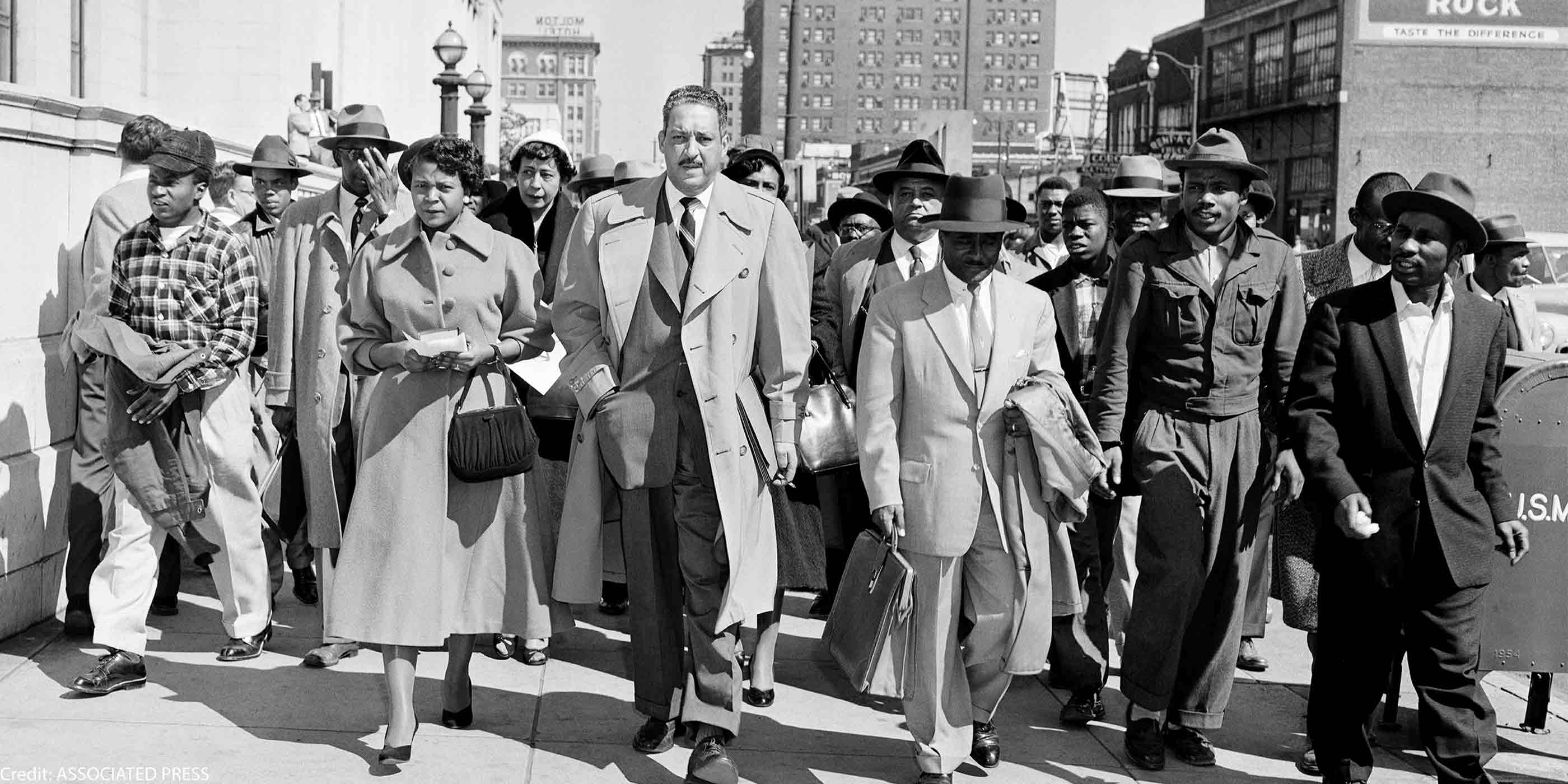
African traditions are presented as foundational to the divine spark underlying the secularized concept of the source of human rights — the inner divine principle or fragment of the universal spirit. It affirms universal human dignity, spiritual equality and our capability for ingenuity, refuting racist denials of our souls. Concepts like the Egyptian Ka and Ba (democratized immortality), Yoruba Ori and Aṣẹ (divine destiny and power), Akan Kra (soul from the Supreme Being), and Bantu Muntu (vital force) are rooted in indigenous tradition, without racial barriers, revealing the Black Diaspora’s resilience and philosophical depth. This urges us to reclaim spiritual liberation against colonial distortions. This brings us to Martin Luther King Jr., a republican revolutionary who demanded that America uphold its constitutional promises of liberty and protest rights, embodying the tradition’s rebellious spirit against injustice.
M.L.K. stated, that
“All we say to America is ‘Be true to what you said on paper.’”
Black Americans capable of revolutionary action, and opposition to propaganda that mislabels civil rights as subversive continue to help advance the Republic through ongoing resistance.
When Frederick Douglass, self-educated on The Columbian Orator (containing Cicero and Cato defending Roman republican liberty against tyranny), repeatedly invoked Roman republican exemplars to demand full citizenship and expose the “sacrilegious irony” of slavery in a republic, this was engagement in a philosophical and rhetorical application that sought to purify the tradition. His 1886-1887 travels through Italy, Egypt, and Greece reinforced his arguments by linking ancient models to African humanity and refuting polygenesis (or inferiority) claims. David Walker’s Appeal (1829) cited ancient Egyptian, Greek, and Roman history alongside Haiti (framed as a modern republican “glory of the blacks”) to call for resistance to domination. Phillis Wheatley’s neoclassical poetry (1773) critiqued slavery’s contradiction with republican liberty while mastering the form. They did it, but we must also possess their knowledge and pass it as inherited tradition to combat ignorance.
Dozens of Black classicists (documented in Michele Valerie Ronnick’s exhibitions and scholarship on “Classica Africana”) built Greek and Latin programs at HBCUs, taught for decades, produced scholarship, and used the tradition for racial uplift and civic equality. Enslaved-born John Wesley Gilbert earned an MA from Brown and became the first African American student at the American School of Classical Studies at Athens (1890-1891). He participated in excavations at Eretria, Greece as one of the earliest professional archaeological projects by any American there and produced a highly regarded thesis on the demes of Attica. He is recognized as America’s first Black archaeologist. Gilbert’s work in Athens and Douglass’s European reflections created direct transatlantic relations to the ancient sources, often affirming African roles in antiquity or countering Eurocentric distortions, and something many European or White American classicists of the era did not prioritize. No one will prioritize it, except for us. These are not peripheral footnotes; they represent direct, high-level participation in the living classical tradition, even in its European homeland and through original scholarly production. Black Americans and the Black Diaspora remain today empowered agents of republican renewal, whose historical and philosophical legacies expose and dismantle domination, and it is ours to wield and champion if its main heirs or claimants have abandoned it.
While many White Southern elites and Europeans invoked republican or classical ideals while building or defending slave societies and empires, Black inheritors applied the tradition’s emancipatory potential universally to themselves and all oppressed, because they experienced its betrayal most acutely. Their scholarship and activism functioned as an internal correction: purifying republicanism of its hypocritical applications and restoring its emphasis on virtue against corruption and domination for all. This continuity persisted from the 1770s through the early 20ᵗʰ century, even as segments of Black radical thought later shifted toward socialism. This tradition must be regained, then you will possess the irrefutable means to displace those elites.
 The Minervan Republic