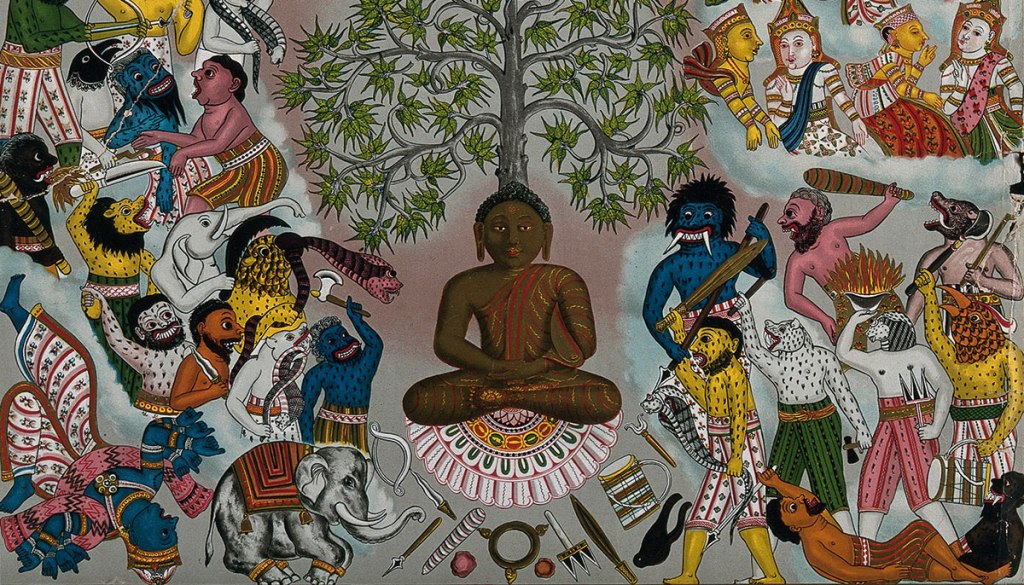
There is a profound moral framework underlying OCCULT PHILOSOPHY. Genuine occultism is not a shortcut to power, libertinism, or moral relativism (antinomianism), but a demanding path of ethical purification, self-mastery, and alignment with universal law.
BENEATH THE PALLID GLARE OF A WORLD GROWN FAT ON IRON, GOLD AND LEDGER, there breathes a secret — the “Occult World,” worlds invisible and worlds within man. Herein unfolds the sovereign praxis of daily unfoldment wherein the aspirant forges the living invitation to the path itself answering in luminous deed how one actually walks this way of rigors that alone can emancipate the soul from pontifical dread of the Occult World. The adept is no carnival conjurer nor libertine of the night; but a slow, luminous architecture of sovereign will, a temple of restraint hewn from the marrow of renunciation.
The concept of “ADEPT” in occult philosophy denotes a being transfigured. The adept is actually the daimon, that radiant inner spiritual principle that awakens and assumes command only when the outer personality, the frail vessel of ego and appetite, has been partially or wholly subdued; otherwise, the person is an ordinary mortal. As one adept cried out, “Eli Eli lama sabachthani?” (PSALM 22:1). Like an athlete summoning every sinew to hoist the impossible weight, the adept’s faculties are brought forth through inner exertion alone; and cannot be summoned at whim or sustained in perpetual display.
Thus the “real adept” remains the hidden dynamic power slumbering in all, within every human breast, kindled only through the fierce conquest of the lower nature; and only emerges through will, discipline, and moral triumph. The genuine adept is no accidental sovereign, no birthright of the elect, but the “rare efflorescence of a generation of enquirers” who obey the soul’s impulse. The calumny that has bound the term “occult” to immorality or moral dissolution is a deliberate inversion, and betrays a grotesque misapprehension of the edifice itself, for adeptship is the antithesis of antinomianism — the very negation of lawless rebellion. Know, that attempting to walk the hidden path without such moral annealing is to summon a storm in a cracked vessel. Having scarcely learned to discern the fruits, the perverse are able to portray sensations of the body and sensationalist revelation born of conditioned carnal religious thoughts known to the crowds as divine signs.
From the Mahatma Letters’ point of view, the very requirements for occult development directly refute the idea that OCCULT PHILOSOPHY is amoral, antinomian, evil, or sexually perverse. True occultism demands ethical purification, self‑mastery, and moral discipline. Occult training explicitly requires probationary discipline. Probationary training is no gentle suggestion but an iron gate: aspirants confront rigorous ordeals of character, steadfastness of purpose, and absolute purity of body and mind, encompassing total chastity and rigorous abstemiousness during the most critical phases. This is not optional; to invoke higher powers without such purification is to invite the terrible recoil of natural law itself. Therefore, occult development is impossible without rigorous moral discipline, so accusations of immorality misunderstand the entire structure of occult training. The “adept” can only emerge in a person who has already vanquished selfishness, sensuality, and moral frailty; so, accusations of depravity reveal only a profound ignorance of the training’s very architecture.
Aspirants are summoned to eradicate selfish motives, sensual cravings, emotional turbulence, and personal ambition, as existential necessity. This is the opposite of antinomianism. This is the precise opposite of antinomianism. A path that demands the annihilation of egoistic impulses cannot, by its very essence, be deemed “immoral” in any conventional sense.
SELF-MASTERY forms the unshakeable foundation of occult potency. The nature of what is at stake and the system’s inner logic requires absolute dominion over the lower nature, rendering the true adept incapable of libertine excess, perversity or sexual aberration. The occultist must move from the wellspring of compassion, sacred duty, universal law, and luminous impersonality. This is no rejection of law but its sublime fulfillment, a stricter, higher covenant than any social convention or ecclesiastical decree. Progress upon this path is foreclosed to any who remain sexually undisciplined or indulgent; there are no exceptions, for these strictures arise not from human caprice but from the immutable ordinances of Nature herself.
In the Mahatma Letters XXVII-XXX and the broader Section III (Probation and Chelaship), K.H. described the “hard probations” that tested sincerity beyond European notions of truthfulness, the necessity of absolute obedience to Nature’s immutable laws as the sole gateway to their school’s discipleship, warning that no one contacts the true masters without undergoing trials that expose every hidden motive. These excerpts reveal probation not as punitive but as a merciful filter ensuring only the pure-hearted advance, directly refuting antinomian charges while illustrating how failure stems from unpurified selfishness rather than any flaw in the philosophy itself. Disciples must devote themselves to selfless service and must prioritize humanity’s upliftment over personal phenomena or fame. Thus, self-mastery serves not isolation but compassionate action, and true occult potency manifests only through impersonality and duty, never ambition.
Whoever dares awaken occult faculties absent prior moral purification courts psychic disintegration, obsessional hauntings, madness, and utter ruin of life. Were occultism truly “evil,” it would scarcely prescribe virtue as the indispensable safeguard against its own perils. The path of adeptship is distinct from the lay practitioner’s more modest tread and embodies the practical flowering of the Bodhisattva ideal: renunciation, self-conquest, ethical transmutation, and selfless dedication to humanity’s upliftment.
This philosophy grounded in the Wisdom Tradition’s doctrinal position as Great Madhyamaka (through Jonangpa and Tsongkhapa studies) teaches, that every newly arisen Bodhisattva or initiated great adept is hailed in Northern Buddhist traditions as the “liberator of mankind.” The Vatican and sundry Christian authorities have long demonized and condemned the great liberator tyros of other traditions, as they teach this path of adeptship and occultism precisely because it stands fundamentally irreconcilable with core Christian dogmas. These teachings represented a direct assault upon the Church’s monopolistic spiritual authority, as a perilous gateway to truths that threaten institutional hegemony. This opposition often sprang from sincere theological conviction, the instinct of institutional self-preservation, and the recurring historical reflex to suppress rival spiritual currents.
Critics of Occultism, foremost among them the Vatican with its vast libraries and centuries of accumulated learning persistently and often deliberately conflate the tawdry spectacle of popular occulture (mediumship, sensational phenomena, spiritualist theatrics) with the profound esoteric current of self-discipline, ethics, and inner evolution. As an ancient and formidable institution, it frequently dispenses the most infantile caricatures beneath its mantle of maternal solicitude and paternal authority. The adept is no libertine rebel. The adept is the inner quality, awakened only when the lower nature lies silenced, the personal self stands purified, and the will flows in perfect concord with universal law.
Who among us has not, in fleeting moments of crisis or grace, felt a glimmer of that latent potential, that inner light stepping forth to assume command when the hour demanded it? Remember this truth when you speak, breathe, and act in the world.
Let us speak honestly: occult philosophy challenges the exoteric creeds, Christianity, Islam, Brahmanism, by unveiling their symbolic or distorted origins, yet it preserves and elevates their true moral foundations. or distorted origins. This isn’t nihilism but a call for religion to become a science, as William Quan Judge noted. Such a stance directly counters Vatican critiques by demonstrating that serious occultism opposes the very sensationalism and moral laxity that sometimes cling to the fringes of “occult” notoriety.
Catholic condemnations, such as those from the Holy Office (which condemned Theosophy in 1919 as incompatible with doctrine), typically depict occultism as pantheistic (denying a personal God and personal immortality) or as a perilous amalgam of mysticism, charlatanism, and hidden forces that erode Christian revelation. They associate it with superstition, moral relativism, or even demonic influences, while warning the faithful against participation. Yet this portrayal routinely conflates popular occulture (mediumship, sensational phenomena) with the deeper discipline of self-mastery and inner development. Occult Philosophy does not annihilate morality but furnishes higher rules and canons of right and wrong, with sanctions rooted in universal principles rather than theological distortions now overgrown.
This threatens established Christian (and other religious) power structures, because occult philosophy is iconoclastic in the extreme. When earnestly studied and inwardly grasped, it sweeps away conventional religious beliefs, exposing exoteric doctrines as symbolic, partial, and often corrupted across centuries, often by priestly hands. While it safeguards and exalts authentic moral foundations, the transition harbors a danger, that could be exploited by an unscrupulous body: for virtue may crumble before the new, loftier ones fully crystallize, potentially cleaving society into factions of enlightened intellect versus ignorant fanaticism. Religions resist because their authority is built upon churches, hierarchies, clergy, and mass adherence, and depends upon preserving the conventionalist framework. Occultism shifts the very ground, rendering religion a verifiable science of laws, accessible through personal development rather than mediated exclusively through institutional sacraments or dogma. This erodes the Church’s exclusive interpretive monopoly and appeals directly to humanity’s latent divine potential.
It is cautioned, that abruptly destroying cherished beliefs without guidance could leave a moral vacuum. Occultists within the Theosophical Movement championed the gradual dissemination of knowledge, learning from the errors of past priesthoods while preparing humanity for the potential of a new philosophical renaissance.
This emphasis on discipline finds echoes even within Christianity. To know CHRISTOS in depth has ever demanded far more than nominal belief or external rite. It requires rigorous moral purification, self-denial, conquest of the lower nature (flesh, passions, ego), fervent prayer, and total surrender to the divine will. Mystics and saints across ages describe a transformed inner life: the old self must die that the higher Christ-principle may arise. Ascetic disciplines, vows of chastity in certain vocations, humility, and boundless charity mirror the self-mastery central to occult training. The Sermon on the Mount and the Pauline exhortation to “crucify the flesh” erect an equally exalted standard of ethical purity and inner striving.
The decisive divergence lies in framework and authority. Occult philosophy universalizes this transformative process as a natural law open to every sincere aspirant across all traditions, independent of any single revelation or institution. It portrays the adept as the evolutionary crown of human potential achieved through self-induced effort, not solely through grace channeled by ecclesiastical mediation. In so doing, it democratizes and scientizes the path of transformation, challenging any claim of exclusive salvific power. Both traditions recognize that undisciplined sensuality or selfishness obstructs higher realization, whether that realization be union with CHRISTOS or the full awakening of the inner divine. Yet occultism’s iconoclastic edge, revealing symbolic layers beneath dogma, naturally unsettles institutional strongholds that position themselves as indispensable intermediaries.
True occultism is the antithesis of evil, perversity, or license. It is a demanding ascent, or emergence and rebirth, requiring the subjugation of the lower self by the deeper essence within. By threatening to replace fading exoteric sanctions with a higher, impersonal morality grounded in universal law and inner science, it challenges religious power structures built on maintained ignorance or partial truths. This does not negate the value of Christian discipline but reframes the quest for transformation as humanity’s shared heritage; and one that religions may guide but cannot ultimately monopolize without risking stagnation. The path remains strict, ethical, and inward: only the purified can safely wield the latent powers within.
The adept path involves a profound surrender of the lower personal self (ego, desires, separateness) so that the higher inner essence, the purified spiritual principle, can emerge and guide. This mirrors the Christian mystical emphasis on “dying to self” so that CHRISTOS (or the divine life) may live within. Both traditions describe a transformative surrender that subdues selfishness, sensuality, and personal willfulness in favor of alignment with a deeper reality. Different vocabularies point to a similar process of silencing the outer personality to allow the inner divine spark or presence to dominate.
Many traditions including Christianity have produced profound transformations through surrender to a higher inner reality, but they have also generated cases of self-deification, delusion, spiritual abuse, or ego inflation when discipline and discernment falters. This is a human vulnerability across systems, not unique to one.
Christian mystics (e.g., some accused of Quietism or pantheism like Meister Eckhart) faced heresy charges for language bordering on identity with God. Extreme asceticism or ungrounded visions have led to fanaticism and mental ruin. Theosophy and related occult currents have seen inflated egos, charismatic abuse, and claimants to adeptship who lacked the required moral conquest. No tradition is immune, meaning that rigorous self-mastery and ethical safeguards are simply essential.
Within this framework the Vatican’s opposition and the theology of mediated salvation stand exposed in their philosophical insufficiency. Christian dogma, rooted in the necessity of ecclesiastical grace and the fear of an invisible world populated by adversarial spirits, insists upon external authority lest the soul stray into gnostic autonomy; it dreads the direct knowledge of occult science because such knowledge democratizes the divine, rendering every purified heart a potential temple independent of pontifical mediation. The exorcist convocations of the Vatican, with their summons to heightened vigilance against esoteric currents, perpetuate a spiritual infancy which keeps humanity fearful of the Occult World rather than sovereign within it.
Perhaps, this is unsatisfactory to you, and perhaps it is not, but the point is to establish the basis, as those Letters purported to do, lay out the fundamentals upon which OCCULT PHILOSOPHY are based, as opposed to what is popularly regarded as occultism, based on media entertainment and fears of the unknown. This indulgence in fantasy is a remarkable example of how institutions of power and authority that claim to be the gate of all sacred Truth — using to their advantage (and perpetuate) the adolescent condition of humanity bound to primitive fears — depend upon one another. We should not have to always stand and hold hands to affirm that these ideas do not upset your cherished faiths, as they will wane of their own accord. But ideas and causes have been set in motion, and this teaching of the sovereign will is not a mere idea. It carries the realities and potentialities inherent in nature, and it is within man’s natural right to know it, and to know that no god, king, government, machine or institution has sway over it.
Thus the disciplined path of occult philosophy endures not as a relic of forgotten ages, but as the evolutionary imperative of the present hour, inviting all to test its principles through personal application and responsible inquiry. In this manner the invisible worlds cease to be objects of adolescent terror and become the luminous domain of conscious mastery; the Occult World, once feared by pontifical decree, reveals itself as the natural birthright of the purified soul.
 The Minervan Republic