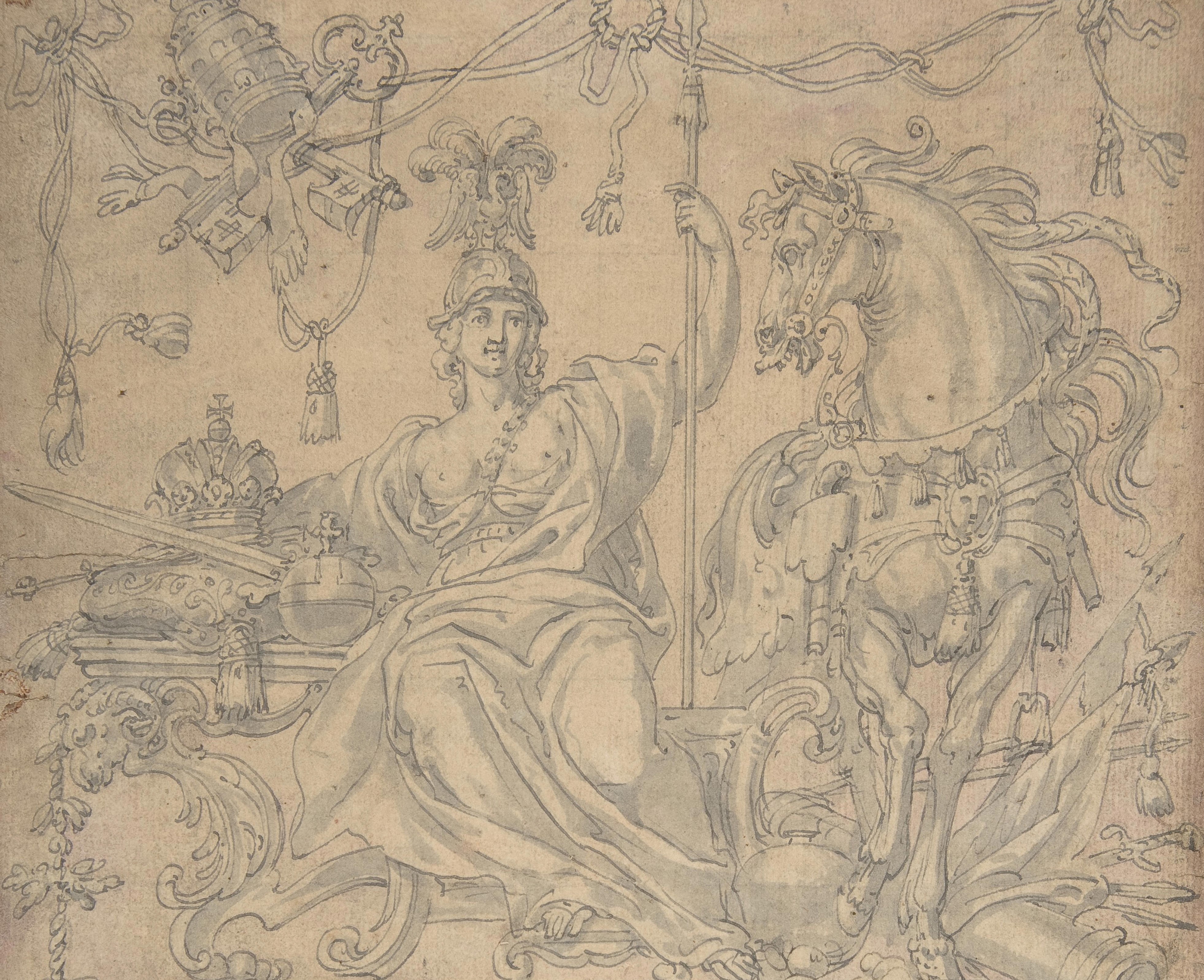
The neo-classical ideal of the early American Republic sought to form citizens of virtue, moderation, and public spirit through classical education and early maturity. Commercial youth culture and the crisis of delayed adulthood have inverted that project, rewarding status, spectacle, and prolonged adolescence instead of self-command. The resulting character is better suited to oligarchy and technocracy than to enlightened republican self-rule.
- INTRODUCTION
- RIDING THE TIGER BEGRUDGINGLY
- THE MODERN PATTERN OF DELAYED ADULTHOOD AND ITS CONSEQUENCES
- THE BLAME GAME AND FEAR TO FACE THE INTERNAL
- REPUBLICANISM WITHOUT COMMERCIAL YOUTH CULTURE AND MODERN MASS MEDIA
- THE NEO-CLASSICAL AGE AND A DEFENSE OF THE CLASSICS
- WHAT COULD REPLACE THE MODERN PATTERN
- REFERENCES
INTRODUCTION
In the early American Republic and through much of the nineteenth century, “youth culture” as a distinct, commercially dominant, society-wide force did not exist in the modern sense. Childhood and adolescence were shorter stages. Young people routinely assumed adult economic, military, intellectual, and household responsibilities in their teens. Apprenticeships, farm labor, military service, and early marriage were common. Figures such as Alexander Hamilton as a key Revolutionary pamphleteer and staff officer in his late teens and early twenties, many of the younger officers and diplomats of the Revolution, and numerous nineteenth-century inventors, writers, and political actors reached high levels of competence and public contribution well before the ages at which many today still occupy “emerging adult” status. The cultural expectation was formation toward maturity, not prolongation of adolescent norms as the social ideal.
The modern pattern of delayed markers of adulthood through later marriage, later stable employment, extended education, prolonged financial dependence, and cultural celebration of youth styles into the late twenties and thirties is well-documented and relatively recent. It is driven by a combination of economic shifts (credential inflation, housing and labor-market changes), technological amplification of peer-group and consumer youth markets, and cultural valorization of extended adolescence. However, the result is that a commercial youth aesthetic and set of habits can exert outsized influence on the broader social atmosphere long after the biological window of adolescence has closed.
From a civic-republican standpoint, this inversion matters. A society in which the formative years are dominated by commercial spectacle rather than disciplined preparation for citizenship, and in which adult norms are expected to adapt to youth styles rather than the reverse, makes the cultivation of the virtues the Founders regarded as necessary for republican endurance more difficult.
RIDING THE TIGER BEGRUDGINGLY
I do not believe in permanent and eternal telos like the believers in Biblical prophecy — the final Epopteia, or stage phase. I believe that short and brief cycles in history can be brought about that appear to be relatively good, or at potential peak, even relatively “Golden” (or of whatever name it is given) to the prior world. But this never comes without loss and pain of the world before it. Our world, presently, and its culture, not that merely of the billionaires and the technocrats has become a hindrance to both humanity and the advancement towards a matured republic for ourselves. Thinkers two and three centuries prior might have seen in their period a scaled vision in a time when the commercialization and materialism so characteristic of today did not exist, but now that vision seemingly appears impossible to reach.
Yet, I look at the actions of our government, and the cries of pain across the world, and I am reminded of how serious this world and this life is. It is struggle. It is pain. It is death, but it is also a world of blooming life, ebbs & tides and revolution. I believe we can bring about better cycles that can set things in motion for the next coming generations towards matured republic, superior to the present stasis and delay.
We are told to ride the tiger, because modernity is a terminal phase of dissolution, in which the forms of higher order have already collapsed; and direct resistance is futile against currents too strong to reverse. The “differentiated man,” one who retains an inner orientation toward transcendent principles, therefore “rides the tiger.” He engages the forces of the age without being unseated by them, maintains sovereignty of spirit, and waits until the beast tires so that a new formative activity might become possible. This is an ethic of detachment and endurance rather than immediate reconstruction.

I am no aristocrat, or nepotic child. No one need not have been a reborn prince or aristocrat to understand these things! Character and institutions must be actively formed in the present, not merely conserved inwardly while waiting for the cycle to exhaust itself. We cannot treat decline as an inexorable cosmic phase to be ridden out. We must diagnose and treat corruption as a contingent political and moral problem that virtue, education, and association could still counteract. The modern has relinquished their duties and spirit to the winds of the times and are washed and drowned by the ocean upon which the tiger rides.
The American Founders treated civic virtue as the indispensable foundation of free government. John Adams wrote that “Public virtue cannot exist in a nation without private, and public virtue is the only foundation of republics.” James Madison insisted that the Constitution presupposed “sufficient virtue among men for self-government”; without it, “nothing less than the chains of despotism can restrain them from destroying and devouring one another.” Washington, in his Farewell Address and elsewhere, linked morality, religion, and the diffusion of knowledge as the great pillars of popular government. Education of the young was repeatedly framed as a civic priority: to implant principles of virtue and liberty, form habits of self-control, frugality, and public spirit, and prevent the degeneration that luxury and vice produce.
They were not prudes who demanded monastic austerity. They understood youthful energy and the attractions of pleasure. But they distinguished between transient passions and the formation of character capable of self-rule. Youth was a stage to be guided toward maturity through family, classical learning, practical responsibility, and example, not prolonged or celebrated as an end-state of chaos, display, and immediate gratification. Luxury and “fashionable diversions” were viewed as accelerators of corruption that would eventually make republican institutions unsustainable.
A cultural phenomenon, e.g., like Rolling Loud, registers as a concentrated version of the commercial spectacle. These large-scale festivals are centered on high-energy with minimal-substance performances; extreme mosh pits involving physical aggression and thrown objects; heavy emphasis on intoxication, fashion spectacle, and social-media content creation; audiences treating the event as much as a site for personal virality and status performance as for music; and an overall prioritization of immediacy, algorithmic hype, and chaotic stimulation over craft, coherence, or shared civic purpose. This is youth culture organized around private pleasure, image, and short-cycle attention.
To the Founders, such a dominant cultural form would appear as a modern equivalent of the soft corruption they feared: the replacement of public-spirited discipline with hedonism, the elevation of celebrity and viral status over character, and the normalization of disorder and self-display as entertainment. It would signal a failure to form the next generation of citizens and a slide toward the conditions under which republics historically decay into oligarchy or demagoguery.
I think that a mature republic requires citizens capable of subordinating private appetite to the common good, sustaining voluntary associations, practicing reciprocity, and exercising reasoned judgment rather than passive consumption of spectacle. When commercial youth culture becomes a primary site of identity formation rewarding status competition, resentment, vulgarity, and perpetual adolescence, it actively undermines those capacities. It fills the vacuum left by declining civic associations with anti-social or purely consumerist values. It trains attention toward endless stimulation and personal branding rather than the slower work of self-government and public deliberation.
This does not mean every young person or every expression of popular music is corrosive, nor that festivals or energetic art are inherently hostile to republican life. The problem is structural and cultural, because when the dominant forms of youth experience systematically privilege the traits Claire Snyder-Hall on “Real Housewives” and the Decline of Civic Virtue identifies as anti-republican, and when those forms expand into lifestyle brands that shape aspiration and social norms, they impede the formation of the mature citizenry the Founders believed a republic requires.

This is why I advocate for the deliberate divergence and movement away and rebellion against modern materialist habits. It is a direct response to precisely this kind of cultural drift. It has crippled our political creativity.
In short, the Founders would have seen the present culture not as harmless exuberance but as a warning sign of characterological decline. This is the same decline that makes ordered liberty harder to sustain.
Culture has become a real obstacle to advancing the ideal of a mature republic. Republics require citizens capable of subordinating immediate appetite and status competition to longer-term common goods. When a dominant youth-oriented commercial apparatus systematically rewards the opposite traits, it delays or weakens the formation of those capacities.
THE MODERN PATTERN OF DELAYED ADULTHOOD AND ITS CONSEQUENCES
The modern pattern of delayed adulthood sometimes theorized as “emerging adulthood” represents a historically novel extension of the transition from adolescence into full adult roles. Median age at first marriage in the United States rose from 27.1 for men and 25.3 for women in 2005 to 30.2 and 28.4 by 2023. The share of young adults (ages 25-34) who had ever married fell from roughly 62 percent in 2005 to 44 percent in 2023, while the proportion living with a child declined from 55 percent to 39 percent (Paul Hemez and Jonathan Vespa, Changes in Milestones of Adulthood, U.S. Census). Independent living, once the most common milestone for this age group, has also declined.
These shifts coincide with elevated rates of psychological distress. Prevalence of any psychiatric disorder exceeds 40 percent among those aged 18-29 in the United States, higher than in other adult age bands (The New Life Stage of Emerging Adulthood). Subjective ill-being has risen sharply among the young, erasing the traditional midlife “hump” of unhappiness; and young people’s mental health has deteriorated both absolutely and relative to older cohorts. Suicide rates among youths aged 12-17 increased 70 percent between 2008 and 2020. Time spent in social engagement by adults aged 25-34 fell by roughly one hour per day between 2003 and 2019, and loneliness is highest among the youngest respondents in national surveys.
Economic and social consequences follow. Labor-force participation among young men has declined; and many experience frequent job changes (a median of roughly ten between ages 18 and 29). Unpartnered adults aged 25-54 show lower employment rates, lower earnings, and lower educational attainment than partnered peers. Disconnected young adults (neither in school nor working) face long-term penalties in earnings, health, and family formation; and each year of disconnection has been estimated to impose substantial social costs. Student debt further delays household formation and homeownership. Obesity among young Americans more than doubled between 1990 and 2018 (Laura Feivason, How does the Well-Being of Young Adults Compare to Their Parents’?).
Critics of the “emerging adulthood” framework argue that the period often reflects structural precarity and developmental delay rather than constructive exploration (Seth J. Schwartz, Jennifer L. Tanner, Moin Syed, Emerging Adulthood). Prolonged dependence, repeated job instability, and deferred family formation can produce aimlessness rather than growth, with downstream effects on mental health, productivity, and the capacity for sustained civic participation.
These patterns are not neutral. They coincide with the dominance of commercial youth aesthetics of spectacle, virality, status display, and short-cycle stimulation, that continue to shape aspiration well into the chronological years once associated with full adulthood. The result is a cultural inversion in which adult norms are expected to accommodate extended adolescent forms rather than the reverse.
THE BLAME GAME AND FEAR TO FACE THE INTERNAL
The statistical patterns of delayed adulthood rising median ages at first marriage (now above 30 for men and near 28-29 for women), sharp declines in the share of young adults who have married or live with children, elevated rates of anxiety, depression, and loneliness in the 18-29 cohort, frequent job instability, and higher rates of disconnection from work or education coincide with a measurable uptick in favorable views of socialism among younger Americans. Recent polling shows support for socialism among those under 30 often exceeding support for capitalism, with figures in some surveys reaching 25 percent or higher preferring socialism as the path to the “American Dream,” and majorities of young Democrats viewing socialism positively.
The civic-republican tradition locates the deeper problem elsewhere. It does not primarily blame or seek to transform economic structures as the solution to political decay. Instead, it treats the internal struggle against human failings such as avarice, ambition, resentment, luxury, and the failure to practice virtue and moderation as the decisive arena.
This is the real decisive arena that the data analytics and artificial intelligence cannot do for politicians and educators. Claire Snyder-Hall’s analysis of commercial culture reinforces this diagnosis. Reality television and analogous forms of mass entertainment foster selfishness, status obsession, vulgarity, and resentment, which are traits more suited to hierarchy or oligarchy than to egalitarian republican self-government. These habits privatize leisure, weaken associations, and distract citizens with “bread and circuses,” making collective action for the common good harder. When such cultural formation coincides with the material delays and psychological strains of prolonged adolescence, the appeal of external systemic solutions grows. Transforming economic structures appears simpler than the harder, continuous work of moderating desire, cultivating reciprocity, and forming character.
The republican tradition does not deny that economic conditions matter, or that inequality of wealth can translate into inequality of political power. Founders such as Jefferson worried about the effects of concentrated commercial power on civic equality (Joerg Knipprath, America’s Founders on Virtue as Fundamental to Republican Government). Yet the primary safeguard remains internal: the practice of virtue and moderation by citizens capable of self-government. Structural reform without that formation is incomplete; the tradition treats the failure to form such citizens as the more fundamental threat. Recovering the habits of self-command, temperance, and public spirit is therefore not a secondary cultural concern but the practical precondition for any durable ordered liberty, whether the surrounding economy is more commercial or more regulated.
REPUBLICANISM WITHOUT COMMERCIAL YOUTH CULTURE AND MODERN MASS MEDIA
The civic republican tradition from classical sources through Renaissance humanism, early modern thought, and the American Founding developed in social worlds that lacked anything resembling a commercially dominant, society-wide “youth culture.” Adolescence was brief. Young people routinely entered adult economic, military, and household responsibilities in their mid-to-late teens. Apprenticeships, early military service, farm labor, and marriage were common pathways into recognized adulthood. Political participation itself often functioned as a rite of passage, and casting a first vote marked a transition into civic maturity.
The early period of the Republic is interesting, because of the life that was being put into by many people to give expression to this neo-classical age, involving the popularization of classics to a point of cultural normativity and wide prevalence. In the early American Republic and much of the nineteenth century, chronological age was less rigidly segmented by consumer markets or mass media. Educational systems were shorter for most; many young men and women assumed productive roles well before the ages at which contemporary milestones are now typically reached. The cultural expectation was formation toward self-command, public spirit, and useful citizenship rather than prolonged peer-group consumer identity. Luxury and “fashionable diversions” were viewed by republican writers as accelerators of corruption precisely because they distracted from the habits of frugality, industry, and civic duty required for self-government.
Republican theory therefore never had to contend with a commercial apparatus that systematically markets extended adolescence as an ideal or that treats youth styles and status competition as the dominant cultural grammar of an entire society.
THE NEO-CLASSICAL AGE AND A DEFENSE OF THE CLASSICS

Anyone bold enough to speak this philosophy in our day will find themselves up against a culture that considers itself above critique. The modern “gods” are conceived as uncritical and non-judgemental. Scaling this philosophy evokes charges of conservatism, paternalism, elitism, racism, and the sad excuse that the classics are merely the words of “old white men” and racists. The demographics and general modern perspective fail to understand, that regardless of race, we all inherit this tradition, not just the European settler-colonialists and later immigrants. The inability of certain founders and others to live up fully to it does not refute the system. We do not possess the skill, knowledge, maturity, and repertoire of the abolitionists or founders. We have not been capable of advancing their ideals and skills, expanding them to the larger culture, embracing the neo-classical attitude that came on a wave of Pagan revival, Neoplatonic, cultural, dynastic and Christian Humanist renaissance across Europe from a prior period to the Enlightenment. We have not outdone their work, yet we view them with hubris.
The early American Republic treated the classics as a living cultural norm rather than an elite ornament, and yet some will falsely portray the early thinkers as mere “larpers,” and are yet unable to match their repertoire. Latin and Greek remained entrance requirements at most colleges; and the Yale Report of 1828 defended them as uniquely suited to form republican citizens by instilling principles of liberty, patriotism, and noble action. Translations, primers, oratorical collections such as The Columbian Orator, Greek Revival architecture, and classical allusions in political speech made Greco-Roman models widely available beyond the college-bound. The result was a neo-classical age in which republican self-understanding drew directly on antiquity’s language of virtue, mixed government, and the common good.
That formation occurred without the saturating presence of mass media or consumer markets that segment and prolong adolescence as a commercial lifestyle and therefore can be replicated. Civic habits were shaped primarily through family, apprenticeship, local associations, and deliberate education rather than algorithmic spectacle or status competition.
The modern contention that the classics belong to “old white men” and are therefore alien to non-European demographics rests on a partial reading of history. The tradition is an inheritance available to anyone who masters its resources. Early Black writers and abolitionists treated it precisely that way. Phillis Wheatley composed within classical forms and Christian-classical frameworks while critiquing the hypocrisy of slaveholding Christians. Frederick Douglass, self-taught in part through The Columbian Orator (which included Cicero, Cato, and Roman speeches), deployed classical rhetoric as a weapon against slavery and later against Jim Crow. David Walker invoked Hannibal and Carthage against the “Romans” of American slaveholding, and other Black abolitionists pointed to Egypt’s influence on Greece and Rome, and to North African Church Fathers, to refute claims of racial inferiority. These thinkers did not treat the classical inheritance as racially exclusive; they claimed it, mastered its tools, and turned them against domination.
The personal and institutional failures of certain founders and later generations, above all the contradiction of slavery, do not refute the republican system of ordered liberty, civic virtue, and equal natural rights. They expose the gap between principle and practice, a gap that the same classical and republican resources were later used to close. Declining to master those resources while adopting opposing systems, for example, varieties of socialism that prioritize class or group conflict over individual rights and the common good is a form of intellectual escapism relative to the earlier Black and White abolitionists who engaged the tradition on its own terms and bent it toward emancipation. If its descendants have failed to aid you in bending it toward emancipation, do not stake hope on them. Take up the tradition and the resources. They cannot refute it, without destroying themselves.
Contemporary deficits in skill, knowledge, maturity, and repertoire relative to both the founders and the abolitionists are real and measurable. The decline of classical education, the prolongation of adolescence, and the dominance of commercial youth culture have left many without the linguistic, historical, and rhetorical equipment those earlier generations took as ordinary. The republican tradition never required demographic uniformity; it required the formation of citizens capable of self-command and public spirit. Recovering that formation through rigorous engagement with the sources rather than their racialization or abandonment remains the practical path toward the mature republic the early period sought to establish.
WESTERN CLASSICAL TRADITION AND PERFECTIBILITY
Earlier republican and Enlightenment thought did carry strong ideas of human advancement. Perfectibility (perfectibilism), or the belief among these thinkers both religious and rationalist that individuals and societies could improve through reason, education, and the cultivation of virtue was widespread. Condorcet’s sketch of the progress of the human mind, the Founders’ confidence in education as a means of forming better citizens, and the neo-classical conviction that the study of antiquity could elevate character all reflected an optimistic view of human perfectibility. Improvement was understood as the gradual strengthening of rational self-government, moral discipline, and civic capacity, not as a racial hierarchy. The same classical resources that trained white elites were claimed and weaponized by Black abolitionists who used Greco-Roman rhetoric, history, and moral language to expose hypocrisy and demand equal standing under the republican principles already proclaimed. This effort has been disrupted, but it does not mean it must remain so.
In the present, those older ideas of advancement and improvement are frequently associated with racism and colonialism. The Western classical tradition is often framed as the exclusive inheritance of “old white men,” and any call to recover its standards of excellence or character formation is met with charges that such standards are inherently exclusionary. Demographic and ideological shifts reinforce the claim that European-derived culture is not “theirs” to uphold. The result is a double distortion: the tradition is racialized and rejected by some, while its universal resources for self-liberation and civic formation are left underused.
Equality itself has undergone parallel distortion. Classical and early American republican equality was political and legal: equal natural rights, equal standing under law, and equal opportunity to participate in self-government. It coexisted with recognition of natural differences in talent, virtue, and achievement. Modern egalitarian rhetoric sometimes collapses this into demands for equal outcomes or identity-based claims that treat hierarchical excellence, cultural inheritance, or differential results as presumptively illegitimate. When “equality” is redefined in this way, the older republican project of forming citizens capable of self-rule through rigorous education and the practice of virtue appears suspect rather than liberating.
The practical consequence is that culture now works against the mature republic rather than for it. Commercial forms reward the very traits of resentment, status display, prolonged adolescence that republican writers identified as corrosive. At the same time, the intellectual climate makes recovery of the classical and republican sources of improvement more difficult by racializing them and by treating any hierarchy of excellence as suspect. The tradition itself never required demographic uniformity. It required the formation of character. Reclaiming improvement as the universal work of cultivating self-command, moderation, and public spirit available to anyone who undertakes it remains the republican alternative to both cultural escapism and the reduction of equality to the distorted meaning in “sameness of result.”
WHAT COULD REPLACE THE MODERN PATTERN
Several interlocking correctives have been brought up in various republican analyses of commercial culture’s effects on civic habits. First, the rebuilding of voluntary associations and face-to-face civic practices is essential. Commercial culture privatizes leisure, fosters passivity, and substitutes national spectacle and consumer identity for local reciprocity. Countering this requires deliberate cultivation of associations that generate social capital, i.e., networks of trust and mutual obligation, rather than passive consumption of entertainment.
Second, education should orient toward the formation of character and civic literacy rather than indefinite credential accumulation, as things have been moving towards. Republican writers treated schooling as a primary instrument for implanting principles of virtue, liberty, and self-government. Prolonged institutional dependency without corresponding responsibility tends to postpone the very habits of judgment and self-command that citizenship requires. Curricula and institutional cultures that emphasize historical knowledge of republican self-government, practical competence, and habits of temperance and industry would better serve the transition to maturity.
Third, cultural resistance to the anti-republican traits fostered by commercial spectacle is necessary. Status obsession, vulgarity, resentment, and the glorification of hierarchy undermine the public-spiritedness and equality of respect required for self-government. Alternative practices such as a vocally critical (not hate-watch) viewing of media, non-market venues for recreation and association, and social norms that reward responsibility over display can help reorient aspiration. The goal is not austerity but the recovery of a collectivist outlook oriented toward the common good rather than private ranking and perpetual stimulation.

Finally, adulthood itself must be re-valued as a positive achievement rather than a deferred or optional status. Markers such as economic independence, stable partnership, and civic participation need not be rigid chronological thresholds, but they should again be understood as ordinary expectations of maturity rather than optional lifestyle choices. A society that systematically delays these markers while saturating young people with commercial youth aesthetics weakens the characterological foundations on which republican institutions rest.
The republican tradition offers a coherent alternative for earlier and more deliberate formation of civic virtue, reconstruction of associational life, education oriented to self-government rather than indefinite adolescence, and cultural resistance to commercial forms that reward the opposite of the habits a free people requires. These are not nostalgic prescriptions but practical responses to the measurable costs of prolonged delay and the historical conditions under which the republican ideal was first articulated and sustained.
To the next generations and the current youth, do not say as those before you thought — that it is the duty of our parents and elders to leave to us a better future. The republican tradition teaches, no, you must create it and give birth to it again and again through the strength of your freed and educated minds, each generation, to sustain freedom and the flame of liberty. Now, it is time to step into your roles in the civic order, and be of service to each other, and take care of one another.
REFERENCES
- Carl J. Richard. The Golden Age of the Classics in America: Greece, Rome, and the Antebellum United States. Cambridge, MA: Harvard University Press, 2009.
- Jeffrey Jensen Arnett. “Emerging Adulthood: A Theory of Development from the Late Teens Through the Twenties.” American Psychologist 55, no. 5 (2000).
- Arthur C. Brooks. “America’s Crisis of Civic Virtue.” Journal of Democracy 35, no. 2 (2024).
- James E. Côté. “The Dangerous Myth of Emerging Adulthood: An Evidence-Based Critique of a Flawed Developmental Theory.” Journal of Youth Studies (2014).
- Jon Grinspan. The Virgin Vote: How Young Americans Made Democracy Social, Politics Personal, and Voting Popular in the Nineteenth Century. Chapel Hill: University of North Carolina Press, 2016.
- Robert D. Putnam. Bowling Alone: The Collapse and Revival of American Community. New York: Simon & Schuster, 2000.
- Margaret Malamud. African Americans and the Classics: Antiquity, Abolition and Activism. London: I.B. Tauris, 2016.
- Michele Valerie Ronnick. “Black Classicism in the United States.” In Oxford Bibliographies in African American Studies. New York: Oxford University Press, 2024. Also see The Fourteen Black Classicists from Michele Valerie Ronnick’s Exhibition; The Contributions of Black American Classicists against Racism.
- Claire Snyder-Hall. “‘Real Housewives’ and the Decline of Civic Virtue.” Logos 24, nos. 1-2 (2025).
- U.S. Census Bureau. Working papers on young-adult milestones and living arrangements (2025).