
ZEÚS / IUPPITER
Zeús (Ζεύς), the sovereign of the Olympian order and wielder of the thunderbolt that enforces cosmic measure, stands as the archaic guarantor of dikē and the sworn oath that binds both gods and men. In the Hesiodic vision he is the father who sets Díkē upon the earth to watch the judgments of kings, punishing those who bend justice for private gain (Theogony 901-9061; Works and Days 256-2622). For the classical republican mind this figure is not arbitrary monarch but the principle that no power, human or divine, may act without regard to the common order. Cicero invokes Iuppiter as the divine sanction of the laws that protect the res publica from the domination of any single will, while the Capitoline cult of Iuppiter Optimus Maximus anchored the Roman mixed constitution in a higher justice that restrains both popular excess and oligarchic overreach. The republican tradition therefore recovers in Zeús the image of ordered sovereignty that alone makes non-domination possible: power that remains answerable to measure rather than collapsing into the unchecked force of the tyrant.

ATHĒNÂ / MINERVA
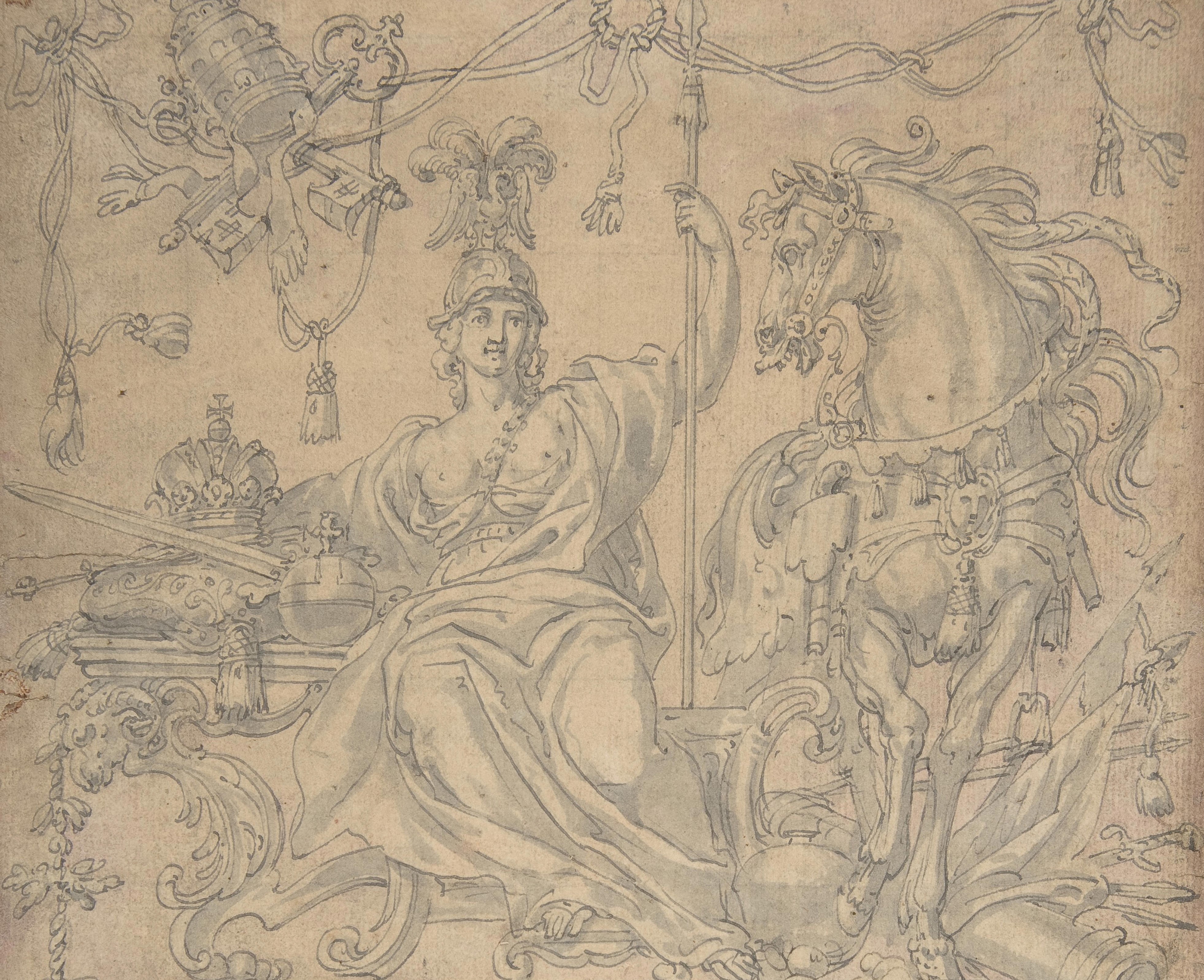
Athēnâ (Ἀθηνᾶ), born fully armed from the head of Zeús and never subject to the passions that unbalance lesser gods, embodies the strategic wisdom and civic intelligence without which the free city cannot endure. As poliad deity of Athens she guards the institutions of deliberation and the arts of self-government; and her epithet Poliás (Πολιάς) names the continuous protection of the civic body against both external conquest and internal corruption. In the Roman form of Minerva, she becomes the patron of crafts, strategy, and the disciplined mind that sustains the commonwealth. Classical republican philosophy finds in her the model of the citizen-statesman whose virtue is not raw force but the foresight that anticipates domination and the measured counsel that preserves the mixed order. The use, recovery, sculpted art and iconography of Minerva in the republican tradition therefore places her at the center: the goddess who arms the mind of the free man so that the res publica may be shielded, advanced, and transmitted across generations.

ÁRĒS / MARS
Árēs (Ἄρης), the fierce power of battle, is transformed in the Roman republican imagination into Mars, divine father of Rōmulus and Remus and therefore ancestral guardian of the city’s martial capacity. Mars teaches us much about the philosophy. His cult was not the celebration of indiscriminate violence, but the disciplined strength required to defend the res publica against those who would impose arbitrary rule. Polybius and Cicero alike recognize that the mixed constitution rests upon the citizen’s readiness to bear arms in the common cause; that which without this capacity the formal balances of power become empty. Mars therefore still supplies the republican tradition with the archetype of civic courage that refuses both the servility of the subject and the predatory domination of the warlord. The citizen who cultivates the virtus associated with Mars upholds the interval between license and tyranny by the willingness to endure hardship for the sake of ordered liberty.

APÓLLŌN
Apóllōn (Ἀπόλλων), lord of the Delphic oracle and of the measured arts of music and prophecy, embodies the principle of limit that classical republican thought places at the heart of self-government. The maxims inscribed at Delphi such as “know thyself” and “nothing in excess” are not private ethics but political wisdom: the free city survives only when citizens and magistrates recognize the bounds of their own power. In Platonic and Ciceronian philosophy, the god’s clarity disperses the fog of demagoguery and the blindness of oligarchic self-interest. Republican recovery therefore finds in Apollo the divine image of the ordered soul and the ordered city alike: the power that refuses both the hubris of the tyrant and the formlessness of the mob, preserving the measured interval in which genuine deliberation and non-domination can exist.

DÍKĒ
Díkē (Δίκη), daughter of Zeús and Thémis, is the personified Justice who walks the earth watching the judgments of men and reporting their crookedness to her father. Hesiod places her at the foundation of any lasting political order: when she is honored the city flourishes; when she is driven out by bribery and violence, ruin follows (Works and Days 213-285). In the classical republican tradition, she is the living principle that no citizen, however powerful, may place himself above the common law. Plato’s Republic and Laws make the cultivation of dikaiosynē the central task of the ideal polity; Cicero translates the same demand into the Roman vocabulary of iustitia as the bond of the res publica. Without Díkē (Justice), the mixed constitution collapses into the domination of the stronger; her continuous presence is therefore the deepest requirement of ordered liberty.

THÉMIS
Thémis (Θέμις), the Titaness of divine custom and the right order that precedes written statute, is the archaic ground upon which all human law rests. As mother of Dike, Eunomía, and Eirḗnē she generates the triad of Justice, Good Order, and Peace that Hesiod and the early lyric poets treat as the conditions of civic flourishing. In classical republican philosophy she represents the unwritten constitution — the ancestral mos (customs) and the natural equity that restrain both popular assembly and magisterial power from arbitrary innovation. Cicero’s appeal to the ius naturae and the higher law that no decree can overturn is a direct continuation of this Themisian insight. The republican tradition recovers in Thémis the recognition that true non-domination is possible only when human legislation remains answerable to a measure older and higher than the will of any temporary majority or oligarchy.

HĒRAKLÊS
Hēraklês (Ἡρακλῆς), the civilizing hero whose twelve labors clear the earth of monsters and lawless forces, supplies the classical republican tradition with the archetype of virtue in action against chaos and arbitrary power. Each labor is a conquest of domination in its elemental forms — brute strength, predatory appetite, the corruption of sacred places, so that ordered human life may take root. In Roman republican cult he is honored as the protector of oaths and the model of the citizen who endures extreme hardship for the common good. The philosophical reading of the hero, already present in Prodicus and developed by the Stoics and Cicero, treats the choice of the hard path of virtue over the soft path of pleasure as the founding decision of the free man. Republican recovery therefore sees in Hēraklês the continuous labor required to keep the res publica from being overrun by the monsters of tyranny, faction, and civic decay.

HESTÍA / VESTA
Hestía (Ἑστία), the pure hearth that never leaves Olympus and whose Roman form Vesta guards the eternal fire of the city, embodies the continuity of the commonwealth across generations. Her cult is the living center of civic identity: so long as the sacred fire burns, the res publica endures; its extinction would signal the collapse of the public thing into private fragmentation. In classical republican thought the hearth is the image of the common good that must be tended by successive citizens rather than possessed by any single generation or faction. The Vestal discipline of unbroken chastity and vigilance models the civic self-restraint required if the free city is to outlast the ambitions of its individual members. Thus Hestía anchors the republican tradition in the deepest sense of inheritance: the ordered liberty we receive is not our private property but a trust that must be kept burning for those who come after.

LIBERTAS
Libertas, the Roman personification of liberty, is the goddess whose temple on the Aventine and whose image on the coinage of the late Republic declare that freedom is not the absence of all restraint but the absence of arbitrary domination. She is linked to Iuppiter Libertas and to the political acts by which the Roman people claimed protection against the overreach of magistrates and the powerful. In classical republican philosophy she names the condition in which no citizen is subject to the unchecked will of another, whether that will appear as monarchical, oligarchic, or demagogic power. The recovery of the republican tradition therefore places Libertas at the center of its moral and political vocabulary: the living ideal that the res publica exists to secure and that every generation of citizens is bound to defend.

VIRTUS
Virtus, the personified excellence that the Romans derived from the root vir and understood as the distinctive quality of the free man, is the civic and martial strength required to sustain the res publica under pressure. It is a Roman concept that at once embodied valor and martial courage, prudence, justice, temperance and fortitude. All qualities that mold a generation and a mature nation. Cicero and the republican historians treat her as the active force that turns formal institutions into living defenses against domination. She is not private moral perfection but the public capacity to endure hardship, to prefer the common good to private advantage, and to act decisively when the free order is threatened. In the classical republican tradition, Virtus is the necessary complement to Libertas: liberty without the excellence that can defend it soon collapses into either license or subjection. The recovery of that tradition therefore calls for the continuous cultivation of Virtus in the citizens who alone can keep the public thing from falling under the weight of arbitrary power.
FOOTNOTES
- Zeús marries Thémis; she bears the Hōrai (Seasons and Hours), including Eunomía, Díkē, and Eirēnē, “who mind the works of mortal men,” along with the Moirai. This establishes Díkē as Zeús’s daughter and associates her (and her sisters) with oversight of human affairs (see Martín Laclau, Law and Literature in Ancient Greece, pp. 20-42). ↩︎
- There is virgin Díkē, born of Zeús, honored among the Olympians. When someone harms her by scorning her crookedly, she sits beside her father Zeús and proclaims the unjust mind of human beings, so that he takes vengeance on the people for the wickedness/recklessness of their kings, who have baneful thoughts and bend or pervert judgments (dikas) by pronouncing them crookedly. The surrounding lines emphasize immortal watchers of Zeus who monitor judgments and wrong deeds on earth, and the “gift-eating” (dōrophagoi) kings who deliver crooked judgments for private gain. (accessible pdf trans. M.L. West, Hesiod, Theogony and Work of Days). ↩︎