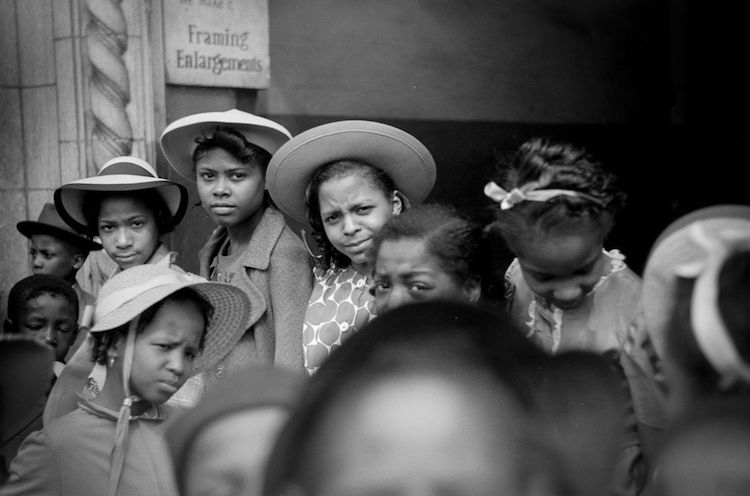
It never mattered whether the Black man sang Jazz, while smoothly puffing the finest cigar in the finest suit or rapped about slinging guns and drugs. The critical opinions about us in everything we do and create were the same then and now. Lets address a pattern of deep hatred or disgust for Black people, no matter our birthplace, on a surface and fundamental (biogenetic) level, based on one’s aesthetic racism and the ethnic chauvinism that radically racialized medieval ethnic self-definition and Anglo-Saxonism between the 18ᵗʰ and 20ᵗʰ century. That particular history has phases beginning with (i.) 16ᵗʰ-18ᵗʰ century scholars revival of interest in Anglo‑Saxon law and liberty, portraying pre‑Norman England as a golden age of “free Englishmen” through (ii.) the 19ᵗʰ century when Anglo‑Saxon identity was transformed into a racial ideology, claiming inherent political superiority of “Anglo‑Saxon peoples,” culminating into (iii.) the 20ᵗʰ century racialized narratives. Evola views Black people as fundamentally in their constitution, a degenerate race infecting the purity of the Anglo-Saxon. Whether rap culture and gang culture existed or not, as we will see in this early history, would not have changed this belief about Black people. The black redneck dysfunctional model and argument of Thomas Sowell, which tells us that our failure as a race merely stems from a lack of adopting middle-class value orientations falls to the ground when closely examined, because one the factors is the relentless and concerted effort of those bound to these sort of pseudo-intellectual frameworks. In On Early Black Elite-Institutional Republicanism and Working-Class Radical Republicanism, I argued differently, explaining that the strength of early Black political thought was a dual-engine, not dependent on merely adopting one or a particular class.
The dress of a man was never the question. What Evola condemned in the Negro was not a coat ill cut, nor a manner unlearned, but a stock he had already placed beneath the European in body, in soul, and in spirit. Hence the indifference to reform of habit. A Black man might speak Latin, wear broadcloth, and keep the fasts of a cathedral, and he would remain, in this scheme, a vessel of the “telluric” and the nocturnal.
Older civilizations such as the Greeks, Romans, Confucian, Islamic and medieval Christian treated virtue ethics as a universal expectation. It was assumed that individuals and communities should cultivate character. But in the U.S., from the 18ᵗʰ century onward, moral language was repeatedly used to justify racial hierarchy, which changed how people hear it today. So, because racists treated Black people unjustly regardless of behavior, many Black thinkers and communities developed philosophies that emphasize dignity, self‑acceptance, and intrinsic worth rather than respectability politics as a reaction. Respectability politics lost credibility because racism ignored manners and dress, and self‑acceptance became a healthier foundation for identity — an impulse distorted by commercial culture and entertainment industries, that promoted caricatures or hyper‑stylized versions of “Black expression.” However, older civilizations demanded virtue because they knew something modern culture forgets: A society cannot be stronger than the character of its people.
Older civilizations tied cultural pride to virtue and discipline, but modern commercialization sometimes ties cultural pride to consumption, image, or defiance. This is an observation that does not require constructing metaphysical racializations. Modern American culture often treats moral expectations as oppressive, but long‑term collective advancement still depends on individuals cultivating virtue, discipline, and character, just as older civilizations understood.
The fashion of citing Julius Evola as a diagnostician of this issue and in general of the modern age deserves a plainer refusal than it commonly receives. Those who borrow him to study the society and age of the mass-man, the reign of quantity, or the flattening of form are not drawing upon a neutral instrument afterwards stained by an unfortunate opinion. The hierarchy is the diagnosis. Beneath the talk of solar and telluric stocks, of pathos of distance and of contamination, lies a denial of Black and African soul: the claim that a dark body is the adequate organ of a lower spirit, that mixture is a wound in the order of being, and that African presence in a city, a music, or a franchise is already a fall. Ordinary biology was not grand enough to bear that denial, and so the denial was rewritten in the language of initiation. A better account of modern disorder already existed, and exists still, in the republican tradition, which can name the death of civic virtue without first denying that the African possesses a soul.
Evola’s doctrine was built, not stumbled upon. The three degrees are set forth in In the Sintesi di dottrina della razza, published at Milan by Hoepli in 1941 and latterly translated as Synthesis of the Doctrine of Race (Evola 34) of the Cariou edition; the race of soul and spirit (Evola 85); the solar and Demetrian races of the spirit (Evola 117); and the telluric race (Evola 121). The race of the spirit is defined as a stock’s bearing before the sacred, before death, and before the world. Telluric spirit is then assigned to “pre-Aryan” and “Negroid” peoples as a bondage to soil, night, and the Mother. The third degree does not lift the ranking and solidifies it. A Black body is read therefore as the proper vessel of a lesser spirit, and that reading is offered as metaphysics.
His tripartite division of man is a move often praised, by his admirers, as a rising above the merely biological. It is no such rising. The body remains the first degree of the doctrine. Purity, on his own account, is the coincidence of the race of the body with the race of the spirit, the flesh serving as the adequate organ of an inner type. A higher style of speech does not cancel the lower term. It binds it. Adriano Romualdi, no enemy of the system, observed that it would make little sense to call this a racism of the spirit alone, since race was for Evola first of all psycho-physical. The Southern segregationist, Evola thought, sees only the material fact, and misses the larger infection for him: the manners and the dress.
That double verdict is older than Evola, and it has not been retired. Gobineau’s inequality of races or racializations, Chamberlain’s foundations, Grant’s Passing of the Great Race, the eugenic inventories of Davenport and the American breeders of men: all of these located the disability in the germ, and treated education as a lacquer on an inferior wood. When the craniometers were laughed out of the laboratory, the claim changed its instrument and not its conclusion. Intelligence tables, heritability coefficients, polygenic scores read as if they were destinies, the polite name “human biodiversity,” but the front is the same front, newly instrumented.
The turn to metaphysics is the second line of works, raised when the first is under fire. A doctrine that speaks only of skulls and quotas can be met with a skull and a quota. A doctrine that speaks of solar stocks, of Hyperborean residue, of a “race of the spirit” disclosed to the initiate, cannot be met on the same ground. The metaphysics therefore is the shield. Guénon saw the device and disliked it: metaphysics yoked to a political anthropology, and the eternal made to serve a census. Contemporary White nationalism has learned the same use. Where the biological pamphlet is contested, one produces Evola, and the hierarchy reappears as tradition, as initiation, as a knowledge too high for the egalitarian to touch. The authority is not in the measurement. It is in the refusal to be measured.
None of this is altered by manners. The theory never offered the Black man a promotion by way of the tailor. It offered him a rank and then built a philosophy in which the rank could no longer be appealed.
He did not repent of it in age, though no record of repent is needed. The Path of Cinnabar (English ed. 2009 returns in the chapter entitled “The Issue of Race” (Evola, 164-79) to the same triad, and repeats the rule that the inner race outranks the merely biological form (ibid, 169-71). Nothing in it withdraws the ranking of living peoples, and his later writings keep the elitist scale and discard only the party letterhead.
“America negrizzata,” collected in L’arco e la clava (Milan: All’insegna del pesce d’oro, 1968) treats the projected Black portion of New York as “negrification and mongrelization” by faster-breeding inferior races (Evola 26). Evola refers to Jazz as “a negrified music and dance.” America, he writes, has chosen to imitate Black people, who are viewed as a contagion that has passed to other nations. A usual person might even react to the idea, and say, “this is true,” but it is the manner in which he states it, as he provides no real sociological analysis of the “why” or data to explain. Black people are attributed a pseudo-biogenetic quality and compared to a disease spreading of its own volition. Ella Fitzgerald, heard in Italy, is the shapeless, screaming mass of flesh, and brutality is given an essentialist “Negro character.” Sentimentality in love is said to place Americans much closer to us than to the perceived “civilized Europeans.” Sexual capacity is dismissed as crudely quantitative and priapic, and he ascribes pride to the “Negro psyche.” The Beat generation is mocked as the “white negro,” and the remedy proposed is separation, or else the emptying of one state of the Union, so that Black Americans might be removed and cease to contaminate anyone.
When a modern White ethno-nationalist is pressed and asked, “what do you think about race and Black people,” and they reply, with a predictable, “…well, I just think we need to be separate and go our own ways,” there is often an intellectual framework underlying their statements. The pattern of rationale is similar to Evola. Any data or statistics, or information after the belief is used to confirm the bias.
When Evola was once pressed by Salvatore Quasimodo, he answers in the same essay that a healthy doctrine of race has nothing to do with the prejudice of white skin. It is a hierarchy of values, “according to which we say no to negroes, to all that pertains to them, and to all Negro contamination.” Negro stocks sit, on this ladder, just above Australian primitives, nocturnal and telluric against a diurnal type. Hindu, Chinese, Japanese, and certain Arab strains may outrank degraded whites. The exception discloses the rule. The refusal is particular. It is a no to Black soul.
Elsewhere the same refusal is furnished with a mythic birth. He cites the Bundahishn, at the place marked XIVB: a demon let loose upon a woman, a man let loose upon a witch, and the negro come into being through that kind of coition. In Revolt against the Modern World (Rivolta contro il mondo moderno), the proto-Mongoloid and Negroid stocks are made residues of a lost southern continent, set against a northern “Uranian” light. Verses concerning the Dasyu are read as a spiritual war upon blackness.
This is just naming a method, and that method does not vary. A text about enemies, outsiders, or cosmic opposition is compelled to mean sub-Saharan Africa, and sub-Saharan Africa is then compelled to mean a permanent rank of soul.
The esoteric dress is not an ornament upon this judgment but the means of its survival. He disliked zoological rankings and said so. He then rebuilt the same ladder one story higher and called the rebuilding Tradition, but the Evolian enthusiast does not catch it. Yet if spirit is prior to body, the flesh of a singer cannot decide her spirit. If initiation is a change in the state of a single soul, it cannot be a pedigree of the group. If the age is dark, the European is fallen with the rest. The logic of such a “superior stock” of the monocle-man betrays itself. If the primordial tradition is one, then it is not the private estate of Hyperboreans. The “race of the spirit” merely borrows the prestige of metaphysics in order to violate it. The embryological fancy he repeated, that a woman’s former Black lover marks the child she later bears to another, is folk magic joined to panic. One can even imagine the pseudo-intellectual bringing to the case studies, an abuse of telegony re-adopted from 19th century pseudoscientific theory by purity culture and manosphere spaces combined with misinterpretations of a famous 2012 study on microchimerism.
Guénon had already cut the nerve of his construction, and the cut is in the letters rather than in later polemic. To Guido de Giorgio, on 20 November 1925, he writes that Evola is really too imbued with philosophy, and especially with German philosophy; that he has misunderstood Orient et Occident; and that to call Guénon a rationalist is to betray a man who cannot lay down philosophical labels. On 26 January 1926 he writes that Evola does not understand at all what is meant by intellectuality, knowledge, and contemplation, and cannot distinguish the initiatic point of view from the profane. To Evola himself, on 24 August 1930, courtesy is granted and the line is then drawn: the point of view assumed is quite distinctive and certainly cannot be Guénon’s. The later letters, collected as Lettere a Julius Evola for the years 1930 to 1950, continue to correct him upon the Intellect and the Supreme Identity, and to warn him against the mixture of metaphysics with politics. Evola records the clashes himself in The Path of Cinnabar: action against contemplation, temporal authority against spiritual authority, and race.
The difference is therefore not one of temperament but of principle. For Guénon there is one metaphysical truth above religions and polities, and realization is not decided by ethnos. Caste, where he allows it, is function and vocation, and the biological obsession of the moderns is a reduction of the person to the body. For Evola, there is a warrior code identified with Rome and with a Nordic-Aryo-Roman type, a hierarchy of souls, and a willingness to carry metaphysics into the counsel of a regime. Guénon desired an intellectual elite within a tradition. He did not desire a crusade against a negrified modernity. The denial of the Black soul is Evola’s addition. Those perennialists who remained with Guénon drew the same line. Nasr, after meeting Evola in the 1960s, found the political inclination closed. Murad has named the blind spot and the residue that taints the insight. Readers who keep the praise of jihad and of sacred law, and quietly drop the chart of souls, are compartmentalizing.
Nor will antiquity supply what he requires. He was wont to say that the ancients did not speak of race because they possessed it. The corpus says otherwise. Homer’s Ethiopians are amymones, blameless. Zeus and the gods feast among them (Iliad 1.423-424; 23.205-207). They are the most remote of men, divided toward the rising and the setting sun, in the Odyssey (1.22-26). Menelaus has been among them, at 4.84. Memnon, son of the Dawn and king of the Ethiopians, slays Antilochus and is himself a hero of the cycle (Odyssey 4.188; 11.522). Virgil still calls him niger at Aeneid 1.489, and the epithet stands in a parade of heroes, not as a demotion of soul. The long-lived Ethiopians of Herodotus (third book at chapters 17-24) are an extreme of the known world, with the Table of the Sun, not a residue of a fallen continent. Diodorus, in the Library (3.2), reports the tradition that the Ethiopians were the first of men and the first to honor the gods. Frank M. Snowden Jr., in Blacks in Antiquity: Ethiopians in the Greco-Roman Experience, published at Harvard in 1970 gathers the textual and the archaeological record of soldiers, priests of Isis, athletes, residents and figures of myth, and the central finding holds. Color was noticed, and it was not a civic or spiritual bar of the modern kind. To be Black and to be a slave were not the same proposition. Unions across color, in myth and in anecdote, are not treated as the death of a spiritual stock.
Theories of climate and the clichés of physiognomy exist, and they are not creditable to the ancients as charity. The natural slave of Aristotle is not Black. A Roman omen concerning a dark man at a gate is a superstition of color as death, and not a doctrine of African inferiority in the spirit. Dasa and Dasyu in the Rig Veda are enemy, outsider, or people who do not sacrifice; but to read those hymns as a perennial war of Nordic spirit against sub-Saharan Africa is a fancy of nineteenth-century philology against Vedic theology. The same corpus gives a dark Krishna. There is no classical concept equivalent to Evola’s as applied to Black Africa. He invented the need and then declared that antiquity had already met it.
The civilizational record is equally stubborn. Kerma and Kush were states of the Nile, with monumental building and a long commerce; the Twenty-fifth Dynasty was Nubian rule in Egypt. Aksum minted coin, wrote in Geʿez, received Christianity in the fourth-century, and traded the Red Sea. Ghana, Mali, and Songhai conducted the empires of gold and salt, and Timbuktu was a seat of Islamic learning. The bronze and terracotta of Ife and of Benin were of an order that stopped the first European visitors. Great Zimbabwe and Mapungubwe were capitals of stone upon the gold road to the Indian Ocean. The cities of the Swahili coast were literate, Muslim, and commercial. None of this is a leftover of Hyperborea, nor a gift of later colonizers. A doctrine that must reclassify Nubian kings, Aksumite coin, and Malian jurisprudence as spiritually null, in order to remain standing, has ceased to read history; and has decided the rank of the soul beforehand, and afterwards sorted the stones.
Like a screeching chalkboard, Evola cannot stand to see, smell, or hear of Black people. It is not difficult to realize, what he is saying reflects the modern conservatives and contemporary White nationalists in our period. Traditionalists and conservatives complained about the same things then that they do now as James J. Sack demonstrates on Right-Wing Hatred of Dissenters in the 18ᵗʰ century.
The same things said about rap were said about jazz in the Roaring Twenties period into the Great Depression. Evola’s opinions were not unique metaphysical insight in his period, as Lynne Seago’s paper, From Potent to Popular: The Effects of Racism on Chicago Jazz, 1920-1930 demonstrates. We find similarities between Evola’s view of “Black people contaminating ‘the Anglo-Saxon’” and the views in this era lessening the force of his metaphysics dressed in the racism and pseudoscience of it. The racial stereotypes in standings on jazz and Black people among the general American population during the 1920s-30s reflect the same veneer of reason.
Lynne Seago, in her study of Chicago jazz between 1920 and 1930, records the attitude Evola shared: the music called “nigger music” and “whorehouse music.” J.A. Rogers cited for his belief in jazz as barbaric rhythm; Obendorfer for voodoo and the vilest deeds; a school physician for the claim that jazz degrades civilized races as it has always degraded the savages from whom it was borrowed; dancing that began in the restless feet of the black described as snake-like contortion — Evola’s lecture on the Italian radio is that literature dressed as metaphysics. The same charges historically were afterwards removed from jazz onto rap, and the verdict did not change. A judgment that survives every alteration of form is not a criticism of a style. It is a refusal, already made, of the people who make the style. The thesis that traces lively music to the folkways of the Southern white, and failure to a missing orientation of the middle class, does not touch the matter either. Evola was not complaining that Black Americans had borrowed the manners of another people. He was complaining that they were upon the radio, in the hall, near white women, and inside the franchise.
LYNNE SEAGO, FROM THE POTENT TO THE POPULAR: THE EFFECTS OF RACISM ON CHICAGO JAZZ, 1920-30
“In the beginning, jazz was distinctly Southern and distinctly Negro. By the end of the 1920s, however, both white and black jazz bands existed in the city of Chicago, and jazz was played for a national audience. Jazz style also changed, from Negro “hot” to a “sweet” style similar to the popular music of the day. These changes occurred because of racial stereotypes associated with jazz music by the white community, and the black community’s reaction to those stereotypes. Racism in Chicago during the 1920s changed jazz from a potent and distinctly Negro style of music to a diluted by-product of mainstream popular culture. (…)
White phonograph companies refused to record Negro jazz because of the traditionalist opposition to jazz music in the general white population. Traditionalists, usually Protestant middle-class Americans of Anglo-Saxon ancestry, connected jazz to the Negro brothels, where it had first become popular in New Orleans. Milton Mezzrow, a jazz clarinetist, wrote that, in the twenties, Negro jazz “was called ‘nigger music’ and ‘whorehouse music’ and ‘nice’ people turned their noses up at it.” They refused to accept jazz because they believed it was immoral. Traditionalists also disapproved of jazz because of supposed origins in “heathen” African spirituals.
J.A. Rogers wrote in 1925 that, in jazz’s “barbaric rhythm and exuberance there is something of the bamboula, a wild, abandoned dance of the West African and Haitian Negro.” Taking that idea a little farther, Mrs. Marx Obendorfer said that “Jazz originally was the accompaniment of the voodoo dancer, stimulating the half-crazed barbarian to the vilest deeds….It has also been employed by other barbaric people to stimulate brutality and sensuality.’” Traditionalists thought jazz was barbaric, whether or not it actually had roots in Africa, and believed jazz’s “heathen” roots would influence Americans. Dr. Florence Richards, the medical director of a girls’ high school, said jazz’s influence was “as harmful and degrading to civilized races as it always has been among savages from whom we borrowed it.” Typically, middle-class and educated in Western culture, traditionalists opposed jazz because it was a product of “culturally inferior” Negroes. They contrasted their own noble, formalistic styles of art with the “vulgarities and crudities of the lowly origin.” Traditionalists believed that a jazz song, in its crude, Negro form, “sounded like a crazy clarinetist broadcasting from a boiler room on a night when the static was particularly bad.” They compared jazz dancing, which ”began … in the restless feet of the black,” to “a series of snake-like gyrations and weird contortions of seemingly agonized bodies and limbs.” Jazz dancing, like the music itself, grew from the lowly nature of Negroes.”
Evola pressed by Black Music on the Italian Radio in “Negrified America”
Julius Evola’s views about Black people in America were typical of the general White American population. Evola views the Americans as degenerated and closer to “the negroes,” than the “civilized European.”
Moreover, Evola views Black people as fundamentally in our constitution, a degenerate race infecting the purity of the Anglo-Saxon. Evola was the kind of racist who proudly consciously adopted such views and held themselves to be in perfect reason. On this, the state of things is made to be dependent on whether or not the White masses or majority consciously adopts the race realist position or accepts us, and neither is the position we ought to accept finding ourselves at the mercy of the will of a people holding such beliefs. To the race realist, the racial attitude Evola presented is considered a “matter of fact” in life, and not mere opinion; and Evola spoke and thought in that sense. Evola, stressed out by popularity of Black music tries to explain music intelligently like present-day Ben Shapiro. Evola gives us his monocular “insight” into this “noble” superior thinking about Blacks in America.

“Not long ago, the newspapers announced that according to some calculations, by 1970 half of the population of Manhattan will be black, and that in the five boroughs that make up the entire city of New York, 28 percent of the inhabitants will be of colored race. Developments in the same direction have been registered in other cities and areas of the United States. We are witnessing a negrification, a mongrelization and a decline of the white race in the face of faster-breeding inferior races.
Of course, from the point of view of democracy, there is nothing wrong with that, on the contrary. We are all acquainted with the zeal and intransigence of American proponents of so-called “racial integration,” which can only further speed the process. They not only advocate complete interracial social fraternization and want the Negro to have free access to any public and political office (so that we may even expect, in the future, a black president of the United States), but also have no objection to negroes mixing their blood with that of white Americans. A characteristic example of propaganda for this agenda is the play entitled “Deep Are the Roots” (in other words: of racial “prejudice”), which Italian radio has felt the need to subject us to more than once.
The ‘integrationists’ who draw these conclusions – as logical as they are aberrant – from the dogma of egalitarian democracy, and who, while talking at full blast about freedom, are in fact advocating a truly coercive system (1), are still opposed, especially in the South, by certain groups that have no intention of giving a green light to the advance of the black race and the “negrification” of their country. However, these latter groups fail to realize the extent of the phenomenon, in the sense that they only notice it in its most material and tangible form. They fail to see the extent to which America is “negrified” not only racially and demographically, but above all in its civilisation, in the behaviour and tastes of Americans, even when there has been no actual mixing with negro blood.
The U.S. has been compared, not without justification, to a melting-pot. It actually presents us with a case in which a human type was formed, with characteristics that are to a large extent uniform and constant, from out of a highly heterogenous raw material. Emigrating to America, men of the most diverse peoples receive the same imprint; after two generations, except in rare cases, they lose almost all of their original characteristics, reproducing a fairly homogenous unit in terms of mentality, sensibility and behavior: the American type.
In this regard, theories such as those formulated by Frobenius and Spengler, who have asserted that there is a close relationship between the forms of a given culture and a kind of “soul” bound to the natural environment, to the “landscape” and the original population, do not seem applicable. Otherwise, an essential part of American culture would have been possessed by the indigenous element, which consists of Amerindians, the redskins. The red Indians were proud races with their own style, their own dignity, sensibility and forms of religiosity; not without justification, a traditionalist writer, F. Schuon, spoke of the presence in their being, of something “aquiline and solar”. And we will not hesitate to assert that had it been their spirit that to an appreciable extent had imbued – in its best aspects and on an appropriate plane – the human material thrown into the “American melting pot,” the level of American civilization would probably be higher (2).
Instead, besides its Puritan-Protestant component (which, in turn, as a result of its fetishistic emphasis on the Old Testament, possesses many judaized, degenerate traits), it seems that it is precisely the negro element, in its primitivism, that has set the tone in important aspects of the American psyche. It is already characteristic that when speaking of American folklore, it is to the negroes one is referring, as if they were the original inhabitants of the country. Thus, the famous “Porgy and Bess” by the Jew Gershwin, which deals exclusively with blacks, is considered in the US to be a classic work inspired by “American folklore”. The composer has declared that he lived for some time among American blacks in preparation for this work.
But the phenomenon of popular and dance music is even more conspicuous and general. Fitzgerald was not wrong when he said that in one of its main aspects, American civilization can be called a civilization of jazz, i.e., of a negrified music and dance. In this domain, very singular “elective affinities” have led America, by way of a process of regression and primitivization, to imitate the negroes. Assuming there would be a need for frenzied rhythms and forms as a legitimate compensation for the mechanical and materialistic soullessness of modern civilization, one would have done much better to look to the many sources available in Europe: we have elsewhere mentioned, for example, the dance rhythms of South Eastern Europe, which often have something truly Dionysian. But America has chosen to imitate the blacks and the Afro-Cubans, and then from America the contagion has gradually spread to all other countries.
The Negro component of the American psyche was already noticed, in his time, by the psychoanalyst C. G. Jung. A few of his observations are worth quoting:
“Another thing that struck me [in the American] was the great influence of the Negro, a psychological influence naturally, not due to the mixing of blood. The emotional way an American expresses himself, especially the way he laughs, can best be studied in the illustrated supplements of the American papers; the inimitable Teddy Roosevelt laugh is found in its primordial form in the American Negro. The peculiar walk with loose joints, or the swinging of the hips so frequently observed in Americans, also comes from the Negro (3). American music draws its main inspiration from the Negro, and so does the dance. The expression of religious feeling, the revival meetings, the Holy Rollers and other abnormalities are strongly influenced by the Negro. The vivacity of the average American, which shows itself not only at baseball games but quite particularly in his extraordinary love of talking – the ceaseless gabble of American papers is an eloquent example of this – is scarcely to be derived from his Germanic forefathers, but is far more like the chattering of a Negro village. The almost total lack of privacy and the all-devouring mass sociability remind one of primitive life in open huts, where there is complete identity with all members of the tribe.”
The passage continues along the same lines, and Jung ends up wondering if the inhabitants of the new continent could still be considered to be Europeans. But his observations can be further developed.
The brutality that unquestionably is a characteristic of Americans can well be said to have a negro character. In the happy days of what Eisenhower was not ashamed to call the “Crusade in Europe,” as well as in the early days of the occupation, we had the occasion to observe the typical forms of that brutality, but we also saw that at times, American “whites” went even farther in this respect than their negro comrades, whose infantilism, however, they often shared.
Generally speaking, the taste for brutality now seems to be ingrained in the American mindset. It is true that the most brutal of all sports, boxing, originated in England, but it is in the United States that its most aberrant forms have developed, and it is there that it has become the object of a collective obsession, soon transmitted to other nations. Concerning the taste for getting into fights and coming to blows in the most savage manner it is enough, though, to consider the greater part of American films and popular detective stories: vulgar fist-fighting is a constant theme, evidently because it corresponds to the tastes of American audiences and readers, for whom it seems to be the symbol of true masculinity. America, the world leader, has, on the other hand, more than any other nation relegated the traditional duel to the status of ridiculous European antiquated rubbish. The duel is a method of settling disputes, following strict rules, without resorting to the primitive brute force of the mere arm and fist. There is no need to point out the striking contrast between this American trait and the ideal behavior of the English gentleman, despite the fact that the English made up a component of the original people of the United States.
Modern Western man, to a large extent a regressive type, is in various respects comparable to a crustacean; he is as “hard” on the outside – as a man of action, as an unscrupulous entrepreneur, as an organizer, and so forth – as he is “soft” and formless in his internal substance. Now, this is true to the highest degree of Americans, who represent the degenerate Western type carried to the extreme. But here we find another of their affinities with the Negro. Inconsistent sentimentality, banal pathos, especially in love affairs, put Americans much closer to negroes than to truly civilized Europeans. Of this, observers can easily find clear evidence in a number of typical American novels and again, songs, as well as in cinema and everyday life.
That American eroticism is as pandemic as it is – technically speaking – primitive, has also been deplored by American girls and women. Which brings us to yet another convergence with what is characteristic of the negro races, in which the at times obsessive part always played by eroticism and sexuality is associated with primitivism; thus, these races – unlike orientals, the ancient Western world and certain other peoples – have never known an ars amatoria worthy of the name. The much-vaunted high sexual performance of negroes is really only of a crudely quantitative priapic character.
Another obvious aspect of American primitivism concerns the concept of “bigness”. Werner Sombart has successfully put his finger on it in saying that “they mistake bigness for greatness.” Now, this trait is not found in all non-European peoples or peoples of color. For example, an authentic Arab of the old race, a redskin, an East Asian are not overly impressed by merely material, quantitative, ostentatious size, including that related to machinery, technology and the economy (apart, of course, from already europeanised individuals). It is a trait found only in truly primitive and childish races like the Negro. It is no exaggeration to assert that the foolish pride of Americans in spectacular “bigness,” in the “achievements” of their civilization, reek of the Negro psyche.
Here, we ought to mention the oft-repeated nonsense about Americans being a “young race”, with the tacit corollary that they are the race of the future. It is true that a myopic gaze easily mistakes regressive infantilism for true youth. Strictly speaking, according to the traditional conception, this perspective must be inverted. Despite appearances, recent peoples, since they came last, are the most removed from their origins, and as such must be considered to be the most senile and decadent peoples. This view, moreover, corresponds to the organic world (4). It explains how paradoxically, the similarities of supposedly “young” peoples, in the above sense of late-comers, with genuinely primitive races that have remained outside of world history, and explains the taste for primitivism and the return to primitivism. We have already remarked upon the American predilection, from an elective affinity, for Negro and sub-tropical music; but the same phenomenon is apparent in other domains of more recent culture and art. We could consider, for example, the glorification of “négritude” by existentialists, intellectuals and “progressive” artists in France.
It follows that Europeans, including the imitators of the higher non-European civilizations, demonstrate, in turn, the same primitive and provincial mentality when they admire America, when they let themselves be impressed by America, when they stupidly allow themselves to be Americanized and enthusiastically believe that this means catching up with the march of progress, and that it is a sign of being liberated and open-minded.
This “catching up” includes the social and cultural “integration” of the negro, which is spreading in Europe itself and even in Italy, and promoted through the subliminal effects of imported films (where blacks and whites are shown mixing in social functions, as judges, police officers, lawyers, etc.) and television, in spectacles showing black dancers and singers mixed up with white ones, so that the general public is gradually accustomed to interracial fraternization and loses every remaining natural sense of race and every feeling of distance. The hysteria caused by the shapeless, screaming mass of flesh that is the negress Ella Fitzgerald during her performances in Italy is a phenomenon that is as sad as it is indicative. As is the fact that the most blatant glorification of negro “culture,” of négritude, comes from a German, Janheinz Jahn, in a book published by Munti, a venerable old publishing house in Germany (the homeland of Aryan racism!). A well-known left-wing Italian publisher, Einaudi, was quick to spread it in our country as well, in a translation in two editions. This ranting book goes to the point of claiming that negro “culture” would be a excellent means of reviving and restoring the “materialistic civilization” of the West…
Regarding the elective affinities of Americans, we would like to refer to one more point. If in the United States of America there was one thing that seemed to be positive and present some sort of hope, it was the phenomenon of a new generation that had championed a kind of rebellious, anarchistic, nihilistic and anti-conformist existentialism: the so-called Beat generation, the Beats, the hipsters and the like, which we will discuss more elsewhere. Well, fraternizing with blacks and a veritable religion of negro jazz, deliberate race-mixing, including white women having sexual relations with negroes, are a characteristic aspect of this movement. In a well-known essay, Norman Mailer, who was one of its main exponents, actually established a kind of equivalence between the negro and the human type of the generation in question, even defining the latter as a “white negro.” Very rightly, Fausto Gianfranceschi has written in this regard: “There is a parallell to the fascination exerted by negro ‘culture,’ in the terms described by Mailer, in the effect of the message of Friedrich Nietzsche at the turn of the century. The starting point is the same concern with shattering fossilized conformity through the immediate awareness of vital and existential facts; but what confusion, what degradation, if the negro, as seen today with jazz and the sexual orgasm, is placed on the pedestal of the ‘Superman’! “(5).
Pour la bonne bouche, we will conclude with a significant statement by a far from superficial American author, James Burnham (in “The Struggle for the World”): “There is in American life a strain of callow brutality. This betrays itself no less in the lynching and gangsterism at home than in the arrogance and hooliganism of soldiers or tourists abroad. The provincialism of the American mind expresses itself in a lack of sensitivity toward other peoples and other cultures. There is in many Americans an ignorant contempt for ideas and tradition and history, a complacency with the trifles of merely material triumph. Who, listening a few hours to the American radio, could repress a shudder if he thought that the price of survival [of a non-communist society] would be the Americanization of the world?” And unfortunately, to a certain extent, this is already happening.
(1) Forced “integration” is a blatant violation of the principle of freedom, and that violation is only secondarily a matter of ”race”. No family has ever been denied the right not to welcome strangers it dislikes into its home or to stay apart from them (whatever the reason may be for such an dislike); but fraternization with negroes in public life is imposed – ironically in the name of liberty, of a freedom that is unilateral. So-called segregation – apartheid – is deplored, even though it is the only reasonable system, and one that harms nobody: let each everyone remain in their own realm, among their own. It is unbelievable what “progress” has brought about in the degenerate white race: the British, who until recently were extreme practical racists, to the point of believing that beyond the English Channel, there dwelled what was almost a different humanity, and in their colonies to haughtily hold themselves apart from even “colored” representatives of ancient civilizations superior to their own (India, China, etc.), have at the time of this writing, as a result of the “anti-colonialist” infatuation, forced their compatriots in Rhodesia to secede from the Commonwealth, applying sanctions against them because they refuse to yield to the imposition of granting the equal and indiscriminate democratic vote to the mass of the black population, which would have forced them out of the land that had been civilized only by them.
As for the US, if it is indeed the case, as some claim, that a guilt complex for the wrongs done to blacks in the former regime of slavery are the motive of the “anti-segregationists” – as if all the blood shed by whites in the fratricidal civil war (officially fought for the freedom of the blacks) were not enough – why do they not request that one of the fifty states of the Union be emptied and ceded, so that all American blacks could be moved there, allowing them to rule themselves and do whatever they want without bothering or contaminating anyone? That would be the best solution.
(2) A man of letters with intellectual pretensions, Salvatore Quasimodo, has deplored the “racist” ideas expounded here, and has accused us, among other things, of self-contradiction, because while we are against negroes, we nonetheless respect Amerindians. He has no suspicion of the fact that a “healthy racism” has nothing to do with the prejudice of “white skin”; it is essentially a matter of a hierarchy of values, according to which we say “no” to negroes, to all that pertains to them and to all Negro contamination (the Negro races, in this hierarchy, are just above Australian primitives, and according to a well-known morphology correspond mainly to the type of “nocturnal” and “telluric” races, as opposed to the “diurnal” type), while on the other hand, given what the white race has been reduced to in the age of colonial mercantilist expansion, we would certainly be willing to concede superiority over “whites” to the higher Hindu, Chinese, and Japanese types, and to some Arab strains, despite the fact that they do not have white skin.
(3) One may add the absolutely Negro character of the movements of American comedians and varieté dancers.
(4) Of course, here only one aspect of Nietzscheanism is taken into consideration. The degree of confusion that reigned in American existentialism can be seen in the fact that while on the one hand making common cause with the Negro, on the other hand, some were attracted by the transcendence of the Far Eastern esoteric school of Zen.
Translated by G. A. Malvicini. Source: Negrified America by Julius Evola, Das Gletscherkreuz
APPENDIX
Where did Theosophy and Blavatsky stand, against Evola on racial science? Julius Evola on Occultism and Theosophy tells us, that he had outgrown Theosophical and Anthroposophical speculations.
Evola explains his early influences, and later preference for traditionalism.
“On the whole, however, I always preserved my independence, frequently even voicing my lack of regard for modern ‘occultism’. Modern occultist currents certainly played a useful, if limited, role in my case, the role they generally play in the contemporary world: that of providing an initial starting point. It is then up to each individual who feels drawn to certain forms of wisdom, as mediated by contemporary ‘occultism’, to act on the basis of his or her personal qualifications: either to stop at the usually promiscuous and dispersive surface of ‘occultism’, or to somehow get in touch with the original sources of traditional wisdom, in the awareness that ‘occultist’, Anthroposophist and Theosophist speculations mostly serve to discredit rather than valorize traditional doctrines. As for me, I chose the second option.” (Julius Evola, The Path of Cinnabar, 2009 ed., pg. 27)
A good deal of it does, and a good deal of Theosophy does not discredit “traditional doctrines.” H.P. Blavatsky stated that the purpose of the Theosophical Society was not the creation of a nursery for the production of psychics and occultists.
BLAVATSKY ON ALTRUISM AND BLACK PEOPLE IN EUROPE AND AMERICA VERSUS EVOLA
Now compare Blavatsky, a Russian emigrant to America, who called herself a democrat and a republican citizen, versus Julius Evola. When H.P. Blavatsky was naturalized as a U.S. citizen, she wrote concerning Race in 1878: “I abjure all titles of nobility upon being naturalized (…) I am too democratic, and I love and respect the people sufficiently, having devoted all my sympathy to them, and this without distinction of race or color…”
“HE WHO DOES NOT PRACTISE ALTRUISM; HE WHO IS NOT PREPARED TO SHARE HIS LAST MORSEL WITH A WEAKER OR POORER THAN HIMSELF; HE WHO NEGLECTS TO HELP HIS BROTHER MAN, OF WHATEVER RACE, NATION, OR CREED, WHENEVER AND WHEREVER HE MEETS SUFFERING, AND WHO TURNS A DEAF EAR TO THE CRY OF HUMAN MISERY; HE WHO HEARS AN INNOCENT PERSON SLANDERED, WHETHER A BROTHER THEOSOPHIST OR NOT, AND DOES NOT UNDERTAKE HIS DEFENCE AS HE WOULD UNDERTAKE HIS OWN – IS NO THEOSOPHIST.”
(HPB, “LET EVERY MAN PROVE HIS WORK”)
“And why not rather turn the public attention to more than one “disgrace to a civilized nation,” taking place on British soil and in American lands, e.g., to the revolting treatment by the Anglo-Indians of the millions of natives, from the highest Brahman to the lowest pariah, and the no less revolting attitude of the white Americans towards their black co-citizens, or the hapless Red-Indians? Cannibals inflict less torture on their prisoners of war than do the two cultured Christian nations in question on their colored Brethren of the “inferior” races. The former kill and devour their victims, after which these are at rest; while the whites of England and America act worse than Cains towards their black subjects and citizens: they torture them mentally, when not physically, from their cradle to their tomb; refusing them every privilege they have a right to, and then turning round and spitting on them as if they were so many toads.”
H.P.B, THE MOTE AND THE BEAM
EVOLA ON HIS “HEALTHY RACISM”
“…a “healthy racism” has nothing to do with the prejudice of “white skin”; it is essentially a matter of a hierarchy of values, according to which we say “no” to negroes, to all that pertains to them and to all Negro contamination…” (EVOLA)
The Theosophical Society organization propagating Theosophy would lose its influence mostly from internal subversion and leadership conflicts, giving birth to offshoots such as Anthroposophy in Germany. Decades after the Hodgson-Coloumb Affair, the Theosophical Society declines by 1930 as a result of Leadbeater’s sex scandal and finally, through the Krishnamurti-Besant-Leadbeater messianic cult that took over the society and was disbanded by Krishnamurti himself, never able to regain its prominence. This era of degeneration of the Theos. Soc. provided Evola with his critique. Ultimately, it is National Socialism and Fascism that is able to grab hold of the Age. Still, its residual remains and this affects us. After the Ariosophists, Fascists and Nazis, come Esoteric Hitlerism, Third Positionism, Neo-Fascism, the Nouvelle Droite, and so forth. Ariosophists saw the movement of the Ku Klux Klan as part of a concerted effort and Hitler, as a disciple. This mirrors the present-day white ethnonationalist movements. As odd as the Theosophical doctrines were, H.P.B. explicitly spoke against the racialist notions as held by Evola and the National Socialists before they even existed; and specifically in this case, rejected racist attitudes towards Black people in America. Those who wish to refute this ought to refer to the article Occult Interests and Theosophy in Germany (1880s-1930s): Blavatsky vs. Hitler, List and Liebenfels on Race that dismantles the claims in bad scholarship that tried to scapegoat the Theosophical Movement and Blavatsky after World War II.