🕊
INTRODUCTION
THE REPUBLICAN TRADITION, IN ITS CLASSICAL, RENAISSANCE, AND MODERN FORMS, has long contended with socialism and its variants (Marxism, social democracy, anarcho-communism, and later state socialism) as rival answers to the problems of domination, inequality, and political order. Republicanism prioritizes political liberty as non-domination, civic virtue, popular sovereignty under law, national self-determination, and the moral education of citizens; socialism prioritizes the abolition or radical restructuring of class relations through collective control of the means of production, often subordinating political forms to economic transformation. Giuseppe Mazzini stands as a pivotal 19ᵗʰ century republican voice who explicitly rejected socialist materialism, class war, and internationalism in favor of a moral-national republicanism. Over the long 19ᵗʰ and 20ᵗʰ centuries, socialist movements and regimes systematically displaced both classical republicanism and residual monarchies, first by allying with or capturing republican institutions, then by redefining “the people” in class rather than civic terms, and finally by constructing welfare or command economies that rendered older republican language of duty, virtue, and mixed government secondary or obsolete.
- INTRODUCTION
- CORE PHILOSOPHICAL VISION OF THE REPUBLICAN TRADITION
- CONTENTION WITH SOCIALISM AND THE FORGOTTEN ANTHROPOLOGY OF FREEDOM
- HISTORICAL TRAJECTORY OF THE DISPLACEMENT AND TACTICS
- INTELLECTUAL AND CULTURAL DISPLACEMENT
- REPUBLICANISM AND ITS SUITORS
- HOW SOCIALISTS GASLIGHT TO DISPLACE REPUBLICANISM
- CORRUPTION OF THE POLITICAL PARTIES CREATE OPPORTUNITY
- THE PATHOLOGIES ARE SYMPTOMS OF REPUBLICAN DECAY
- DEMOCRATIC SOCIALISM REDEFINES BASIC REPUBLICAN PRINCIPLES
- NO ROOM FOR REPUBLICAN REVIVAL
- CONCLUSION AND SOLUTION: WHAT CAN BE DONE
CORE PHILOSOPHICAL VISION OF THE REPUBLICAN TRADITION
Classical republicanism (Aristotle’s politeia, Polybius’s mixed constitution, Cicero’s res publica) defined liberty as freedom from arbitrary power, neither slave nor subject to a master. Government exists to secure the common good through institutional balances (monarchical, aristocratic, and popular elements), active citizenship, and the cultivation of virtue. Corruption arises when private interest or faction displaces the public thing. Renaissance writers (Machiavelli’s Discourses) recovered this as a practical art of founding and maintaining free states against fate and internal decay. The Atlantic republican tradition (Harrington, Sidney, the American Founders) added representation, separation of powers, and commercial society while retaining the fear of both monarchical absolutism and pure majoritarian democracy. French revolutionary republicanism (Condorcet, the Girondins, later the more moderate republicans of 1848) fused popular sovereignty with rights, but the Terror and Bonapartism revealed the fragility of virtue under mass politics.
Mazzini’s contribution was distinctive. In The Duties of Man and the program of Young Italy, he fused REPUBLICANISM with a sense of religious duty to Humanity, national mission, and progressive association. The nation is the intermediate sphere between the individual and humanity; the republic is the form that alone allows the free development of both. Liberty is not mere non-interference but the capacity to fulfill moral duties in association with equals. Property is legitimate when it serves personality and labor; pure economic leveling is rejected because it dissolves the moral personality. Mazzini therefore opposed both the dynastic legitimacy of the Restoration monarchies and the materialist collectivism he saw emerging on the left.
CONTENTION WITH SOCIALISM AND THE FORGOTTEN ANTHROPOLOGY OF FREEDOM
The clash is ontological and ethical.
MATERIAL VERSUS MORAL IDEALISM
Socialists (Saint-Simonians, Fourierists, then Marx and Engels) treated history as driven by modes of production and class conflict. Mazzini and earlier republicans insisted that ideas, duties, and religious or moral consciousness are primary. Mazzini repeatedly attacked the “materialism” of socialism for reducing man to his appetites and the state to an economic administrator. In his view, a republic without moral education collapses into either despotism or anarchy, and socialism’s promise of abundance without virtue simply produces new masters.
CLASS VERSUS CITIZENSHIP OR NATION
Marxism defines the political subject as the proletariat whose emancipation requires the dictatorship of that class and the withering of the state. Classical and Mazzinian republicanism define the subject as the citizen of a particular people whose freedom requires the endurance of a constitutional order that transcends class. Mazzini’s 19ᵗʰ century polemics against Bakunin and the International Workingmen’s Association insisted that the “social question” could be solved only inside the national republic, not by dissolving nations into a cosmopolitan proletariat. Class struggle, for republicans, is a symptom of incomplete citizenship, not the motor of history.
MEANS AND END
Republicans historically accepted constitutionalism, representation, and (after the American and later French experiences) limited property rights as permanent features of free government. Revolutionary socialists treated the bourgeois republic as a transitional form to be superseded by the social republic or the dictatorship of the proletariat. Even gradualist social democrats subordinated political forms to the progressive expansion of state economic control. The republican fear articulated by Constant, Tocqueville, and later by Italian moderates was that the concentration of economic power in the state recreates the very arbitrary domination that republics were founded to prevent.
INTERNATIONALISM VERSUS NATIONAL SELF-DETERMINATION
Mazzini’s “Young Europe” was an association of free national republics, not the abolition of nations. Marxist internationalism (and later Soviet practice) treated national independence as secondary to class solidarity and, in practice, to the interests of the leading socialist state. This produced a lasting republican suspicion that socialism, once in power, would sacrifice local self-government to centralized command.
These differences were already visible in the 1848 revolutions. In France the provisional government of Lamartine and the moderate republicans confronted the Luxembourg Commission and the June Days; and the “democratic and social republic” demanded by the left was rejected by those who feared it would destroy the political republic. In Italy, Mazzini’s Roman Republic of 1849 was crushed by French arms, but its internal debates already showed tension with more radical social currents. After 1848 the split hardened, Marx’s Communist Manifesto and later writings dismiss republican democracy as the political form of bourgeois rule. Mazzini and the non-Marxist democrats replied that socialism without national and moral foundations was either utopian or tyrannical.
It is a conviction of the idealist, that ideas and ideals are not just abstract, but the conditions of possibility for history. If the right idea fails to appear or fails to be realized, then history repeats its errors or intensifies them. Just because an idea persists into the present doesn’t mean it is truer or more effective than those that were eclipsed or ignored. There are many neglected ideals that may have contained the very solutions history failed to realize, and one of those is definitely the republican tradition.
The classical republican case against oligarchy rooted in the fear of domination through concentrated wealth and through dependency, the insistence on independent citizens of character, the priority of self-mastery and civic virtue over material restructuring, does not require democratic socialism or Marxism. It is available in the American tradition itself. Yet almost no one is making that case at scale.
REPUBLICANISM is distinct from SOCIALISM and Democratic Socialism. Republican thinkers from Machiavelli to Harrington to the American founders believed that domination arises from internal human tendencies such as vanity, ambition, corruption, dependency, loss of virtue, psychological servility and the failure of self-mastery. Socialists borrow republican language (of non-domination, freedom, citizenship), but they relocate the source of domination from the soul to the structure. This shift makes their project fundamentally different: (a) classical republicanism is a moral anthropology; and (b) socialism is a material anthropology. They diagnose different poisons, so they prescribe different cures.
Classical republicanism insists that freedom is first and foremost a matter of character, and socialists insist that freedom is first and foremost a matter of material conditions.
This implicitly rejects the republican belief that a free society requires free citizens that are psychologically free, virtuous, and independent; whereas socialists argue that a free society requires a transformed economic structure, and virtue will follow from material conditions. We say that no amount of transformation of the external structures, as the socialists argue, could solve the problems, and that the problems are at their root internal and psychological. Man must overcome their failings or repeat the failings of history. The REPUBLICAN PHILOSOPHY is the best system that provides the conditions for freedom for this development, whereas socialism has not proven so.
The republican tradition has been abandoned and not given the full chance, and people not wanting to practice it is an excuse to avoid our human failings, that we rather jump desperately to adopt whole new systems that have led to the further degeneration of our own, and its vulnerability to alternatives, thereby obscuring the true meanings of our government. The decisive problems of political life are rooted in deep features of human psychology, and transformation can and must come from within. Ambition, vanity, envy, the desire for domination or dependency, the tendency of power and prosperity to corrupt are the poisons of politics, and no rearrangement of external structures can abolish them.
Institutions can channel, restrain, or elevate these tendencies, but they cannot eliminate the need for citizens and leaders to practice self-mastery and civic virtue. Our system demands it, so we must demand it of ourselves. When people treat structural transformation as sufficient alone and the root of change, they externalize responsibility for their own failings and open the door to systems that concentrate power while promising a transformed humanity that never arrives.
Machiavelli observed that “in the process of time that goodness is corrupted, unless something intervenes to lead it back to the mark.” Even good laws require the virtue of citizens willing to enforce them against those who transgress. Republics decay when citizens lose the capacity for self-rule and the willingness to put the common good above private interest. Dependency of character or material condition undermines the capacity for citizenship. Structural equality of property was a means to protect independence, not an end that automatically produces virtue.
Madison in Federalist 10 declared that
“The latent causes of faction are…sown in the nature of man.” The causes cannot be removed without destroying liberty; and must be controlled through institutional design.
In Federalist 51, it is stated, that:
“If men were angels, no government would be necessary (…) In framing a government which is to be administered by men over men, the great difficulty lies in this: you must first enable the government to control the governed; and in the next place oblige it to control itself.”
Ambition must counteract ambition. Nothing can stop the singular aspiration and ambition of a people, except the ambitions of another. Republican government, Madison declared, “presupposes the existence of these qualities [virtue and intelligence] in a higher degree than any other form.” (James Madison on the ‘Divine Ideal’ in American Republicanism). Without some measure of virtue in the people, “no theoretical checks—no form of government can render us secure.”
The tradition does not claim that institutions are irrelevant. It claims they are secondary to, and dependent upon, the character of those who inhabit them. Structural redesign without corresponding self-mastery merely relocates the same human failings.
In the historical cases of socialism, socialist regimes carried out the most thorough transformations of external structures yet attempted abolition or near-abolition of private ownership of the means of production, central planning, suppression of market competition, and explicit programs to create a “New Socialist Man.” The results repeatedly demonstrated that the internal problems remained and often intensified. The many cases are the predictable outcome of a theory that treats human nature as plastic to material structure. When the structure is transformed and the old vices reappear in new institutional clothing, the theory has no residual explanation except further, more total control, hence the recurrent slide toward authoritarianism.
Republicanism starts from the realistic premise that human failings are permanent and must be managed through a combination of character formation, independence, and institutional checks. It does not promise that virtue will automatically follow from correct property relations. It therefore builds in auxiliary precautions such as separation of powers, representation, federalism, civic education while still insisting that those precautions fail without a citizenry capable of some degree of self-restraint and public spirit.
Socialism’s record shows the opposite sequence focused on structural transformation first, with the expectation that a new psychology will follow. When it does not, the response has historically been typically more coercion and less room for the independent character that republicanism treats as foundational. No system “assures” virtue; but republicanism is simply the tradition that refuses to pretend virtue is optional or a condition of economics.
The republican tradition has never been practiced in pure form for long, as it requires continuous renewal of civic habits. Modern politics has largely abandoned the effort. Civic education in virtue and independence has declined, social capital has eroded, and shared narratives of republican self-government have weakened.
When citizens and elites treat this work of self-mastery and mutual civic formation as optional or oppressive, structural utopias become attractive precisely because they externalize the problem.
“’The system’ is at fault.” “Burn it all down!” “Change the ownership relations and the psychological failings will dissolve.”
This is an evasion.
It obscures the founders’ understanding that republican government presupposes qualities of character that no constitution can manufacture by itself, and it repeatedly licenses the concentration of power in the name of a transformation that history shows does not occur. But they were mere old white racists only contextual to their particular times. This perspective common in the present-day must be challenged.
The argument is not that republican institutions magically solve human nature. It is that structural transformation has never done so either, and that the tradition which acknowledges the permanence of internal failings while still demanding their overcoming has a more realistic anthropology and a better record of preserving limited government, than the tradition that treats those failings as the temporary byproduct of the wrong property relations.
HISTORICAL TRAJECTORY OF THE DISPLACEMENT AND TACTICS
Socialism did not simply displace republicanism and its language by force of arms alone. It displaced it through a combination of intellectual capture, institutional inheritance, and the exhaustion of older republican resources.
LATE NINETEENTH-CENTURY ALLIANCE AND ABSORPTION
In France the Third Republic was founded by moderates and Opportunists, yet the growing socialist parties (Guesdists, then the SFIO) used republican institutions (e.g., universal suffrage, free speech, municipal power) to advance class demands. The Dreyfus Affair temporarily reunited republicans and socialists against clerical-monarchist reaction, but the price was the progressive identification of “the Republic” with social legislation. In Italy the republican movement fragmented after unification under the Savoy monarchy; many former Mazzinians drifted toward radical democracy or early socialism, while the monarchy itself adopted limited parliamentary forms. The Italian Socialist Party (1892) treated the existing state as an enemy to be overthrown or captured, not perfected as a republic.
WORLD WAR I AND THE COLLAPSE OF MONARCHIES
The war destroyed the Hohenzollern, Habsburg, Romanov, and Ottoman empires. In most cases the successor regimes were republics like Weimar, Austria, Czechoslovakia, the first Hungarian republic, and the Russian Provisional Government. Socialists and social democrats were often the largest or most organized forces available to staff these republics. In Russia the Provisional Government’s failure to exit the war and solve the land question opened the door to Bolshevik seizure; the soviets displaced the Constituent Assembly. Elsewhere, social democrats became the mainstay of parliamentary republics while communists denounced them as “social-fascist” or transitional. Monarchy survived mainly where it had already constitutionalized itself as in Britain, Scandinavia, and the Low Countries or where Catholic or conservative forces retained strength (Spain until 1931, Italy until 1946).
INTERWAR POLARIZATION AND THE ECLISPSE OF CLASSICAL REPUBLICAN LANGUAGE
Fascism and communism both presented themselves as solutions to the failures of liberal-republican parliamentarism. The classical republican vocabulary of civic virtue, mixed government and the common good sounded archaic against the languages of class, race, or the total state. In the Soviet Union and later the people’s democracies, formal republican institutions (constitutions, soviets, elections) were retained as façades while real power lay with the party and the security apparatus. In Western Europe, social-democratic parties accepted the republican form but redefined its content as the welfare state and progressive taxation. The older republican emphasis on active citizenship and limited government was increasingly treated as “bourgeois” residue.
POST-1945 CONSOLIDATION
In Western Europe the Christian-democratic and social-democratic consensus built mixed economies inside republican or constitutional-monarchical shells. The language of “social rights” and “positive liberty” displaced the older republican concern with non-domination and institutional balance. In Eastern Europe, Soviet-imposed regimes called themselves people’s republics or socialist republics while systematically destroying independent civil society, national traditions, and any residual liberal or classical-republican currents. Intellectual life was dominated by Marxist historiography that portrayed 19ᵗʰ century republicanism as an incomplete bourgeois stage on the road to socialism. Only after 1989 did a limited recovery of republican themes (civil society, rule of law, national independence) become possible in the former Soviet bloc, often in explicit reaction against the socialist experience.
INTELLECTUAL AND CULTURAL DISPLACEMENT
By the mid-20ᵗʰ century, the dominant progressive narrative treated classical republicanism as historically superseded. Academic political theory largely forgot the neo-Roman and Atlantic republican traditions until the late 20ᵗʰ century revival associated with Quentin Skinner, J.G.A. Pocock, and Philip Pettit. That revival itself often positioned republicanism as a third way between liberalism and socialism, precisely because socialism had so thoroughly occupied the terrain of equality and solidarity that older republican arguments about virtue and non-domination needed restatement.
MECHANISMS OF THE DISPLACEMENT
Socialism displaced republicanism and residual monarchy by (i.) redefining the demos from civic people to class (or later identity) subject; (ii.) capturing the state by using republican elections and institutions to expand administrative and economic power until the original constitutional limits became hollow; (iii.) moral inversion by treating duty, patriotism, and property as ideological masks for exploitation rather than conditions of free citizenship; (iv.) international organizational superiority that historically outorganized the looser republican associations and patriotic societies of the Mazzinian type; and (v) crisis exploitation through wars, depressions, and the failure of liberal elites repeatedly handing initiative to movements promising radical economic transformation.
Mazzini’s warning that a republic without moral and national foundations would be captured by materialist doctrines proved prescient. Where socialism succeeded in taking power, the political form that survived was rarely the classical or Mazzinian republic. It was either a party dictatorship wearing republican clothes or a social-democratic administrative state in which the older republican virtues of independence, civic courage, and limited government had been subordinated to security and redistribution. Our recovery of the republican argument in contemporary political theory is, in part, an attempt to reclaim a vocabulary of liberty and citizenship that socialism had nearly erased.
REPUBLICANISM AND ITS SUITORS
Leftists and contemporary socialist enthusiasts have become clever at gaslighting about their views to popularize socialism or its variants.
It is important to note, that the republican critique of socialism is neither a liberal argument, a leftist one, nor a modern conservative (right-wing) one. It is an older, independent political tradition whose core commitments to liberty as non-domination rather than mere non-interference, the primacy of civic virtue and moral duty over material interest or class position, the nation as a moral association of citizens rather than an arena of class war, and constitutional forms that permanently limit arbitrary power predate the modern left-right spectrum crystallized in the French Revolution and the 19ᵗʰ century rise of socialism, and cut across it. That tradition (classical, Renaissance, Atlantic, and Mazzinian) judges political forms by whether they secure liberty as non-domination, cultivate civic virtue, maintain the rule of law under popular sovereignty, and preserve the moral personality of citizens within a particular people. Any attempt to treat the critique as merely “bourgeoisie,” “liberal,” “left,” or “right” is itself a form of gaslighting, because it collapses a distinct philosophical lineage into the very categories’ socialism has worked to monopolize or redefine.
It therefore opposes absolute monarchy, pure majoritarian democracy, oligarchic liberalism, and every form of socialism that substitutes class power, materialist historicism, or administrative command for those ends. Socialists have repeatedly tried to absorb, redefine, or discredit this tradition precisely because it exposes the gap between their rhetoric of emancipation and the new forms of domination their practice produces. Any politician who wishes to fight, e.g., the liberal technocratic and oligarchic forces have their best and irrefutable weapon in this tradition, its language and philosophy.
REPUBLICANISM IS NOT CLASSICAL LIBERALISM
As Helena Rosenblatt already detailed in The Lost History of Liberalism From Ancient Rome to the Twenty-First Century, liberalism as a political ideology arose in the 19ᵗʰ century and produced a school that synthesized with republicanism.
Classical and modern republicanism understand freedom as the status of not being subject to the arbitrary will of another, whether a monarch, an oligarch, a majority faction, or a centralized administrative apparatus. This requires active citizenship, institutional balances, and the cultivation of public spirit.
Classical liberalism (Locke, the Scottish Enlightenment, later Manchester school and much of 19ᵗʰ century constitutional liberalism) centers on negative liberty as non-interference, individual rights, private property as a natural or utilitarian baseline, and limited government that primarily protects commerce and security.
Republicanism shares the suspicion of arbitrary power but adds three decisive elements liberals often underplay or reject:
- Liberty is non-domination, not mere non-interference. A slave with a kindly master is still unfree; a citizen under laws he has a real share in making is free even when constrained.
- Active citizenship and civic virtue are constitutive, not optional. A purely private, commercial life is compatible with liberalism; it is a form of corruption for republicans.
- The political community (res publica, nation, people) is prior to the aggregation of individual preferences. Mazzini’s insistence that duties to the nation and to humanity shape the individual is alien to the more atomistic strains of liberalism.
American Founders such as Madison mixed republican and liberal elements, and many pure liberals (Constant after 1815, later classical liberals) criticized republican emphasis on virtue as potentially coercive. The tradition therefore cannot be collapsed into “liberalism,” but also modern anti-liberal zealotry also reveals the enemies of republicanism. On the other hand, away from the modern post-right’s critiques, when socialists label every defense of constitutional limits or property “liberal,” they erase this distinction in order to claim that the only alternative to their own program is an amoral market society.
REPUBLICANISM IS NOT LEFTISM OR SOCIALISM AND SOCIALIST CONTEMPT FOR OTHER RADICALS
The modern left, especially in its socialist and social-democratic forms, treats economic class as the fundamental political subject and regards the state as an instrument for the progressive equalization of material conditions. Republicanism treats the citizen of a free people as the fundamental subject and regards the state as a permanent framework of non-arbitrary law that must itself be prevented from becoming a new master.
Mazzini’s repeated polemics against the International, Bakunin, and early Marxist currents make the contrast explicit, that socialism’s materialism reduces man to production and consumption; its class war dissolves the nation into hostile camps; its internationalism subordinates self-determination to an abstract proletariat. A “social republic” that concentrates economic power in the state recreates the very arbitrary domination republicans exist to prevent. Nineteenth-century French moderate republicans (the men of 1848 who rejected the June Days and the later Blanquist or Marxist left), Italian Mazzinians, and many Spanish and Latin-American republicans occupied the same ground. They were not “leftists” in the socialist sense; and were frequently attacked by socialists as bourgeois or incomplete.
Contemporary “democratic socialists” and many academic leftists continue the absorption strategy appropriating republican language (“non-domination,” “popular sovereignty,” “the common good”) while insisting that only far-reaching socialization of the economy can realize those goods. This is not continuity. This is redefinition. When the institutional means of party monopoly, administrative discretion over production and distribution, and suppression of independent civil associations systematically generate new masters, the republican criterion of non-domination is violated regardless of the egalitarian rhetoric.
REPUBLICANISM IS NOT MODERN CONSERVATISM OR RIGHT-WING IDEOLOGY
Modern conservatism and the broader right encompass traditionalist defenders of hierarchy and throne-and-altar legitimacy, free-market classical liberals, nationalists of various stripes, and populists. Classical republicanism is compatible with some of these only partially and is hostile to others.
- It rejects hereditary monarchy and aristocratic privilege as forms of domination (the very reason it contended with the old regimes).
- It is suspicious of pure market society when commerce erodes civic virtue or creates private powers capable of dominating citizens.
- It insists on popular sovereignty and active citizenship rather than deference to tradition or elite guardianship.
- Mazzini’s progressive, almost religious faith in national mission and Humanity is far from Burkean caution or reactionary nostalgia.
Neo-republican theorists of the late 20ᵗʰ and early 21st centuries (Skinner, Pettit, Viroli) have sometimes leaned left on welfare questions, precisely to show that the theory of non-domination can require certain social supports. That does not make the tradition “right-wing.” When contemporary conservatives invoke “republicanism” merely as a synonym for limited government or anti-welfare politics, they too are selectively borrowing. The core republican objection to socialism remains the creation of a new dominating power, not a defense of existing hierarchies or markets as such.
HOW SOCIALISTS GASLIGHT TO DISPLACE REPUBLICANISM
Socialist movements and intellectuals have become adept at rhetorical capture and historical revision that make the republican alternative appear either nonexistent or already owned” by “the left.”
Hover or tap to reveal analysis.
ABSORPTION OF SYMBOLS
“Liberty, equality, fraternity,” the social republic, people’s democracy, and even “democratic socialism” recycle republican vocabulary while emptying it of institutional content. Constitutions, elections, and rights language are retained as façades (Soviet constitutions, people’s republics) or as transitional instruments to be superseded once class power is secured.
REDEFINITION OF LIBERTY
Positive or economic liberty is presented as the “real” content of freedom; republican non-domination is dismissed as formal, bourgeois, or insufficient. Criticism of state economic concentration is then framed as indifference to poverty rather than as a distinct concern with arbitrary power.
HISTORICAL STAGE THEORY
Marxist and later progressive historiography treat classical and 19th century republicanism as an incomplete bourgeois phase whose progressive elements are fulfilled only by socialism. Mazzini, the 1848 republicans, and the American Founders become either precursors to be completed or obstacles to be transcended. The actual republican arguments against socialism are thereby rendered invisible or “reactionary.”
POLARIZATION & GUILT
Any defense of constitutional limits, national self-determination, civic duty, or skepticism toward class struggle is labeled “liberal,” “right-wing,” or “conservative.” This forces the interlocutor onto the modern spectrum where socialism can claim the progressive pole. The older tradition’s simultaneous rejection of monarchy and of socialist command is erased.
MORAL INVERSION
Patriotism, property as the basis of independence, and moral education are recast as ideological masks for exploitation. The republican insistence that a free people must cultivate virtue and limit power is portrayed as elitist or moralistic, while the socialist concentration of power is presented as solidarity.
These moves are effective because they exploit the genuine historical overlap with many socialists having entered politics through republican movements, and many republics did expand social legislation.
The republican tradition however stands on its own ground. It is older than the left-right divide, critical of both liberal individualism and socialist collectivism, and hostile to the residuals of monarchy for reasons of non-domination rather than class resentment. Mazzini’s vision of a free national republic grounded in duty, association, and moral personality exemplifies a position that cannot be reduced to any of the modern camps that later tried to claim or erase it. When socialists present their own program as the natural continuation or radicalization of republicanism, they are not clarifying history but rewriting it to eliminate a rival standard of political freedom.
CORRUPTION OF THE POLITICAL PARTIES CREATE OPPORTUNITY
The recurring pattern is itself the latest episode in the long displacement of the republican tradition, not its recovery. The corruption and rhetorical excess of many Republican Party politicians, the technocratic gatekeeping of mainstream Democrats, and the electoral gains of Democratic Socialists reveal a vacuum created by the prior erosion of republican institutions and language. Filling that vacuum with a movement that systematically redefines republican goods in socialist terms (When Socialists Claim the Common Good: Mamdani and Sanders’ Framing on Public Goods and Services) does not revive the tradition, and does not claim to, but it continues the absorption that Mazzini and earlier republicans already diagnosed as fatal to liberty as non-domination.
THE PATHOLOGIES ARE SYMPTOMS OF REPUBLICAN DECAY
Republican Party figures who treat every opponent as a “Communist” while practicing cronyism, personalist loyalty tests, or selective constitutionalism have abandoned the classical republican insistence on civic virtue, institutional balance, and the common good under law. That rhetorical habit is a form of factional corruption built on partisan demonization and point-gaining.
Mainstream Democratic gatekeeping by moderates and liberals often protects administrative and cultural power centers while diluting popular sovereignty into managed consensus, identity management, and technocratic expertise. This, too, is a departure from republicanism, because it treats the citizen body as a collection of client groups or opinion clusters rather than as a people capable of collective self-rule through constitutional forms.
Both failures leave a genuine opening for any movement that speaks the language of anti-oligarchy, popular power, and equality. Democratic Socialists have occupied that opening with organizational discipline and moral energy. The problem is not that they win elections. The problem is what they do with the republican vocabulary once they possess it.
DEMOCRATIC SOCIALISM REDEFINES BASIC REPUBLICAN PRINCIPLES
The principles Democratic Socialists most often invoke popular sovereignty, opposition to concentrated private power, and the equality of political voice. These are real republican goods, but the means and the deeper anthropology are not the same between the two.
NON-DOMINATION VERSUS NEW MASTERS
Classical and Mazzinian republicanism judges institutions by whether they prevent arbitrary power, public or private. Expanding state direction over investment, housing, energy, healthcare, and labor markets concentrates discretionary authority in administrators, party-aligned experts, and regulatory bodies. That authority is itself a potential source of domination: citizens become dependent on political allocation rather than on secure rights and independent economic bases. Historical “social republics” repeatedly produced this outcome, whether in the command form of the 20ᵗʰ century people’s democracies or in the softer administrative form of expansive social democracy. Calling the result “economic democracy” does not change the structure of power.
CITIZEN VERSUS CLASS (OR IDENTITY)
Republicanism centers the citizen of a particular people whose freedom requires a shared civic culture and moral education. Democratic Socialism centers class analysis (often layered with race, gender, and other identity frames) and treats national particularity as secondary or suspect when it conflicts with internationalist or cosmopolitan priorities. Mazzini’s insistence that the nation is the necessary intermediate sphere between individual and humanity is inverted: the nation becomes an obstacle or a temporary vehicle.
VIRTUE & DUTY VERSUS MATERIAL REDISTRUBUTION
Republican freedom requires citizens capable of self-restraint, public spirit, and independent judgment. Programs that treat material equalization as the main or sufficient condition of freedom tend to neglect, or actively undermine the formative institutions (family, local association, civic education, religious or moral communities) that produce such citizens. The result is not the free people of the republican imagination but a population of clients and claimants.
CONSTITUTIONAL LIMITS VERSUS TRANSFORMATIVE MAJORITARIANISM
Genuine republicanism retains mixed government, separation of powers, federalism, and entrenched rights precisely to prevent any temporary majority, including a socialist one, from becoming a new arbitrary power. Many Democratic Socialist currents treat those limits as obstacles to be overcome once “the people” (defined in class or progressive terms) hold office. That is the logic of the transitional state, not of a permanent res publica.
When electoral victories won on anti-oligarchic and egalitarian appeals are then celebrated specifically as triumphs of “Democratic Socialism,” the branding itself performs the displacement. It teaches the public that the only coherent alternative to corrupt partisanship and liberal gatekeeping is the socialist program. The older republican standard is then rendered invisible or is dismissed as already fulfilled (or rendered obsolete) by the advancing of the socialist.
NO ROOM FOR REPUBLICAN REVIVAL
The sense that there is “no room” for a distinct republican revival is the predictable result of decades of intellectual and organizational capture. Socialist historiography long treated classical and 19ᵗʰ century republicanism as an incomplete bourgeois stage. Liberal constitutionalism reduced it to procedural rights and markets. Contemporary partisan culture forces every argument onto a left-right spectrum in which skepticism toward both corporate concentration and state-administrative concentration is made to look incoherent or reactionary.
Yet the room exists precisely where the binary is refused. Revival does not require a new major party overnight. It requires recovering these independent criteria:
- Institutional design that disperses power and secures non-domination such as robust federalism, limits on administrative discretion, protection of independent civil society and local self-government.
- Civic education oriented to duties, common good, and the moral personality of the citizen rather than to class grievance or identity affirmation alone.
- A national frame that treats the people as a historical and moral community capable of self-rule, not as a temporary coalition of interest groups or a way-station to cosmopolitan administration.
- Consistent application of the non-domination test to private oligarchy and to public bureaucracies, without exempting the latter because its rhetoric is egalitarian.
Mazzini’s project of national republics grounded in duty and association rather than in class war or pure individualism remains available as a standard. It is not the property of the Republican Party, the Democratic Party, or the Democratic Socialists. When the latter win by speaking partially in its language and then insist the victory belongs to socialism, they are not completing the republican tradition. They are repeating the historical maneuver that turned the “social republic” into the vehicle for a different, and ultimately dominating, form of power. That is why the pattern is bad, as it closes the conceptual space in which a genuine republican alternative could again become politically thinkable.
Americans are not forced into that binary. It merely seems the situation. The claim that the only coherent anti-corruption, anti-oligarchy option is to vote Democratic Socialist is itself the product of the displacement that have been mapped, since both major parties have largely abandoned the older republican standard, and Democratic Socialism has successfully occupied the resulting vacuum by speaking partial republican language while redirecting it toward socialist ends. The tradition itself rejects the premise that electoral capture of the administrative state is the primary or sufficient form of self-government.
CONCLUSION AND SOLUTION: WHAT CAN BE DONE
Republicanism has never treated voting as the sole or highest expression of citizenship. The true work is the formation of citizens capable of non-domination and the maintenance of institutions and associations that disperse power.
- Apply a consistent non-domination test to every candidate and program, left or right. The demands of the tradition make it more difficult with a vigilant and wise people for pretenders to emerge among you, but they will still try. Does this expand or constrain arbitrary power: private corporate, administrative-bureaucratic, or party-ideology? Reject both cronyist personalism and the concentration of economic discretion in the state.
- Prioritize local and intermediate institutions such as townships, civic associations, independent schools, mutual-aid societies, and professional bodies over national party capture. This appears to have always been the republican seedbed of self-rule.
- Demand and practice civic literacy. If you know more about Marx and leftist critique than the history of the republican tradition and the roots of our meaning of government, re-evaluate. Return to the basics. Study the actual texts and history rather than the partisan or socialist summaries of them.
- Refuse the moral blackmail that equates any hesitation toward Democratic Socialism with defense of the status quo. The republican answer to oligarchy is not a new class or administrative master, but a free people under law.
- Build parallel cultural and educational efforts that treat the nation as a moral and historical community capable of self-correction, not merely as a temporary coalition of interest groups.
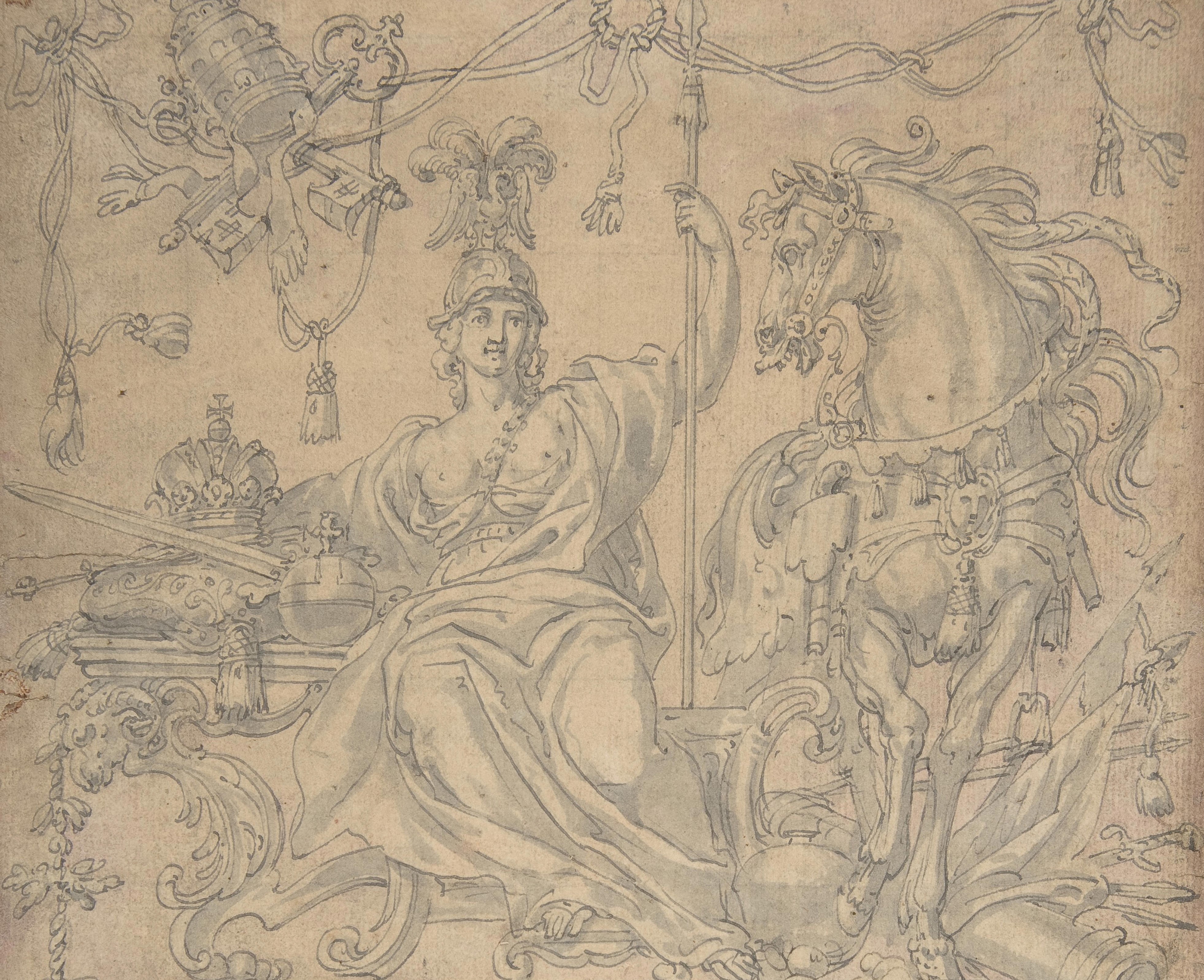
- Become an exemplar of the tradition. Study its art & iconography and spirit, and the spiritual philosophy at its roots and the history of this.
- Question the counter-revolutionary tradition of traditionalist and conservative thinking and their narratives which contain deeply anti-republican sentiment, logic and narratives.
There are surely many other things that can be listed.
Electoral choices remain real and sometimes necessary. They need not, however, be framed as surrender to the only organized force that currently speaks the language of popular power. A citizen who votes for a particular Democrat, Republican, or independent while simultaneously working to restore republican criteria outside the parties is not “wasting” the vote. That citizen is refusing the false choice. In this refusal however must emerge movement and circulation of knowledge.
The choice between corrupt partisanship, liberal gatekeeping, and Democratic Socialism is a false one produced by the prior erosion of the civic republican tradition. That tradition offers a different standard. I do not ask Americans to choose the lesser evil inside a broken binary. We ask them to recover the criteria that make the binary unnecessary.
Refuse the gaslighting that treats every anti-oligarchic energy as inherently socialist or demonizes all “radicalism.” Hold all political parties to the same non-domination test!
The Minervan Republic exists, because the tradition needs a living voice and few are providing it. This is a forum for the civic republican tradition across continents and centuries, with explicit emphasis on its moral architecture, its heritage, and the fight against arbitrary power in every form — monarchical, theocratic, fascist, Bolshevik, or technocratic. Our existing mission statement “to fight arbitrary power in every age” and to reinvigorate the ideal “as the best strategy to save, enhance and fortify our democratic institutions, civic literacy and human ingenuity” is the strategic center.
━━━━༺ ⚔ ༻━━━━
“QUI REM PUBLICAM SALVAM ESSE VOLUNT, ME SEQUANTUR!”
Let those who wish the republic to be safe follow me!