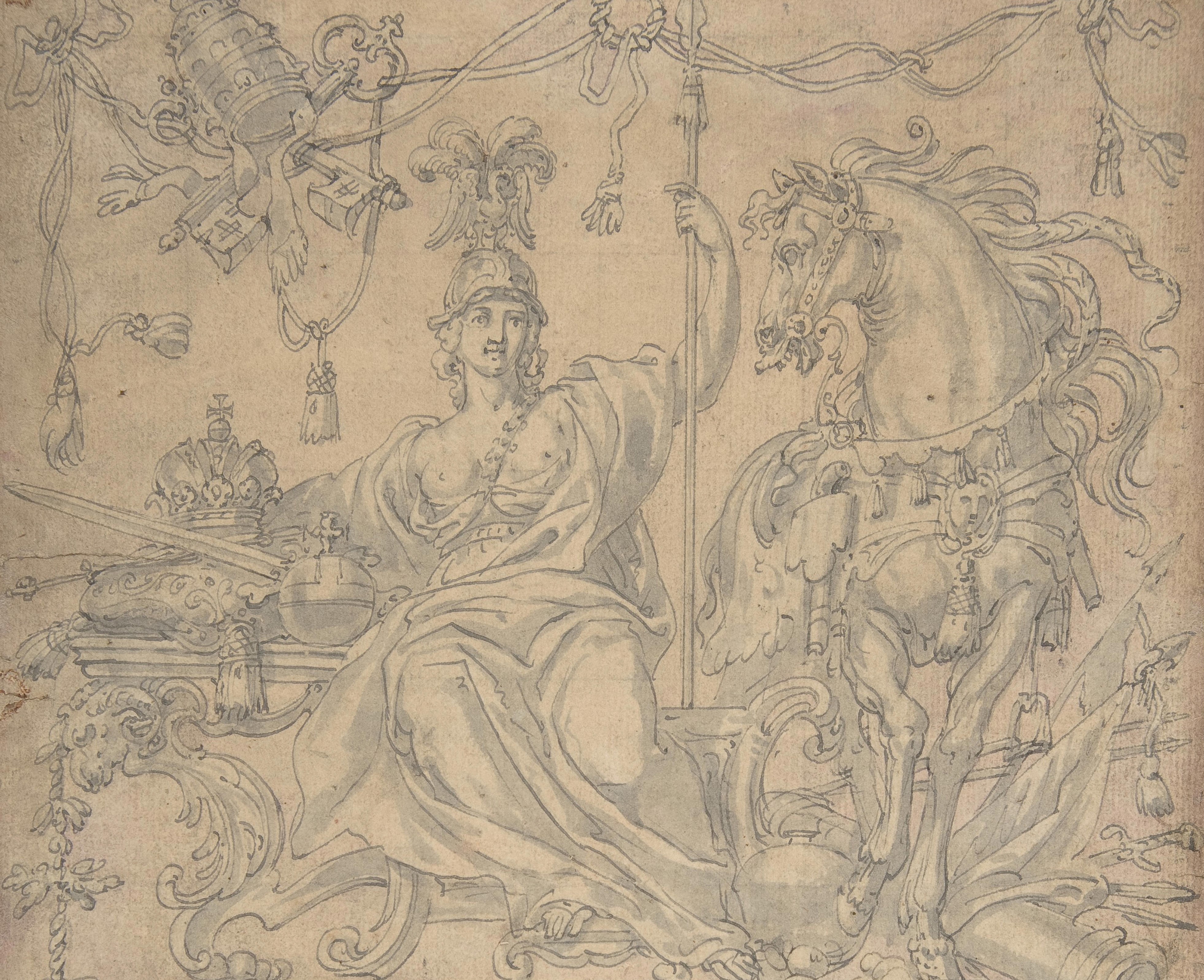
THE AIM IS TOWARDS RECOVERY OF CLASSICAL CIVIC REPUBLICANISM (non-domination, civic virtue, and ordered liberty) as the primary lens, rather than structural racism or economic class relations as the root diagnosis. Its victory will be a victory for many other related schools as well. This can provide a forum for the “civic republican tradition across continents and centuries” from Cicero and classical sources through Petrarch, the American Founding, Mazzini and the Carbonari, early Black republican figures, related or comparative currents — essentially, the full history of the republican tradition. This led to the review of Bruno Leipold on Influence of Republicanism on Marx in Citizen Marx: Section I and II. Our stated mission is to reinvigorate this tradition against arbitrary power, to fortify democratic institutions, civic literacy, and human ingenuity through open deliberation and citizen formation. I have no interest in channeling that into the rehabilitation of the word “socialist.” I advocate to stand on the tradition alone. This explicitly presents the historical republican tradition itself as the product of eclecticism and synthesis and positions our recovery as a living continuation that deliberately diverges from modern materialist habits that leave us dependent on the very oligarchic and technocratic forces relied upon at present and opposed. What we have now are contradictory and conflicting patterns, where political commentators argue that the U.S. is a uni-party, while at the same time advocating their political solution through one-party state logic, where the main objective is to make sure that one particular party or wing within a party dominates in perpetuity. This is a sign of decay, not recovery of the republican tradition.
The refusal of left-right containment does not render the republican tradition irrelevant. On the contrary, the very persistence of domination in new institutional forms such as corporate concentration that turns markets into private governments, administrative apparatuses that issue binding rules without genuine popular authorization, platform infrastructures that condition speech and livelihood, and partisan capture that converts public offices into instruments of factional advantage continually reactivates the republican concern with arbitrary power, civic dependence, and the corruption of self-government. Because these phenomena cut across conventional economic and cultural alignments, republican analysis supplies diagnostic leverage unavailable to redistributionist or culturalist frameworks alone: it can expose how progressive expansions of state capacity may deepen clientelistic dependence even while pursuing equality, how market liberalization may recreate oligarchic vetoes over ordinary life even while expanding formal choice, and how both sides may collude in the erosion of intermediate institutions that once disciplined power. In this way the tradition remains a live resource for diagnosing institutional decay, for reframing constitutional design around non-domination rather than mere non-interference or equal outcomes, and for generating mobilizations that temporarily realign left and right around shared resistance to unaccountable rule, thereby repeatedly reshaping the very debates that cannot fully absorb it.
CONTRAST WITH LEFTIST FRAMEWORKS
The fullness of the republican tradition is about safeguarding liberty through civic virtue and institutional balance. That framework cuts across, and often transcends, the modern left-right spectrum. It’s not reducible to debates over taxes, markets, or welfare — it’s about how citizens and institutions preserve freedom against corruption and domination.
Despite this fact, it is inevitable, that either side of the modern political expression will become agitated, and perhaps only when a certain level of attention has been brought to the project. As the defining problem of the time are the conflicting agendas (or visions) of factions. Our loyalties are not to party factions, but it is worth noting important contrasts with the common leftist framework, with which it is unavoidable to encounter, that present us the opportunity to educate. Typical leftist frameworks (Marxist, socialist, or identity-focused variants) diagnose the world’s core problems as rooted in economic structures (capitalism, class exploitation, mode of production shaping the rest of society) and (or) racism and systemic oppression (colonialism, racial hierarchies, intersectional power). Politics is then often subordinated to economic transformation or identity-based redistribution and deconstruction; and freedom is frequently understood through liberation from those structures.
Our approach rejects this as the primary anthropology.
Firstly, the idea of freedom as non-domination, not class or identity emancipation. Republican liberty means not living under the arbitrary will of another (monarch, oligarch, party, faction, or majority). This requires active citizenship, civic virtue, moral education, mixed government, rule of law, and popular sovereignty under law—not primarily the restructuring of production or the centering of racial categories.
Secondly, the explicit opposition to socialism and Marxism. Our essays catalogue and refute hostility from Marx, Engels, Bakunin, Lenin, and related currents toward civic republicanism, esp. its Mazzinian form of duty, virtue, and moral association. They treat republicanism as idealist, petty-bourgeois, theological, or a transitional bourgeois stage to be superseded by materialist class struggle and economic transformation. I have argued the reverse: materialism neglects character formation and duty, producing new hierarchies and moral collapse rather than sustained freedom. Republicanism is the rival “anthropology of freedom” that keeps politics from collapsing into pure economic or class determination.
Thirdly, on race and Black radicalism. I reject racial hierarchies, and I presented the case utilizing classical republicanism and Stoicism, and my own observations of the habits of thinking of my own race. This was to bring to attention the rich or diverse depth of political opinion in our communities that are treated as monolithic. At the same time, that diverse depth of political opinion is under-developed and stifled by our attitude to our circumstance, e.g., the logic of why Black people can only be “leftist” or should spread out their representation by voting the Republican Party, or why we should only vote for the Democratic Party. Someone like me, who takes the risk to venture away from these limited options is placed in an awkward spot with no support. It is like an article by Mandile MPofu (COM ’24) titled BU Historian Asks Why Black Youth Cannot Not Be Intellectuals (Arts X Sciences Magazine, 2024). Black “intellectuals” in general have to fight for their thoughts to be recognized outside of our community, but what about from within? I usually never have any problem in person conveying my ideas to my own, but on social media, it is very different. It is possible to understand my views by also understanding my childhood. All the things I care about writing about today in relation to Black American thought is only scaled. There is synthesis-building, density of context and comparative depth. I have been thinking on these things since the second-grade teacher taught us to do book reports and present them to our classmates, leaving me constantly subjected to mockery by my own peers, who seemed not to be very supportive, encouraging or carry the degree of pride they pretend or assume I lack. I had to garner confidence by myself from within, while others seemed to constantly gain theirs from the approval of others.
The history and dominance of Leftism is evident among many Black thinkers. The tradition is not grounded within these limitations, and I do not limit it to such categories. There are many limitations external and internal pressed upon us, and I did not get here by constraining my thought. Our thinking does not have to be contained by a leftist framework. I have pointed to Phillis Wheatley, Frederick Douglass, aspects of Garvey, and Haiti’s 1804 revolution embodying practical republican liberation; however, Leninism / Bolshevism and the Comintern displaced earlier Black civic-republican currents. Lenin, the Bolsheviks and so forth captured the language of revolution, anti-imperialism, and liberation for socialist frameworks. The common attitude also about race from either side has always been jarring to me as well, and hypocritical. The republican tradition demands more from us all. I have proposed an alternative as a recovery of that earlier Black republicanism and its further advancement, even of its early tradition of armed citizen defense, producer or yeoman ideals, and non-domination understood in its fullness (requiring pre-liberal contexts and new philosophical development), rather than Marxist or purely identity-based models. This requires practice, philosophers, idealists, economists, etc. from within the tradition, which is great in space as the world itself. Racism and domination are real problems, but the corrective is civic membership and virtue within a universal republican tradition, not the elevation of race or class as the master categories, or the emasculation of the races through racial jealousies and new hierarchies.
Fourthly and lastly, economic power is critiqued, but not through class war. Oligarchy and concentrated economic power are opposed insofar as they produce domination. The remedy is civic virtue, institutional design against arbitrary power, and moral formation of citizens across classes — not abolishing private property or subordinating politics to economic restructuring.
We are concerned with the whole order of society, and it is important to always remember the common man and never neglect attention to the poor and the hungry and the forgotten in society. The great work ends with their dignity restored and philanthropy restored to true practice of wisdom and giving. All people need the tools to sharpen and sustain the mind and strengthen them. Everywhere is martial strategy of the mind and body. Be a world-builder, bridge the classes and bring the world to balance, moderation and order. These ideas build a child into a king, mature princes, bring knights to rank, lead lords to welfare, magistrates and officials to observance, commonwealths to the health of the common good, migrants to noble citizens, strange travelers to companions, corruption to the restored dignity of a nation, and corruption to heel.
I also distance this idea from Christian nationalism, pure traditionalism, totalist nationalisms, and certain forms of liberalism or conservatism, as we fight for the republican tradition, religious pluralism, the eclectic approach, and secular order in its elevated sense. I am opposed to the attitude of the modern thinker who sits around expecting powerful oligarchs and despotic leaders to change their hearts.
Our philosophy cannot be sustained by way of the times, since it begins with the recognition of something of a higher quality, the dynamic might of the soul, its diviner potential, its root in the element composing all living beings, and its freed state from any man-made limitation, or arbitrary power, having in essence no power over it. The boardman kneels to this truth; not us to them. Let us all do our due diligence to hold all power accountable to their duties and the purposes of their office.
REFRESHER ON THE REPUBLICAN TRADITION VERSUS MODERN AXIS
Classical republicanism, stretching from Aristotle and Polybius through Machiavelli, Harrington, and the Atlantic tradition to contemporary theorists of freedom as non-domination, organizes political thought around the axis of civic independence versus arbitrary power. It prioritizes mixed constitutions that check both monarchical and oligarchic domination, the cultivation of public virtue against corruption by private interest, the institutional protection of citizens from dependence on the will of others, and the active maintenance of a common good that cannot be reduced to aggregated preferences, rather than the left-right coordinates of economic redistribution versus market liberty or cultural progressivism versus traditional hierarchy; although this republican grammar repeatedly intersects those coordinates (supplying anti-oligarchic energy to the left, warnings against soft despotism and loss of self-government to the right, and a distinctive critique of both bureaucratic paternalism and unchecked capital), it remains irreducible to them because its primary question is not “who gets what” or “which values prevail” but whether free persons govern themselves or are ruled by unaccountable wills, thereby continually reframing and destabilizing the terms of ordinary left-right contestation.