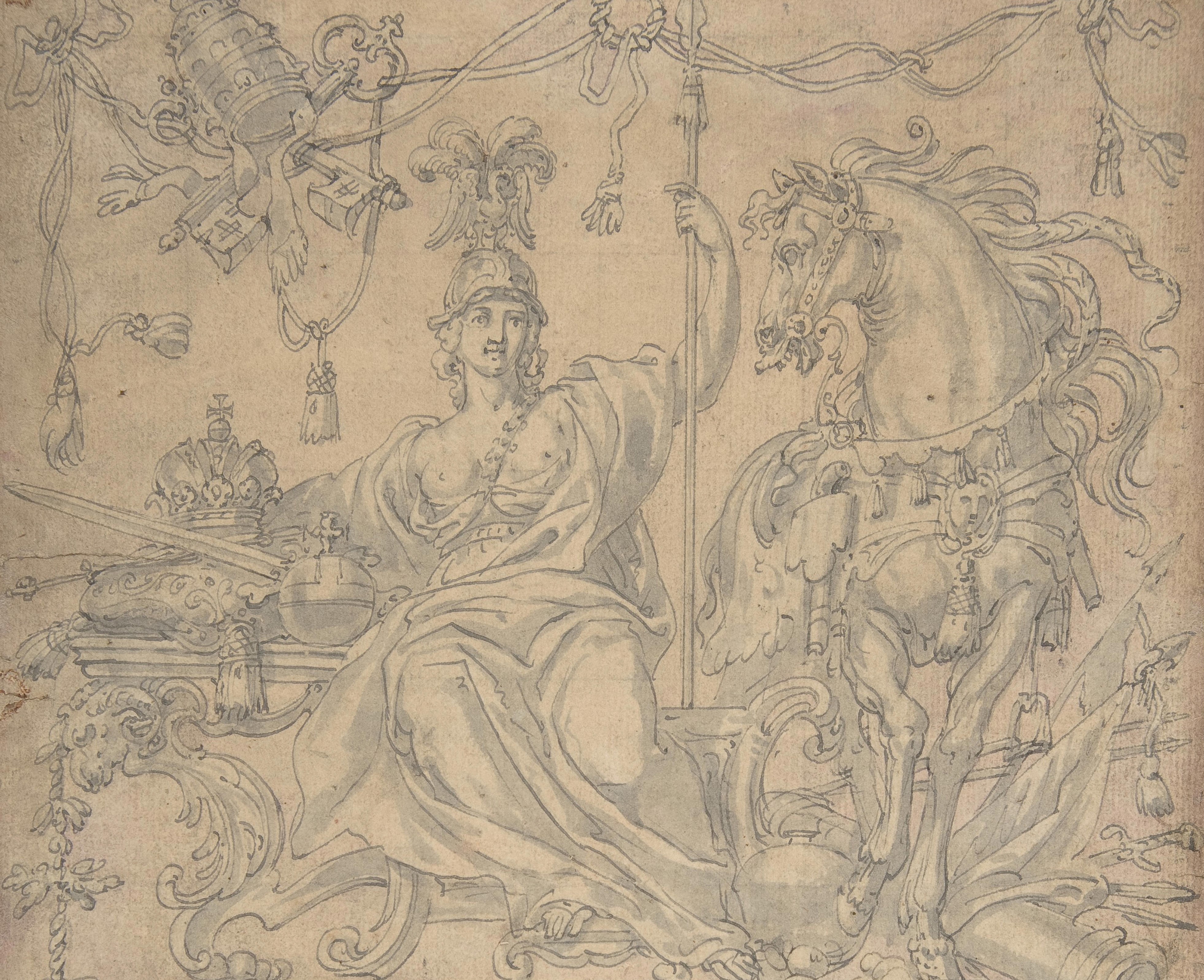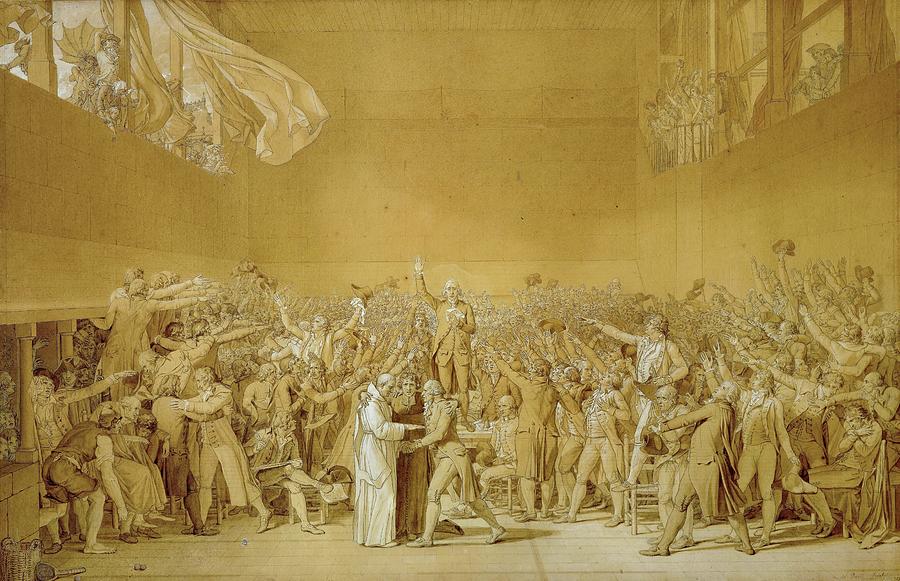
In this tradition, corruption is the capture of public things by private interest, not only bribery. Harrington, Bolingbroke, and Robespierre use the word differently.
“The virtue of justice lies in moderation,
When it governed wisely.”
— ARISTOTLE
CORRUPTION, IN THE REPUBLICAN LEXICON, NAMES THE PROCESS by which the res publica ceases to be the common thing and becomes the instrument of particular wills. Harrington fixes one end of the range. In Oceana the balance of property determines the balance of power. When land is engrossed by a few, the many become dependent, and the public decisions of the assembly express the private interests of the proprietors rather than the common utility. The corruption is structural and does not require that any individual take a bribe. It requires only that the distribution of property place the power of decision in hands that must consult their own estates first1.
Bolingbroke shifts the location of the same process into the operations of a court and a funded debt. In the pages of The Craftsman, the corruption of Parliament is the systematic use of places, pensions, and the public credit to attach members to the ministry rather than to their constituents or to the public good. The mechanism is financial and administrative. A member who owes his seat or his income to the court will not exercise the independent judgment the mixed constitution requires. Bolingbroke does not deny that individual bribery occurs. He treats it as a symptom of a larger capture in which the public revenue and the public offices have been turned into instruments of private and ministerial interest2.
Robespierre employs the term inside a different institutional setting and with a different remedy. In the speeches of 1793 and 1794, corruption is the persistence of private interest inside a republic that has declared itself the reign of virtue3. The enemy is no longer an external court but the internal residue of selfishness that survives the abolition of monarchy. The proposed cure is not a rebalancing of property or a reduction of court influence. It is the identification and removal of those whose private wills obstruct the general will. The range of the term has expanded from a structural or administrative defect to a moral and political crime that justifies extraordinary measures.
Corruption, utilizing these three4, occurs when decisions that ought to track the common utility instead track the advantage of some part. They differ in the site they identify and in the remedy they propose. Harrington looks to the distribution of land and the structure of the assembly. Bolingbroke looks to the independence of Parliament from executive patronage. Robespierre looks to the purity of citizen virtue under conditions of emergency. Any contemporary invocation of the word that collapses these distinctions will lose the precision the tradition itself maintained. The term is technical before it is moralizing and describes a specific failure of the public thing to remain public.
FOOTNOTES
- James Harrington, The Commonwealth of Oceana, in The Commonwealth of Oceana and A System of Politics, ed. J.G.A. Pocock (Cambridge: Cambridge University Press, 1992), “The Preliminaries,” pages pp. 8-66. ↩︎
- Henry St. John, Viscount Bolingbroke, A Dissertation upon Parties, in Bolingbroke: Political Writings, ed. David Armitage (Cambridge: Cambridge University Press, 1997), letters 10-12. ↩︎
- Maximilien Robespierre, “On the Principles of Political Morality” (5 February 1794), in Virtue and Terror, ed. Jean-Pierre Gross, trans. John Howe (London: Verso, 2007), pp. 108-125. ↩︎
- Robert Alan Sparling, Political Corruption: The Underside of Civic Morality. Haney Foundation Series, University of Pennsylvania Press, 2019. ↩︎