Madison’s Federalist 10 is a theory of the cause of faction, not a blessing on parties. Here, we hold him next to Bolingbroke’s idea of the patriot king and Burke’s defense of party, and what problem each thought he was solving.
JAMES MADISON (1751-1836) DEFINES FACTION AS A NUMBER OF CITIZENS, whether a majority or a minority, united by some common impulse of passion or of interest adverse to the rights of other citizens or to the permanent and aggregate interests of the community (Madison, Federalist No. 101). The causes lie in human nature and in the diversity of faculties that produces different degrees and kinds of property. Because the causes cannot be removed without extinguishing liberty, the remedy must control the effects. Madison and his contemporaries studied the English experience of Court factions and ministerial capture precisely so as not to reinstall a single magistrate as the solvent of party but instead constructed an extended republic whose multiplicity of interests and separation of powers would control the effects of faction without concentrating corrective power in one person or one organized party. The argument is diagnostic and institutional. It does not treat organized electoral combinations as desirable instruments of government. It treats them as the predictable and dangerous expression of partial interests that the Constitution must render less able to dominate.
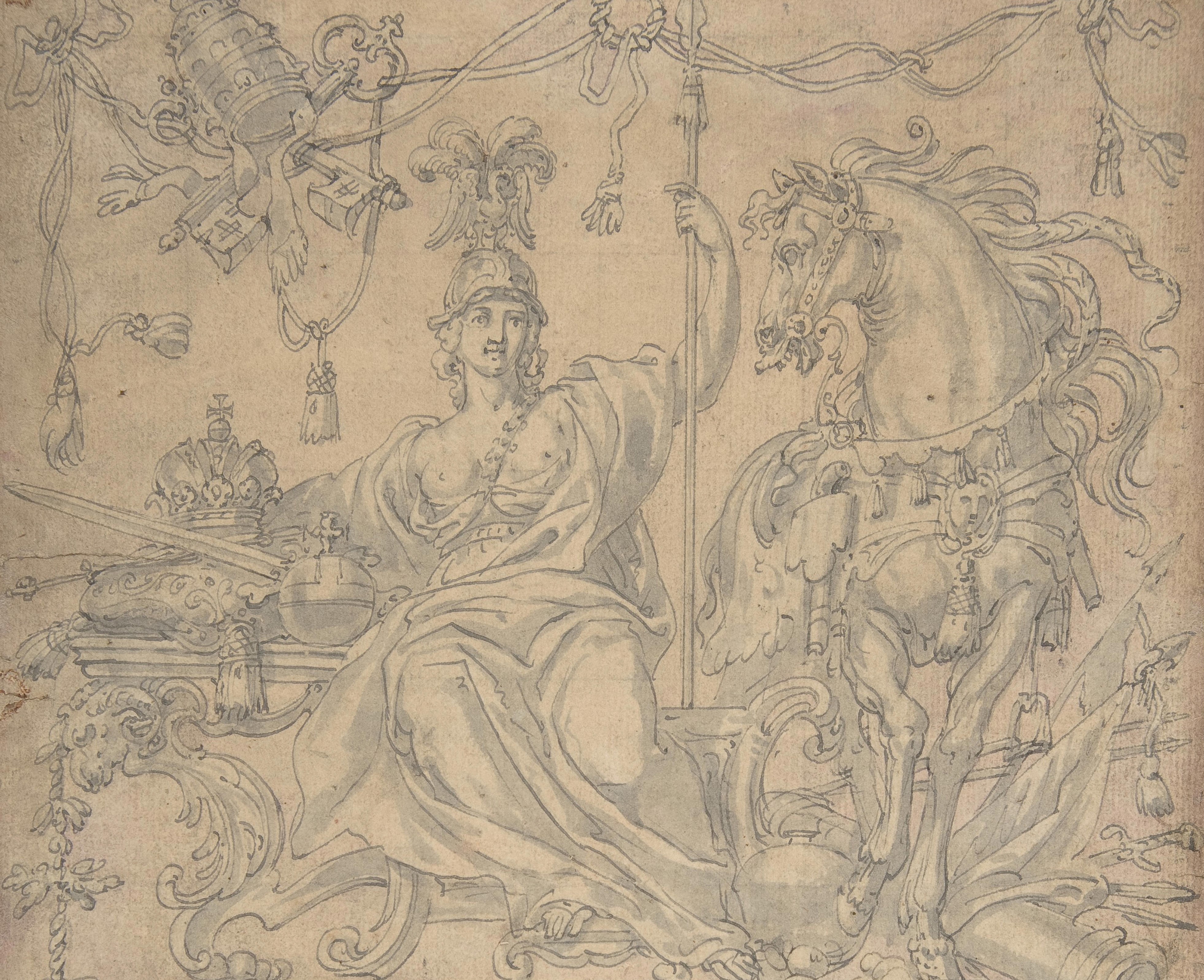
Lord Bolingbroke (1678-1751), who was admired by Thomas Jefferson, addresses a different institutional problem. In the Idea of a Patriot King, he confronts a Parliament already shaped by ministerial patronage and a court that uses places and pensions to secure majorities. The PATRIOT KING is offered as a temporary instrument capable of restoring the independence of Parliament by refusing to govern through a standing party of his own creation. The party, in this setting, is the organized instrument of court corruption. Bolingbroke’s solution is not the multiplication of factions but the temporary elevation of a monarch who will govern without one, thereby allowing the country interest to reassert itself against the moneyed and ministerial interest (Bolingbroke, The Idea of a Patriot King). The problem he sees is the capture of the representative body by the executive; and the remedy is a king who declines to complete that capture.
Jefferson read Bolingbroke profusely and recited from his writings strung with classic Whig teachings of human LIBERTY and constitutional order more than any other classical or modern thinker. Jefferson believed Bolingbroke’s reputation as a Tory was misleading, arguing that his writings supported liberty more strongly than many contemporary Whigs. While Thomas Paine’s prose was plain, democratic and accessible, Jefferson admired Bolingbroke’s ornate, classical, senatorial eloquence. In his late years, in a January 1821 letter to Francis Eppes, Jefferson had this to say of Bolingbroke:
“You ask my opinion of Ld Bolingbroke and Thomas Paine. they were alike in making bitter enemies of the priests & Pharisees of their day. both were honest men; both advocates for human liberty. Paine wrote for a country which permitted him to push his reasoning to whatever length it would go: Ld Bolingbroke in one restrained by a constitution, and by public opinion. he was called indeed a tory: but his writings prove him a stronger advocate for liberty than any of his countrymen, the whigs of the present day. irritated by his exile, he committed one act unworthy of him, in connecting himself momentarily with a prince rejected by his country. but he redeemed that single act by his establishment of the principles which proved it to be wrong. these two persons differed remarkably in the style of their writing, each leaving a model of what is most perfect in both extremes of the simple and the sublime. no writer has exceeded Paine in ease and familiarity of style; in perspicuity of expression, happiness of elucidation, and in simple and unassuming language . . . Ld Bolingbroke’s, on the other hand, is a style of the highest order: the lofty, rythmical, full-flowing eloquence of Cicero. periods of just measure, their members proportioned, their close full and round. his conceptions too are bold and strong, his diction copious, polished and commanding as his subject. his writings are certainly the finest samples in the English language of the eloquence proper for the senate. his political tracts are safe reading for the most timid religinist, his philosophical, for those who are not afraid to trust their reason with discussions of right and wrong.” (Thomas Jefferson to Francis Eppes, January 19, 1821)
This influence on Jefferson demonstrates the eclecticism of the republican-style. American historians including Harold Hellenbrand, Forrest McDonald, and Isaac Kramnick have shown that Jefferson and the broader republican opposition absorbed this diagnosis wholesale, treating Hamiltonian finance, debt, and administration as an American version of Walpole’s system, while republicanizing the remedy into a virtuous, non-partisan executive, frequent elections, and a vigilant Country party that could check executive influence without hereditary monarchy. The PATRIOT KING thus functioned for Jefferson not as a preferred form of government but as a tactical instrument within a limited constitution, whose anti-corruption logic and ideal of disinterested public leadership could be detached from royal form and adapted to the American republic’s institutional and cultural defenses against the same pathology of executive capture.
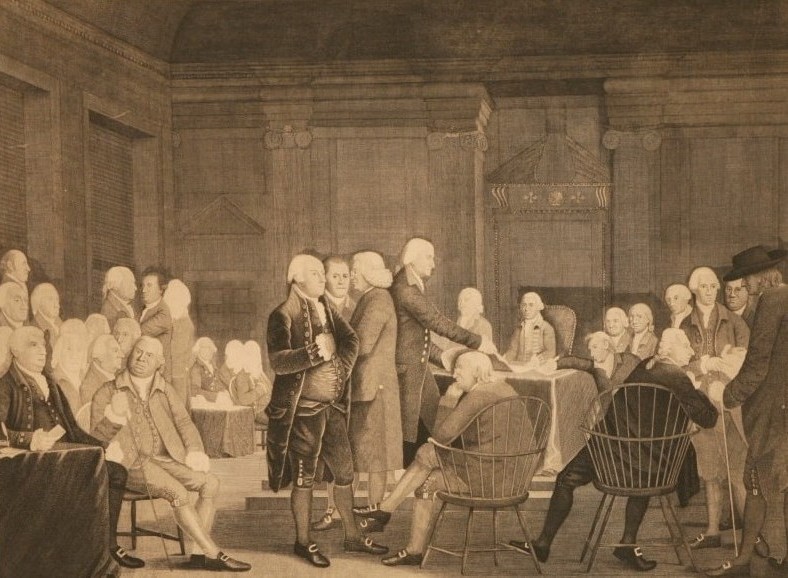
Madison however diverged sharply from Bolingbroke by treating faction as an ineradicable feature of free society arising from the diversity of opinions and the unequal distribution of property, whose effects could be controlled only through an extended republic that multiplies interests and filters representation, rather than through any single magistrate however virtuous, who might temporarily rise above party to restore constitutional balance (Wood, 2011, pp. 499-5062). Proposals in the early 1780s, such as Lewis Nicola’s 1782 letter suggesting that Washington assume a monarchical title over a new western state, remained isolated expressions of wartime frustration with congressional weakness and unpaid officers; they elicited Washington’s immediate and absolute repudiation as the “greatest mischief” that could befall the country, confirming that even the most prestigious figure refused any revival of hereditary or personal rule (Haggard, 2002, pp. 139-693). At the Convention itself, while some delegates briefly entertained stronger executive models, the decisive turn against any form of monarchy reflected the conviction that the revolutionary rupture had already eliminated the social and ideological bases for kingship4, leaving only elective and limited offices compatible with the sovereignty now lodged in the people (Wood, 2011, pp. 95-109; Nelson, 2014, pp. 185-2285).
The choice of a republic rested on the philosophical principle that legitimate authority derives solely from the consent of the governed and the artificial construction of offices under a written fundamental law, rather than from any natural or historical title that could concentrate power in a hereditary line or a single “father of the people”; this rendered even a limited or “patriot” monarchy incompatible once independence had severed the colonial relationship to the Crown (Bailyn, 1967, pp. 198-2296; Wood, 1969, pp. 344-897). The same logic drew on Protestant and natural-law traditions that rejected absolute or indefeasible hereditary right, whether Stuart divine-right claims or any residual sacralization of the magistrate, as incompatible with the equal accountability of all persons before God and the covenantal character of political community; American writers therefore treated the absence of a king not as a temporary expedient but as the necessary condition for a people who could govern themselves without intermediate lords or a permanent head who stood outside the reciprocal obligations of the compact (Nelson, 2010, pp. 88-1228); Wood, 1969, pp. 65-70, pp. 118-24).
Jefferson’s engagement with Bolingbroke reflects the eclecticism with which American republicans adapted Country ideology to the cause of human LIBERTY. Bolingbroke’s diagnosis of executive capture of Parliament through patronage and standing Court factions, together with his temporary instrument of a Patriot King who declines to govern through a party of his own creation, was absorbed as a critique of corruption while being republicanized into non-hereditary mechanisms such as virtuous leadership above faction, frequent elections, and a vigilant Country opposition, rather than retained as monarchical form. This republican-adapted remedy demonstrates the selective application of earlier ideas to defend legislative independence and limited government. It must be cautioned, considering these contexts, that the concept supplies no warrant for a post-constitutionalist strong-executive theory that would elevate personal or party power above constitutional restraints, for the original logic and its American reception both aimed at restoring, not superseding, the independence of representative institutions from executive domination.
In these frameworks the republic was not merely the absence of monarchy but the positive institutionalization of popular sovereignty, in which no office, however elevated, could claim a status prior to or independent of the people’s constitutive act.
Another key figure in developments of eighteenth-century liberal constitutionalism with Madison was Edmund Burke (1729-1797), an Anglo-Irish statesman and critic of British imperialism; and though widely considered the founding father of modern conservatism, is considered also within the classical liberal tradition. Madison and Burke share foundations, but the two differed in their idea towards the balance of tradition and reform. Burke explains the philosophy of party, defending party as a necessary means of giving effect to common principles inside a mixed constitution. In Thoughts on the Cause of the Present Discontents, he argues that men who share a view of the public good must be able to act together if they are to resist the influence of the court. Without such combination, individual members remain exposed to ministerial offers and the House loses the capacity for coherent opposition. Party, on this account, is the organized expression of a principled connection rather than the mere aggregation of private interests Madison feared, or the court engine Bolingbroke denounced (Burke, Thoughts on the Cause of the Present Discontents, 1770). The problem Burke addresses is the weakness of isolated members before executive patronage. The remedy is disciplined or coordinated, self‑controlled effort in defense of a public principle.
To forget or dismiss the historical choice of Madison and his contemporaries to construct an extended republic is to reopen the very logic Bolingbroke offered and the Americans declined: the hope that a temporary, non-partisan head can restore independence to the representative body by standing above standing parties. In contemporary terms, a pattern of historical amnesia permits factional voices within parties to treat the capture of institutions by a dominant party organization as a legitimate or even patriotic instrument for purifying the state, rather than as the recurrence of the Court corruption that both Bolingbroke and the Founders diagnosed. Burke’s caution is that history’s volume of past errors is not self-interpreting; when it is ignored, or is read only as a magazine of weapons for present factions, the permanent causes of mischief9 reappear under new names, while the institutional and cultural remedies the Americans actually chose are treated as obsolete obstacles rather than as the hard-won alternative to both monarchical and one-party logics.
Madison, Bolingbroke and Burke therefore solve different problems with different instruments. Madison seeks to prevent any partial interest from becoming a durable majority inside an extended republic. Bolingbroke seeks to break the existing ministerial combination by means of a king who stands above party. Burke seeks to enable principled resistance to the court by means of organized connection among members. None of them treats the modern mass party as an unqualified good. Each measures the device he considers against the specific threat he believes the constitution faces.
FOOTNOTES
- First published Nov. 22, 1787 in the New York Daily Advertiser. ↩︎
- Gordon S. Wood, The Radicalism of the American Revolution, New York: Knopf, 2011. ↩︎
- Haggard, “The Nicola Affair,” Proceedings of the American Philosophical Society 146 [2002]: 139-69. ↩︎
- Patronage networks, deference, and the identification of the polity with a single person. ↩︎
- Eric Nelson, The Royalist Revolution: Monarchy and the American Founding, Cambridge, MA: Harvard University Press, 2014. ↩︎
- Bernard Bailyn, The Ideological Origins of the American Revolution, Belknap Press of Harvard University Press, 1967. ↩︎
- Gordon S. Wood, The Creation of the American Republic, 1776-1787, University of Chicago Press, 1969. ↩︎
- Eric Nelson, The Hebrew Republic: Jewish Sources and the Transformation of European Political Thought, Harvard/Belknap, 2010. ↩︎
- Referring to ambition, party spirit, and the temptation to complete executive or organizational capture of the representative body. ↩︎