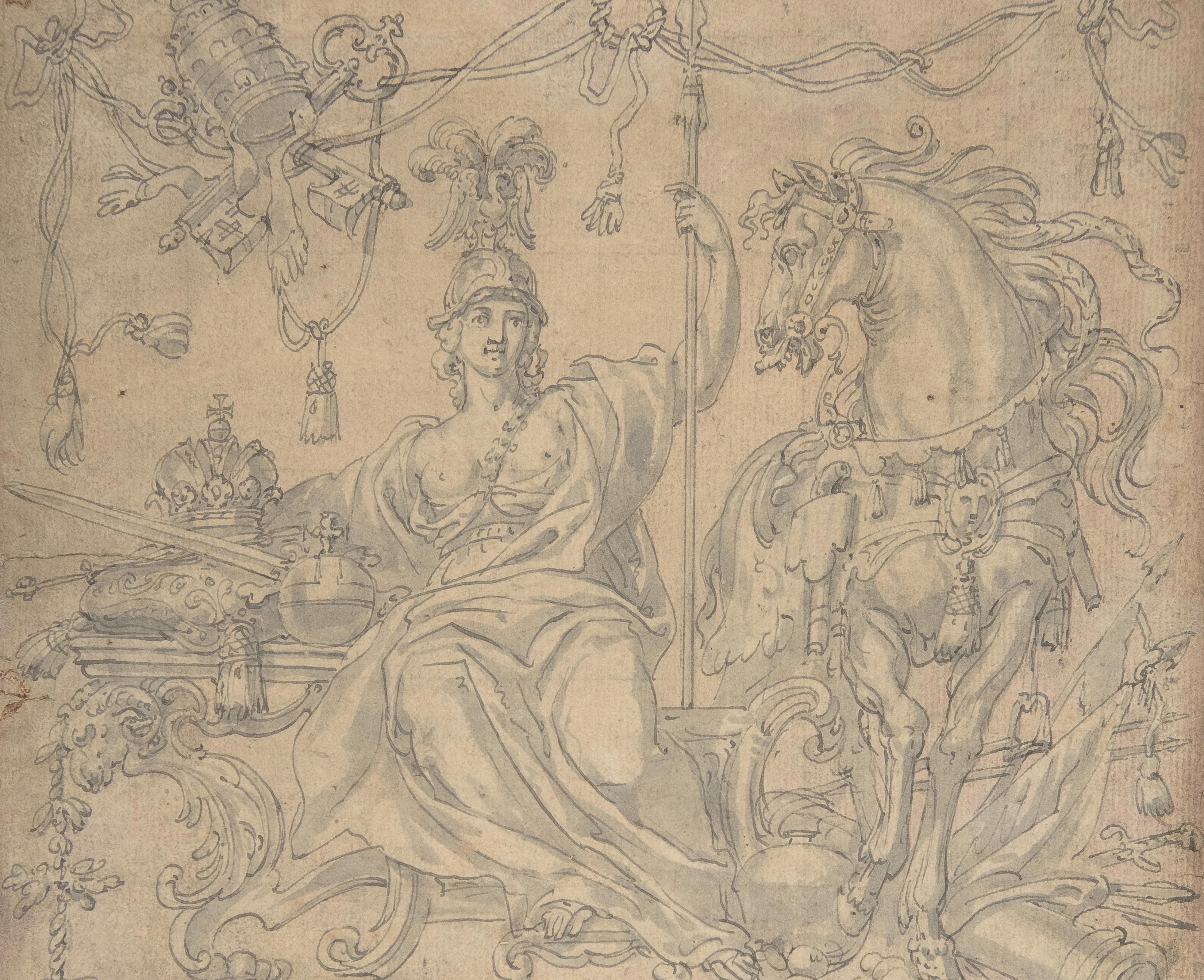
On Civil Theology and the Disciplines of Souls: The Rites, Gods, Symbols, and Initiations by which the Ancient City Formed its Citizens
The civil theology the pre-liberal republican tradition has its actual roots in. This subject was introduced in Myth: The Public Sacred Rites of the Ancient City.
༺❀༻
RITES OF NUMA AND THE FOUNDATIONS OF THE COMMON THING
NUMA POMPILIUS INSTITUTED THE SACRED OBSERVANCES which transformed a band of warriors into a people capable of recognizing a common thing, not by compact among already formed persons but by the disciplines of sacrifice, procession, and the distinction of days. Plutarch records that he called the gods to aid in mollifying so presumptuous a temper, employing sacrifices, processions, and religious dances which mingled solemnity with a beneficent pleasure, and at times heralding vague terrors of strange apparitions and threatening voices, thereby subduing minds by means of superstitious fears.1 Livy sets forth how he established the flamines of Jupiter, Mars, and Quirinus, the Vestal virgins, the pontifices who were judges in all religious causes and makers of laws for rites not yet written, and the temple of Janus as an index of peace and war.2 Dionysius of Halicarnassus notes that by ordering every man to mark his land with stones sacred to Jupiter Terminalis, and by erecting a temple to Public Faith at the public expense, Numa rendered the attitude of the State toward all men the pattern for the behavior of individuals.3 The calendar itself, reformed from ten months to twelve lunar with intercalation by the pontiffs, fixed the fasti and nefasti, so that the lawful and the unlawful days became the measure of civic action. These practices taught the citizens what the city honored and what it would enforce: the pure apprehension of deity by the intellect rather than by images of man or beast, and the public Faith to whom the major flamines were carried with hands wrapped to the fingers. In this manner the rites formed the soul of the citizen before any claim of individual right could arise.

THE CAPITOLINE GODS AND MINERVA AS WISDOM OF THE MAGISTRACY
Upon the Capitoline Hill stood the temple of Jupiter Optimus Maximus, shared in three cellae with Juno Regina and Minerva, the triad which embodied the public religion of the city as a constitutional entity. Livy places the vow and beginning of the temple under Tarquinius Superbus, so that from the foundation of the Republic the Senate held its first meeting of the year within its precincts, and every triumph concluded before it.4 Jupiter, best and greatest, was the guarantor of oaths and the protector of the Roman people in their civic capacity; magistrates took the auspices under his permission and sacrificed upon entering office. Juno Regina guarded the community as queen and protector of marriage and women. Minerva, goddess of wisdom, arts, strategy, and the crafts, completed the triad, her presence signifying that the magistracy required not only the force of Jupiter and the generative care of Juno but the disciplined intelligence which ordered both. Servius records the Etruscan prescription that a city must possess three temples to these deities.5 The archaic grouping of Jupiter, Mars, and Quirinus had reflected the earlier orders of sovereignty, warriors, and the people organised in the curiae; the Capitoline triad preserved and refined that structure under the forms of public cult. Minerva’s claim was philosophical as well as civic: the wisdom which the city honoured was not private speculation but the public intelligence that interpreted omens, preserved the sacred books, and guided the decisions of those who bore the symbols of office.
FASCES AS SYMBOLS OF ENFORCEMENT AND ORDER
The fasces, bundles of rods containing an axe, were carried by the lictors before the superior magistrates as the visible expression of imperium, the power to enforce the will of the city upon citizens and subjects alike. Livy derives them from the Etruscan city of Vetulonia, and Dionysius records that twelve attended each of the kings; after the expulsion of the Tarquins the axes were removed within the pomerium, symbolizing the right of appeal (provocatio) against capital coercion, while outside the city the full apparatus of punishment remained.6 Polybius observes the differing numbers according to rank: twelve for consuls, six for praetors, twenty-four for the dictator, so that the hierarchy of magistracy was made manifest in the procession itself.7 When a magistrate died in office the fasces were inverted; when he committed wrongdoing they were broken. These symbols taught, by the daily spectacle of the lictors, what the city would enforce and under what limits: the rods for corporal punishment, the axe for capital, yet the axe withheld within the sacred boundary so that the people retained the final claim upon life and death. The fasces thus formed part of the civil theology by which the symbols of magistracy made a people capable of recognizing authority as something both terrible and measured.
SOL AND LUNA AS MEASURES OF TIME AND AS CULTS OF ORDER
Sol and Luna were both measures of the year and objects of public cult, their conjunctions and oppositions fixing the intercalations of Numa’s calendar and the festivals of the fasti. Varro lists both among the twelve deities vital to agriculture and among the twenty principal gods (di selecti); Virgil calls them the world’s clearest lights (clarissima mundi lumina).8 Tacitus records an old temple of Sol in the Circus Maximus; the Quirinal shrine of Sol Indiges received sacrifice on 9 August, and the joint festival of Sol and Luna fell on 28 August.9 Luna’s Aventine temple, founded according to tradition by Servius Tullius, had its dies natalis on 31 March; as Noctiluna she possessed a shrine on the Palatine.10 In the later empire the Natalis Invicti of Sol Invictus on 25 December marked the winter solstice, yet the earlier cults already treated the solar and lunar courses as the visible order by which the pontiffs regulated the civic year. Macrobius preserves Nigidius Figulus’s identification of Sol with Janus and Luna with Jana, so that the measures of time were themselves divine persons governing beginnings and cycles.11 The civic claim carried by these cults was that the common thing is measured by the heavens: the lawful days, the market cycles, the agricultural festivals, and the limits of magistracy itself were read from the paths of Sol and Luna. The philosophical claim was that the soul, disciplined by the observation of these measures, learns to recognize the cosmic order of which the city is a part.
HECATE AND DIANA AS GUARDIANS OF THRESHOLDS AND TRANSITIONS
Diana, originally the Latin goddess of the woodland and the hunt at Nemi, became identified with Luna and with Hecate, forming the triple aspect (Diana triformis) which guarded thresholds, crossroads, and the passages between life and death. At Aricia the rex nemorensis and the triple cult statue embodied the liminal character of the sanctuary; coins of the late Republic show the head of Diana Nemorensis with the triple form.12 Hecate, as Trivia, received offerings at the junctions of three roads; her hekataia stood at entrances, and she held the keys of the underworld.13 Virgil’s Sibyl, priestess of Apollo and Hecate, guides Aeneas through Tartarus.14 In the theurgy of the Chaldaean Oracles, adopted by the Neoplatonists, Hecate becomes the Cosmic Soul mediating between the material and the noetic realms, accessible by ritual and contemplation. The civic claim was that the city must honor the guardians of its boundaries and transitions: the crossroads where decisions are made, the thresholds of houses and temples, the passages of birth and death which the Vestal and the flamines also regulated. The philosophical claim was that the soul itself passes thresholds; initiation into the mysteries of Hecate and Diana taught the recognition of those passages not as private terror but as the ordered movement of the common life between the visible measures of Sol and Luna and the invisible order of the gods.
MYSTERIES AS SCHOOLS OF THE SOUL AND THE DIGNITY OF MAN
The mystery religions, whether of Eleusis, of Samothrace, of the Orphics, or of the later theurgic rites, functioned as schools of the soul rather than as slogans. The initiates, after purification by the arts which may be called expiatory (moral philosophy and dialectic), received the mysteries proper, that is the interpretation of occult nature, and finally the epopteia, the immediate vision of divine things by the light of theology. Pico della Mirandola, drawing upon Hermes Trismegistus (“A great miracle, Asclepius, is man”), upon the figure of Proteus as the symbol of man’s mutable nature in the mysteries, and upon the grades of the Greek initiates, sets forth that man, placed in the middle of the world without fixed form or function, may by his own choice descend to the beasts or rise to the divine, emulating the Seraphim, Cherubim, and Thrones.15 The same stages appear in the Platonic tradition: the purification, the philosophical interpretation, and the vision which Plato describes in the Phaedrus and the Symposium. The civic claim carried by these disciplines was that the city required citizens whose souls had been schooled to recognize a common thing beyond private appetite; the philosophical claim was that the dignity of man consists precisely in this capacity for self-formation through the rites and the knowledge of the gods. Initiation was not an escape from the city but the deeper formation of those who would bear its magistracies and observe its measures.
SUMMARY ON PUBLIC SACRED RITES AND ITS ROLE AS CIVIC DISCIPLINE
The ordinances by which the city once taught itself who it was and what it owed were the sacra publica, those rites performed at the public expense for the whole people and for its greater subdivisions, superintended by the pontifices and fixed in the calendars so that the distinction of days became the measure of lawful action.16 Festus defines them as those which are made publico sumptu pro populo, and also those performed for the mountains, pagi, curiae, and sacella, a division ascribed already to Numa, so that the public cult stood apart from the sacra privata of families and gentes yet remained under the same pontifical supervision.17 Cicero, in the laws he proposes for the well-ordered state, requires that the gods be worshipped according to the ancestral rites, that there be temples in the cities so that the presence of the gods may promote a piety useful to commonwealths, and that the preservation of the rites of the family and of the fathers means the preservation of that religion which antiquity, being nearest the gods, has handed down.18
He further ordains that Intellect, Piety, Virtue, and Good Faith be publicly consecrated, that those who possess them may believe the gods themselves established within their own souls, and that the augures hold the highest authority so that no act of the magistrates may proceed without the consent of the heavens.19 Polybius observes that the Romans excel all others in the careful maintenance of the fear of the gods, by which they bind the multitude and secure the stability of their constitution, the same fear which Numa first introduced by the apparatus of processions, dances, and vague terrors.20
These sacra were not private belief. They taught, by the daily and yearly performance of what was due, what the city honored and what it would enforce: the oaths sworn before Jupiter Optimus Maximus, the triumph that concluded only at his temple, the fasces that made the hierarchy of imperium visible, the measures of Sol and Luna by which the pontifices intercalated the year, and the thresholds of Diana and Hecate at which the passages of the common life were guarded.
The philosophical claim carried by the same practices appears in the grades of the mysteries, which Cicero himself excepts from the general prohibition of nocturnal rites, declaring that by them men were raised from a savage life to humanity and learned the principles of living with joy and of dying with better hope.21 Pico, recovering the same grades from Hermes, from the figure of Proteus in the mysteries, and from the sequence of purification, interpretation, and epopteia, sets forth that man, placed without fixed form in the middle of the world, may by the exercise of that capacity either sink to the beasts or rise to the divine orders.22 The sacra publica therefore begin not from any prior right of persons already formed, nor from any contract among them, but from the rites, the gods, the symbols of magistracy, and the disciplines of initiation that first make a people capable of recognizing a common thing. Later settlements may retain fragments of this inheritance in oaths, in public calendars, in voluntary orders. They do not generate the capacity itself. The recovery of the tradition’s depth requires the sacra publica on their own terms, as the set of practices by which cities once taught themselves who they were and what they owed.
REFERENCES AND RECOMMENDED SOURCES
- Bernadotte Perrin, translator. Plutarch’s Lives. Volume 1. Harvard University Press, 1914.
- B. O. Foster, translator. Livy: History of Rome. Volume 1. Harvard University Press, 1919.
- Clinton Walker Keyes, translator. Cicero: De Re Publica, De Legibus. Harvard University Press, 1928.
- Earnest Cary, translator. Dionysius of Halicarnassus: Roman Antiquities. Volume 1. Harvard University Press, 1937.
- Eugenio Garin, editor. Giovanni Pico della Mirandola: De hominis dignitate. Vallecchi, 1942.
- Hans Dieter Betz, editor. The Greek Magical Papyri in Translation, Including the Demotic Spells. University of Chicago Press, 1986.
- Michael H. Crawford. Roman Republican Coinage. Volume 1. Cambridge University Press, 1974.
- Macrobius. Saturnalia. Edited by Robert A. Kaster. Harvard University Press, 2011.
Servius. Commentary on the Aeneid. Edited by Georg Thilo and Hermann Hagen. Teubner, 1881-1902. - W. R. Paton, translator. Polybius: The Histories. Volume 3. Harvard University Press, 1923.
- Wallace M. Lindsay, editor. Sexti Pompei Festi De Verborum Significatu. Teubner, 1913.
- Varro. De Lingua Latina. Translated by Roland G. Kent. Harvard University Press, 1938.
- Virgil. Aeneid. Translated by H. Rushton Fairclough. Harvard University Press, 1916.
FOOTNOTES
- Plutarch, Life of Numa 8.3. In the Loeb Classical Library edition, translated by Bernadotte Perrin, volume 1 (Cambridge: Harvard University Press, 1914), pp. 334-35. Plutarch describes Numa’s use of religious terror and festive rites to tame the early Romans. ↩︎
- Livy, Ab Urbe Condita 1.19-20. Standard reference in the Loeb edition, translated by B. O. Foster, Volume 1 (Cambridge: Harvard University Press, 1919), pp. 68-75. Livy details the priesthoods and the temple of Janus. ↩︎
- Dionysius of Halicarnassus, Roman Antiquities 2.74-75. Loeb edition, translated by Earnest Cary, Volume 1 (Cambridge: Harvard University Press, 1937), pp. 534-37. ↩︎
- Livy, Ab Urbe Condita 1.55; Tacitus, Histories 3.72. The Capitoline temple as the terminus of the triumph and site of senatorial meetings. ↩︎
- Servius, Commentary on the Aeneid 1.422. Servius preserves the Etruscan requirement of three temples for Jupiter, Juno, and Minerva as constitutive of a city. ↩︎
- Livy, Ab Urbe Condita 1.8; Dionysius of Halicarnassus, Roman Antiquities 5.2, 5.19. The fasces as Etruscan in origin and modified by the Republic within the pomerium. ↩︎
- Polybius, Histories 6.53. Polybius notes the ranked numbers of fasces in processions and funerals as markers of hierarchy. ↩︎
- Varro, De Re Rustica 1.1.4-6 and De Lingua Latina 7.16; Virgil, Georgics 1.5-6. Sol and Luna as agricultural and principal deities. ↩︎
- Tacitus, Annals 15.74; Fasti Praenestini and the Calendar of Filocalus. Festivals of Sol Indiges and the joint Sol-Luna observance. ↩︎
- Varro, De Lingua Latina 5.68. The Aventine and Palatine shrines of Luna. ↩︎
- Macrobius, Saturnalia 1.9. Nigidius Figulus’s identification of Sol with Janus. ↩︎
- RRC 486/1. Roman Republican Coinage type 486/1, denarius of P. Accoleius Lariscolus, 43 BCE, depicting the bust of Diana Nemorensis on the obverse and the triple cult statue (Diana, Hecate, Selene) with cypress grove on the reverse. See Michael H. Crawford, Roman Republican Coinage (Cambridge: Cambridge University Press, 1974), Vol. 1, p. 497. ↩︎
- PGM IV.2291-5. Greek Magical Papyri, volume IV, lines 2291-5, in which Hecate is invoked as holding the keys that open the bars of Cerberus and wearing the bronze sandal of the one who holds Tartarus. See Hans Dieter Betz, editor, The Greek Magical Papyri in Translation, Including the Demotic Spells (Chicago: University of Chicago Press, 1986), pp. 80-81. ↩︎
- Virgil, Aeneid 6.35, 564. The Sibyl as priestess of Apollo and Hecate. ↩︎
- Giovanni Pico della Mirandola, Oratio de hominis dignitate (1486). Standard edition in Eugenio Garin, editor, De hominis dignitate (Florence: Vallecchi, 1942), pp. 104-65. Pico links the grades of the Greek mysteries to the ascent of the soul. ↩︎
- Festus, s.v. Publica sacra (Lindsay ed., p. 284). The definition is attributed to the pontifical books and distinguishes the public rites performed for the people from those of private persons, families, and gentes. ↩︎
- Livy 1.20; Plutarch, Life of Numa 9; Dionysius of Halicarnassus, Roman Antiquities 2.21, 2.23. The division into sacra publica and sacra privata is consistently ascribed to Numa. Loeb Livy (Foster), vol. 1, pp. 70-73; Loeb Plutarch (Perrin), vol. 1, pp. 336-39. ↩︎
- Cicero, De Legibus 2.19-22. Cicero requires ancestral rites, temples in cities, and the preservation of family and ancestral observances as the religion handed down from antiquity. Loeb De Legibus (Keyes), pp. 392-403. ↩︎
- Cicero, De Legibus 2.19, 2.28-31. The public consecration of virtues and the maxima auctoritas of the augures. Loeb, pp. 394-405. ↩︎
- Polybius, Histories 6.56. Polybius attributes Roman stability in part to the carefully maintained fear of the gods introduced by Numa. Loeb Polybius (Paton), vol. 3, pp. 394-97. ↩︎
- Cicero, De Legibus 2.36. Cicero excepts the Eleusinian mysteries, by which men are cultivated from a savage life and learn the principles of living and of dying. Loeb, pp. 414-15. ↩︎
- Giovanni Pico della Mirandola, Oratio de hominis dignitate. Garin ed. (Florence: Vallecchi, 1942), pp. 104-65. Pico recovers the protean nature of man and the grades of the mysteries as the path of ascent. ↩︎