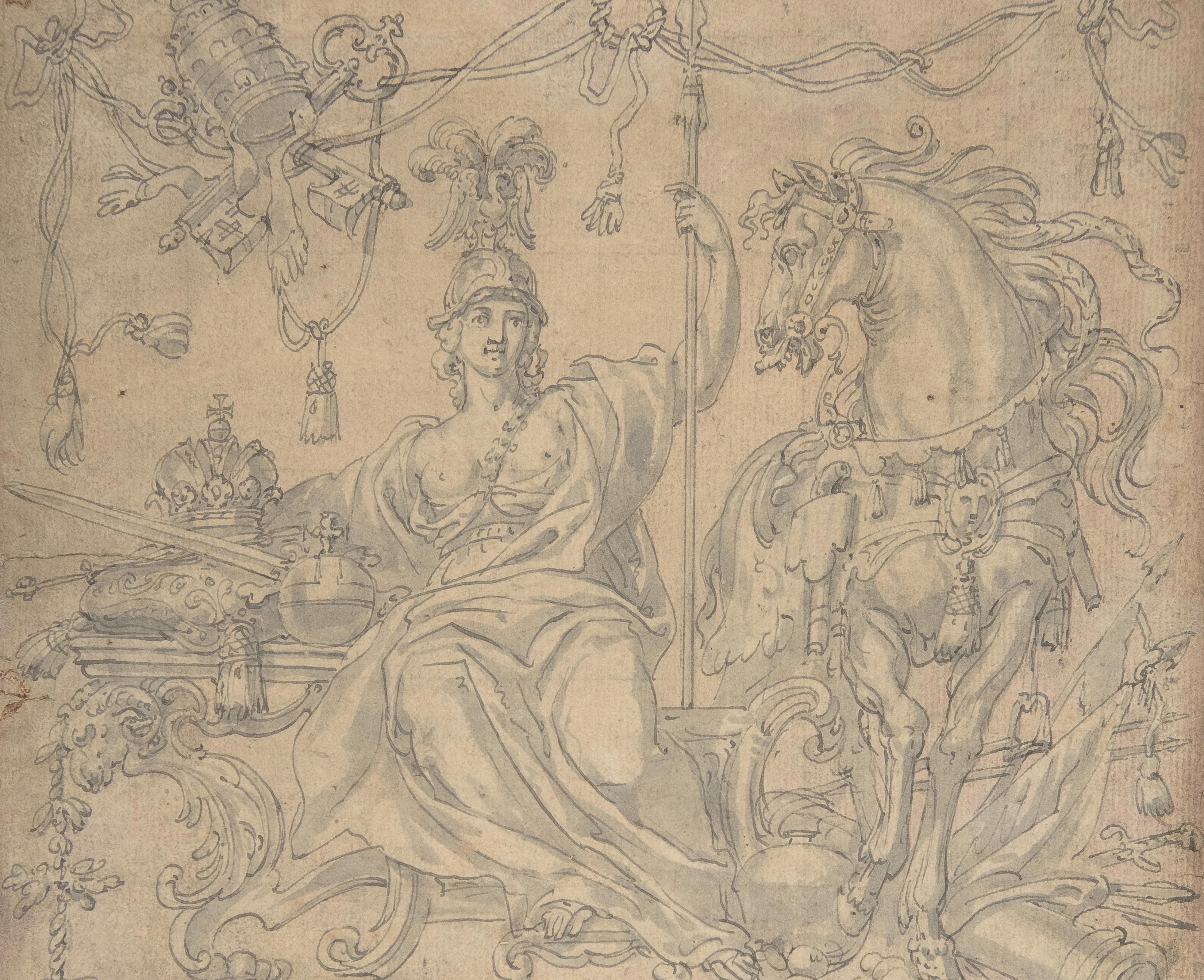
This introduces the pillar of Myth after having introduced Hellas and Rome through the sacra publica (sacred rites of the city), or civil theology the classical republican tradition actually used. It involves the history of Numa’s rites, the capitoline gods studied in Old Gods of the Unwritten Constitution, Minerva, the fasces, Sol and Luna as measures and as cults, and initiation as a school of the soul rather than as a slogan. This is the pre-liberal depth to the pillar of the republican tradition that reintroduces the history demonstrating that the roots of the modern West are not reducible purely to liberal premises.
A CIVIL THEOLOGY IS THE SET OF PUBLIC RITES, priesthoods, symbols, and narratives by which a city teaches its citizens what it honors and what it will enforce. It is not private belief, and it is not mere decoration added to an already completed political order. In Rome, the rites attributed to Numa bound the early city by sacred law and a calendar that ordered both public and private time. The Capitoline cult and the associated priesthoods made the worship of particular gods a civic duty. The fasces displayed before the magistrates combined the power to punish with the visible union of rods that could not be broken singly. Minerva stood for the skilled intelligence required in counsel and in making. Sol and Luna functioned as measures of the year and as objects of public cult. Livy (Ab urbe condita 1.18-21) and Cicero demonstrate that these practices instructed citizens in the city’s obligations and in the limits of private will.
The method of a civil theology is formation through repetition and visibility. Citizens learn the city’s claims by participating in its rites, by observing its magistrates under their insignia, and by hearing the stories of its founders repeated at public festivals. INITIATION, where it appears in mysteries or in later philosophical schools, intensifies the same method. It requires preparation, silence, staged passage, and a return to ordinary life under a new obligation. The knowledge transmitted is not a portable doctrine that can be announced without cost. It is a discipline that alters the person who undergoes it. When later associations spoke of initiation they were drawing on this older claim that certain loyalties and certain kinds of judgment are produced by regulated passage rather than by argument alone.
Civil theology is therefore distinct both from revealed religion enforced as public law and from a purely contractual account of political obligation. This layer is the history preceding liberalism, because it did not begin from individual rights or from a contract among already formed persons. It begins from the rites, the gods, the symbols of magistracy, and the disciplines of initiation that make a people capable of recognizing a common thing. The Roman examples show the form in its classical shape. Later republican and revolutionary movements retained fragments of the same method in oaths, public calendars, and voluntary orders even when they rejected establishment. This part of our pillars states the method so that the particular myths, rites, and symbols can be read as instances of a single civic practice rather than as isolated curiosities. A civil theology is the education a city gives itself in what it is and what it requires of those who belong to it.
Recognition of the sacra publica or the public rites, the measures of gods such as Sol and Luna, the symbols of magistracy, and the initiatory disciplines that first formed a people capable of recognizing a common thing interrupts any claim that liberalism constitutes the total or originating framework of the modern West.
Liberal settlements arise later and operate by different premises. They begin from individuals already conceived as rights-bearing persons, or from a contract among such persons, and they treat the common thing largely as an arrangement for securing private ends. The classical sources, by contrast, locate the capacity for a common thing prior to any such arrangement. Cicero in De Legibus (2.19-22) treats the ancestral rites, the temples in the cities, and the public consecration of Piety, Virtue, and Good Faith as the conditions that make a commonwealth possible; and the augural auctoritas precedes and constrains the acts of magistrates. Polybius (6.56) attributes the stability of the Roman constitution in part to the carefully maintained fear of the gods that Numa introduced through processions, dances, and the distinction of days. Festus and the pontifical tradition distinguish the sacra publica (performed publico sumptu pro populo) from private observances precisely so that the city as a whole is taught what it honors and what it will enforce. None of these begin from individual rights or from a pact among already formed persons.
What modern liberal orders retain in the public oaths, residual calendars, the vestiges of magistracy, and voluntary associations that echo older initiatory forms are selective fragments, and do not generate the underlying capacity. Once that capacity is understood on the terms of the classical sources themselves (the sacra publica, the pax deorum, the grades of the mysteries as a school of the soul rather than a slogan), LIBERALISM appears as a subsequent settlement that can preserve pieces of an earlier inheritance without being able to produce it. The totalist sense of liberalism’s influence is thereby broken: the modern West is not reducible to liberal premises, because those premises presuppose, and cannot themselves create the prior formation of persons able to recognize and sustain a common thing.
This does not require the restoration of any particular ancient cult. It requires only the refusal to treat the liberal settlement as self-originating or exhaustive. The rites, the gods, the fasces, the solar and lunar measures, and the initiatory disciplines remain the denser stratum beneath later arrangements.