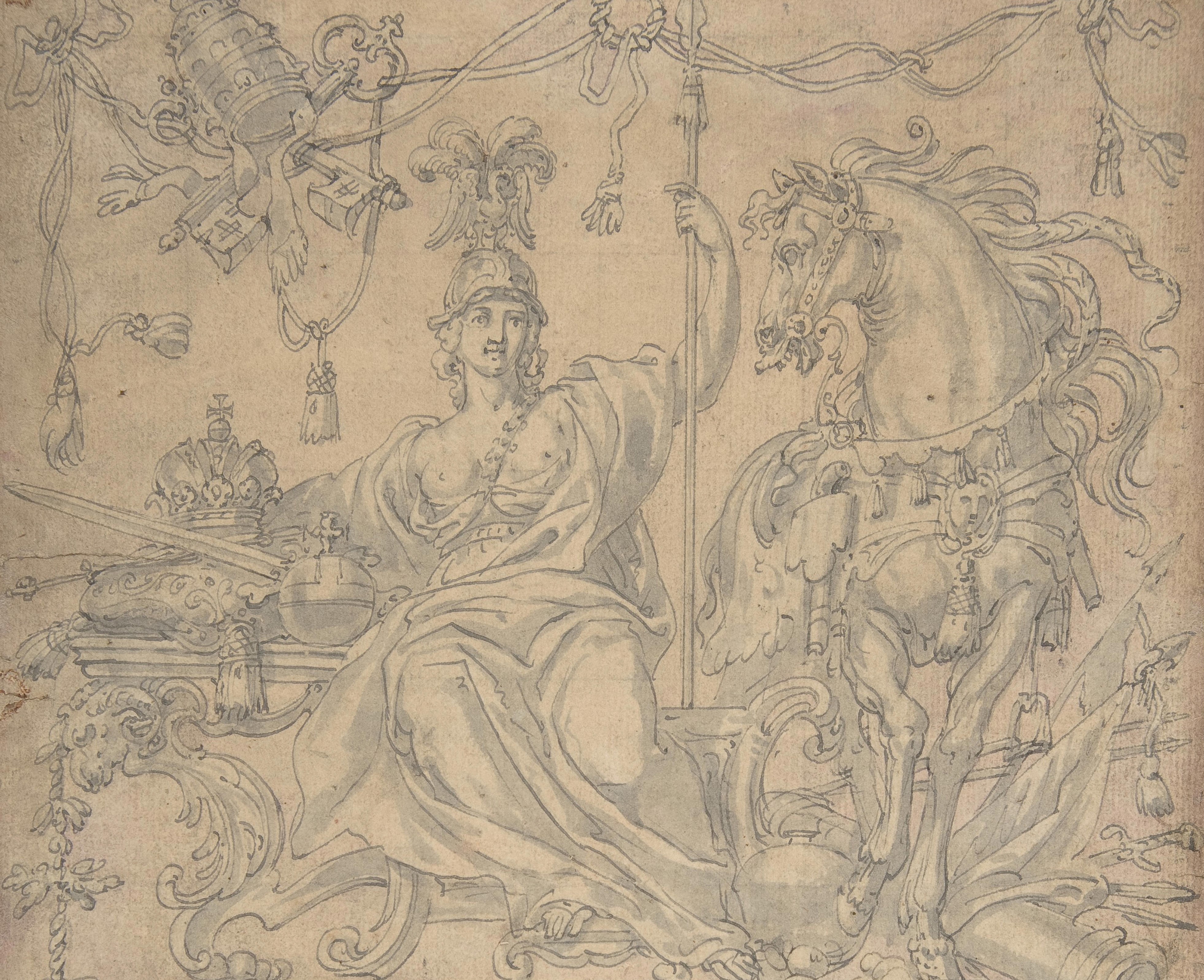
FIGURES LIKE BLAKE, SHELLEY, HUGO, PROUDHON AND LATER BLAVATSKY did not simply use Lucifer as a symbol of inner light rather than evil. Their counter-readings effectively fused three pre-Christian light-god archetypes: the Orphic first-born illuminator Phanes (or Protogonos), the ambitious son of the sun who falls from the chariot (Phaethon), and the defiant bringer of fire and knowledge who suffers for humanity (Prometheus) into a single symbol of enlightenment and resistance.
What later became the dominant Christian figure of Lucifer was not a single invention but the cumulative result of interpretive layering that transformed an ancient motif of the light-bearing celestial rebel into a cosmic origin story for evil. The Christian invention of Lucifer as a demonic figure was further historically used as an anti‑republican polemic, and Romantic Socialists and Theosophists offered a counter‑reading that reclaimed Lucifer as a symbol of enlightenment, liberation, and human dignity.
Romantic Socialists and Theosophists reframed Lucifer not as a demonic enemy of humanity, but as a symbol of intellectual illumination, moral courage, and resistance to authoritarianism. The Christian Lucifer narrative was used rhetorically to discourage political rebellion, delegitimize republican movements, and frame dissent as “satanic,” but the effort to reclaim the motif of the Light-Bearer (or of Light-gods) directly challenged the Christian polemical use of “Lucifer” as a warning against rebellion, dissent, and republican ideals. Jewish exegesis, by contrast, largely retained the original political reading of Isaiah 14 as a taunt against a human tyrant rather than a fallen angel. In sermons, royalist tracts, and counter-revolutionary literature from the English Civil War through the French Revolution and 1848, the Lucifer motif was routinely deployed to equate republican dissent or socialist agitation with satanic pride against divinely ordained order.
The era of reclamation was an authentic intuition and came to our period through essentially Renaissance and Enlightenment reinterpretations of Greek cosmogony through the lens of early physics. The specific extra-biblical myth of LUCIFER with Mesopotamian and Canaanite roots distorts about eighty percent of the original idea and motifs from Near East traditions. The socialist and theosophical sociological and metaphysical reinterpretations found in our modern periods of LUCIFER extends the dialogue beyond early physics; it is basically a combination of the gods Phaeton and Prometheus, which represent mankind suffering and shackled to the world of physical matter.
The soteriology from it therefore argues, that the mind typically perceived as dual is our savior and redeemer from mindlessness and animalism. This interpretation functions, just as the Christian spiritualization of Isaiah 14:12-15 later served as a theological argument against divine-right absolutism and unrestrained political rebellion. The Enlightenment and Romantic view serves as a metaphysical and sociological critique of modern materialism, capitalism, and industrial dehumanization, reclaiming the light-bearer as a symbol of human intellectual and moral liberation. It does not function as a means to teach or spread a so-called doctrine of Luciferianism, which is equated with antinomianism. This immediately dismantles the 18ᵗʰ century counter-revolutionary polemic.
Precisely because the Christian spiritualization of the morning-star figure had been weaponized against political and intellectual rebellion, Romantic Socialists and Theosophists found in the older pre-Christian light-god traditions a powerful symbol for reversal and reclamation.
In the occult philosophy of Blavatsky’s framework, a technical distinction is drawn between the primordial AETHER (the monistic cosmic substance) and the physical ether of James Clerk Maxwell’s theory and 19ᵗʰ century physics. It is its astral light or sidereal FORCE aspect, that Eliphas Lévi had identified with Lucifer, which he described as the generative force which the mage could direct. Blavatsky tries to remedy what she considered an error of Lévi due to his Christian conditioning, and thus philosophically attempted to re-identify this light-principle with the AETHER itself, dissolving Christian dualism into a single cosmic substance from which the first principle of illumination emerges. From the macrocosmic view and not from our plane or angle, the sidereal or astral light is part of the AETHER. Hence, not separated as in an anthropomorphic dualism of a God above and a Satan below, or two dual beings (or twin brothers), but like the threads and knots of one string. These ideas evolved gradually across three different traditions: classical Greek metaphysics, medieval and renaissance alchemy, and 19ᵗʰ century occultism.
The Christian concept of Lucifer as a high-ranking (or popularly “first created”) beautiful angel who fell due to pride significantly distorts its historical roots. It transforms a poetic, political taunt rooted in Canaanite astral mythology into a cosmic origin story for evil, while selectively borrowing and inverting motifs from broader ancient Near Eastern traditions and Hellenistic mystery religions. The Bible itself provides no basis for Lucifer as the “first angel created by God” or even a direct identification with Satan in the way later tradition developed it. The counter‑reading most recognized in the 19ᵗʰ century dismantles the Christian polemical invention of Lucifer as a symbol of rebellion against divine monarchy — a narrative historically weaponized against republican ideals. By restoring the motif to its positive pre‑Christian depictions, they reclaimed a symbol of enlightenment, reason, and human liberation.
“So we have the prophetic message more fully confirmed. You will do well to be attentive to this as to a lamp shining in a dark place, until the day dawns and the morning star rises in your hearts.” (2 PETER 1:19)
In this light, the 19ᵗʰ century revival can be read as a return to an earlier, non-dualistic valence of the same celestial ‘morning star’ image that Christian tradition had inverted into a warning against pride and rebellion.