ORPHIC AND PRE-OLYMPIAN MYTHIC ORIGINS
This re-focuses highly on the Orphic and Pre-Olympian philosophical and mystical contexts, then briefly leads into its recovery through early Physics and Renaissance and Enlightenment Occultism.
INTRODUCTION
LUCIFEROUS DESCRIBES THE RADIANCE OF THE FIRST PRINCIPLE born from the primordial depths in the ancient Greek cosmogonies. Here we examine the meaning of the light-bringer, or morning star, through the Graeco-Roman MYSTERIES, known under the titles Phánēs (Φάνης), ARCHEUS, Prōtogonos (Πρωτογόνος), Érōs (Ἔρως), Erikepaîos (Ἠρικεπαῖος), Antaugḗs (Ἀνταυγής), and in certain aspects Apollōn (Ἀπόλλων) Phosphóros. The figure later called Lux (or LUCIFER) the “light‑bearer” corresponds, beyond the later Latin and Christian reinterpretations of Eōsphóros (Ἑωσφόρος) and the planet Venus, to a far older Orphic concept: the primordial luminous deity Prōtogonos, the “First‑Born” who emerges from Khaós (Χάος). PHÁNĒS represents the mythic archetype of the “First‑Born” LIGHT, the primordial luminous deity who appears at the beginning of Orphic Theogony. In the Orphic tradition Phánēs is the myth of the “first-born” light and is the idea of the first-born god in archaic references to Light-gods. PHÁNĒS the radiant principle that emerges from Khaós (Χάος) and the cosmic egg, inaugurating manifestation, order, and the generative unfolding of the gods.
FROM THE ORPHIC VISION TO ENLIGHTENMENT OCCULTISM
What I refer to as luciferous Prōtogonos, based upon foundational Greek mythical and philosophical characters and without any later innovative overlays, or allusion to the Christian view of EVIL is:
- DEITY, in the form of Aithḗr (Αἰθήρ) and in its essence, MAGNES (Lat. prima materia), or the germ or seed (sperma) of all things — the offspring of the primordial state or the cosmic egg. It is the first to appear and illuminate the hidden. Modern Theosophy referred to it as “Son of the DARKNESS,” the Son of CHAOS, or Unknown Space.
- The first (eldest) God (principle) to emerge out of the depths of the primordial WATER (Mother-SPIRIT) or the undifferentiated Khaós (Space), and the primary aspect of generative power, or the prima materia. The mystery is referred to as “Mother, Father, Son” or androgynous principle depending on the variant of the myth. The “first-born” is technically MAGNES, the active seed in the ante-genesis philosophical theogonies. This is the combination of creative potency in the ancient mythologies. The Father and Son aspects are referenced often as light or fire-gods. In the theosophic and Orphic vision, the first stage of the cosmic scene is luminous (or fiery) and generative, and from this are born worlds and the divine generations.
The generative radiance of Prōtogonos or its illuminating power pervades the emerging Kósmos (Κόσμος). Among the Medieval Alchemists and Christian Cabalists, this radiance becomes reinterpreted as the shadow of the Prōtogonos, or its magnes (a concept of the Medieval Alchemists and Oracles) is the sidereal LIGHT. This COSMIC ELEMENT or force is called Lucifer by Eliphas Levi. Levi termed it Lucifer through Christian terminology, further stating, that this element can generate force, which can be used by the mage. In the Romantic re-interpretation, it is tied to a theory about the medium of light, and not any Biblical angel. In the original idea of the Orphic hymns, this cosmic light and creative force is what the ancients celebrated in the mysteries. Thus, romantic and poetic re-interpretations of the light-bringer as a heroic or civilizing figure essentially find their root in genuine Greek mythic motifs, such as the bestowal of fire and arts. There is profound ancient Greek source material for the light-bringer as benefactor and revealer, quite apart from later theological inventions. Technically he can be interpreted through the lens of culture-heroes because the light-bringing myth partly has its roots in that of Promētheús (Προμηθεύς), the bringer of divine fire to humanity. Our explanation bears the true meaning preserved in the Orphic and philosophical traditions.
Between the pure Aithḗr (AETHER) and the lower airs lies the various stages of manifestation. It is this illuminating and generative force, which the Orphics celebrated as Phánēs, that brings light, order, and life. The Theogonies and ancient theology demonstrate a psychic, noetic, and somatic meaning to this principle on the hidden side of nature.
The “first-born” was the primal radiation from the Absolute in the Orphic sense. Before the Gnostics, Hermeticists and other later developments, the classical Roman poets taught that this was Apollo’s light, or the light of manifestation itself. Interestingly, this light was known as Phánēs, and its ancient myth and the hymns tell us that this light also exists within Man as the inner generative fire. The philosophical interpretation of the myth is thus accurate and profound.
In the ancient theology of Orpheus as set out by Damascius on Hieronymus and Hellanicus and the Rhapsodies, Athenagoras, Proclus, the Orphic Argonautica, the Kern fragments, and Orphic Hymn 6, the primordial principle, or the generative WATER (Ὕδρος) and the matter of the DEPTHS, from which Earth was solidified produces its first offspring, Intelligence and Light as the incorporeal god Phánēs (Φάνης), also named Prōtogonos (Πρωτογόνος), the shining one who first appeared (ἐφάνη) in the divine Aithḗr (Αἰθήρ), “son of Αἰθήρ” in the poetic fragments, from whom proceed the πρωτογόνοι, the “first-born hosts” whom the ancients called theos (θεοί).
THE DÝNAMIS OF THE INITIATE
This is the universal generative cause (ἡ γεννητικὴ αἰτία), symbolized as bisexual in its nature, the primordial power of the depths originating all beings and pervading the cosmos. Its active Power, the revealing and illuminating principle known to the Greeks as the light-bringing intellect (νοῦς) or the daimonic force in its highest manifestation, is the secret wisdom of the divine Spirit. Through communion with this power or the genius of the god, the μύστης or initiate (mystic, receptor or oracle) assimilates the supernal light and wisdom and is in a sense invested with degrees and portions of its illuminating and generative virtues.
And verily, that power is PHÁNĒS (Φάνης), the light of Apollo, of manifestation and the first principle made visible, the radiant intellect that shone forth from the silver egg, the noumenal (first, primal) FIRE that was made alight by generative friction (ἐκ τριβῆς), or the mighty force of the primal winged dragon, the undecaying TIME or Chrónos (Χρόνος). This generative force is the active Power of the Great GOD, the ineffable source prior to all.
In the Hieronyman account, the cosmic egg is broken by friction, and PHÁNĒS, whose name carries the “first‑appeared” or first‑born etymology, emerges as son of Aithḗr. As the bringer of LIGHT and INTELLECT, his bisexual generative form symbolizes total creative potential, while the classical testimonia describe his radiance breaking forth from the primordial WATERS and DARKNESS.
THE COSMOGONICAL PHASES
In the Orphic theogonies as preserved and philosophically expounded by the ancients, principal aspects and stages appear in the cosmogonic process:
(a) KHÁOS: There was the termless time of Eternal NIGHT (Νύξ) when “Nought Was” as a pregnant potential, or undifferentiated expanse (i.e., the pre-aetheric void); then
(b) THEÓS: the CREATIVE GOD (a Unity of Potencies) evolves out of KHÁOS, the primordial state; and
(c) KÓSMOS: the visible, and manifested Universe, whose first condition is fiery, luminous and ordered through the light of manifestation.
From Kháos arises Theós, and from Theós the ordered Kósmos.
This is why the unrevealed principle is identified with the hidden depths or ETERNAL NIGHT in its unrevealed aspect. KHÁOS-THEÓS-KÓSMOS correspond to the combined nature of the circling winged serpentine Ananke (Ἀνάγκη) together with undecaying Chrónos (Χρόνος), collectively figuring the ONE UNKNOWN source (the Unrevealed God, or SPACE). In (b), THEÓS encompasses the ordering principles and the succession of the gods together with the phases or cycles of generation. The phases of the divine interpenetrate with TERMLESS TIME (Chrónos), or the ordered field of manifestation that unfolds from the primal cause.
The ancient commentaries and philosophical readings elaborate upon the Orphic verses and hymns, comparing the notions within Greek tradition itself. They set forth that the light-god called in the ancient mythologies the “first-born” (Πρωτογόνος) god is the first radiation to emerge from the primal generative principle, or the androgynous or unified depths, symbolized in the egg fashioned from the waters or in the misty darkness of Night or Nýx (Νύξ) in the initial stage of cosmogony. This conception belongs to the classical Orphic theogonies of the Hellenistic and earlier periods.
In the Greek cosmogonies we find the same sequence of formative stages arising from the passive and ineffable principle within termless TIME, as exists in the Jewish Kabbalist and Hindu cosmogonies. In the subsequent stage the active period commences, in which the one essence renders Itself visible, then unfolds from the Eternal Cause its latent power, and thirdly becomes an active generative force. All of this proceeds from the generative source of the gods, the “mother of all” the gods, the “Soul of souls,” the primal power that moves within or upon the primeval Khaós (Χάος) or the WATERS (Ὕδρος) of “the Deep.”
ORPHIC HYMN TO PROTOGONOS (PHÁNĒS)
The Orphic hymn to Prōtogonos preserves the living invocation:
“O Mighty first-begotten [Prōtogonos], hear my pray’r, two-fold, egg-born, and wand’ring thro’ the air, Bull-roarer, glorying in thy golden wings, from whom the race of Gods and mortals springs. Erikepaîos, celebrated pow’r, ineffable, occult, all shining flow’r. From eyes obscure thou wip’st the gloom of night, all-spreading splendour, pure and holy light. Hence Phánēs call’d, the glory of the sky, on waving pinions thro’ the world you fly. Priapus, dark-ey’d splendour, thee I sing, genial, all-prudent, ever-blessed king, With joyful aspect on our rights divine and holy sacrifice propitious shine.” (Hymn VI to Protogonus, or Phanes, Thomas Taylor tr., The Mystical Hymns of Orpheus, London, 1792)
This hymn explicitly celebrates the wiping away of the dark mist, the spreading of pure and holy light, the golden wings, the egg-born nature, and the origin of gods and mortals. Phánēs is the radiant scion who disperses obscurity and brings manifestation.
The Derveni Papyrus, an ancient commentary, states of the First-born king:
“Of the First-born king, the reverend one; and upon him all the immortals grew, blessed gods and goddesses and rivers and lovely springs and everything else that had then been born; and he himself became the sole one.” (Damascius, On First Principles, Book I)
Phánēs is hatched from the world-egg by Khrónos (Χρόνος) and Anánkē, or in variant tellings from Hydros and Gaia, or within the aithereal depths. Phánēs is androgynous, winged with gold, often serpent-entwined, bull-voiced, and the driving force of generation and reproduction. His birth creates day and order; and he is the origin of happy gods and mortal men. In the theogonic succession he is later incorporated or “swallowed” in certain myths by Zeús so that the creative power passes into the new ruler of the manifested world.
The ancient Platonists and interpreters of the Orphic myths such as Proclus, Damascius, and Hermias read Phánēs as the first intelligible intellect, the boundary of the intelligible who unfolds himself into light and illuminates the intellectual gods with intelligible light. He is the source of light and intelligence for the Kósmos, bringing light into darkness and order out of chaos. Physically he is Light; and metaphysically he is INTELLECT — the Sun of the Intelligible world.
This aligns with broader Greek philosophical currents. In Hesiod’s Theogony, Érōs appears early as a fundamental binding and generative force after Khaós and Gaîa. Orphic tradition identifies or closely equates Phánēs with this Érōs. Aristophanes’ Birds presents a comic yet revealing cosmogony of Night laying a wind-egg from which golden-winged Érōs springs. Plato’s imagery of the Good as the sun that grants both being and visibility, and the ascent from the cave’s shadows into true light, echoes the same theme of illumination as revelation. Heraclitus’ fire as steering logos and Anaxagoras’ Noûs as the ordering intelligence of the cosmos further resonate with the idea of a luminous, intelligent first principle.
The light-bringing motif appears across Greek myth in beneficent forms. Promētheús bestows divine fire (the light of civilization) upon mortals; Eōsphóros or Phosphóros heralds the daily dawn; and Apollōn Phosphóros and Phoîbos embody ordered light, harmony, prophecy, and intellectual clarity. In the Orphic mysteries Phánēs stands as the primordial archetype of all such luciferous or radiant principles — the first to shine forth, the generator of life, the revealer of the hidden.
CONCLUSION
Orphic Hymn 6, the fragments preserved by Proclus, Damascius, and the Orphic Argonautica all taught about a “first-born” light-god (Πρωτογόνος / Φάνης) as the radiant, creative, and illuminating foundation who wipes away the gloom of night and spreads pure, holy light. Thus the ancient Greeks understood the “first-born” light-god as the positive, creative, and illuminating foundation of the cosmos itself. The luciferous Prōtogonos who is Phánēs, born from the Aithḗr is not an invention of later ages but the mystery of the Orphic tradition: the radiant principle that wipes away the gloom of night and spreads pure, holy light across the world.
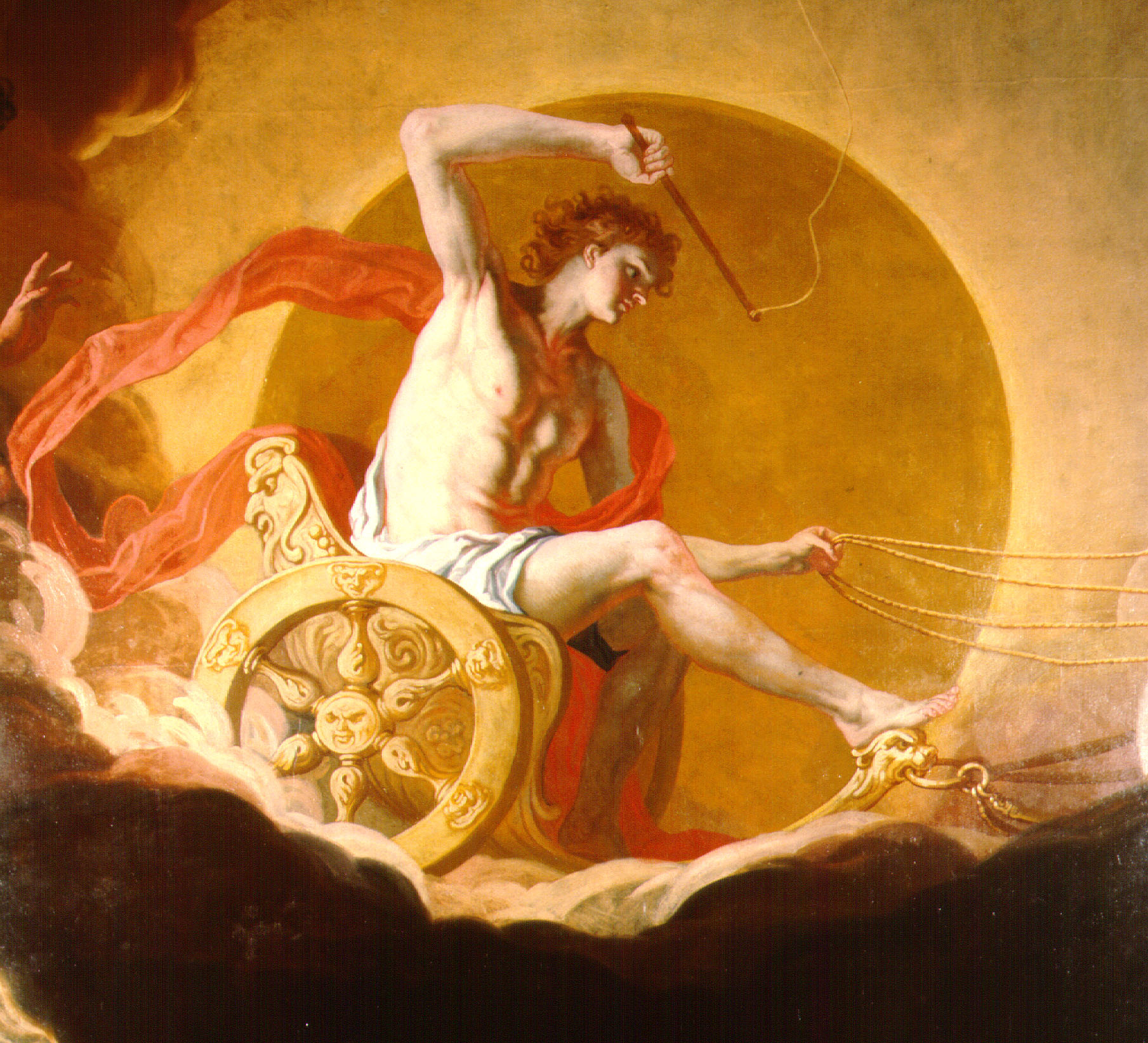
PHÁNĒS, also called Prōtogonos, the shining one who first appeared (ἐφάνη) in the divine Aithḗr, emerges from the silver egg fashioned in the primordial waters or in the misty darkness of Νύξ. Golden-winged and androgynous, bull-voiced, he is the first visible manifestation, the all-shining flower of light, the glory of the sky. From darksome mists he brings pure sight and all-spreading splendor, pure and holy light; hence the ancients name him Φάνης, for by his appearing the hidden becomes manifest and the ordered Κόσμος receives its luminous foundation. In the fragments he is sometimes identified with Phaethon, the shining one, son of Αἰθήρ, yet he remains the single generative cause, at once paternal and maternal in nature, from which the subsequent gods and the visible universe proceed. The primal serpent-dragon (the undecaying Χρόνος with Ἀνάγκη) encircles the egg and brings it to birth; from that birth shines forth the first light that orders and illuminates all things. In this the Orphic verses and the philosophical commentaries speak with one voice: the light-god is the radiant beginning of manifestation, not a later dualistic invention, but the authentic first radiation of the generative depths into visible form.
SIMILAR KABBALIST IDEA IN THE SIPHRA DZENIOUTA
The Siphra Dzeniouta (Sifra de‑Tzeniuta) or the “Book of Concealed Mystery” provides a Jewish mystical formulation of the same archetypal pattern of phases from a hidden nothing to primordial light to emanation and to the formation of ordered worlds. It is one of the oldest and most cryptic sections of the Zohar. Though the Jewish mystical formulation and the Orphic and pre-Hesiodic formulation arise from different cultures, different metaphysics, and different theological frameworks, they were explicitly merged into a single “medium of light” theory by Renaissance and Enlightenment occultists.
The Siphra Dzeniouta teaches about Ain / Ain‑Soph / Ain‑Soph‑Aur, the Ancient of Days (Atika Kadisha), the concealed ether, the great Father-Mother union, the primordial Light‑Bearer and the sparks that become worlds. “Father-Mother” (the ultimate nature, SPACE) is the hidden nameless (secret) DEITY throughout ancient Mesopotamia in its highest philosophical conception, but the aspect of the Mother of All (the Divine Feminine) became suppressed and relegated to lesser roles. The LIGHT-GOD called the “first-born” (Son) god is the first radiation to emerge from Father-Mother (Father-Mother is “Unknown Space”) in the first stage of cosmogony. It has been demonstrated that this exact belief exists in classical Hellenistic and Pre-Olympian mythology.