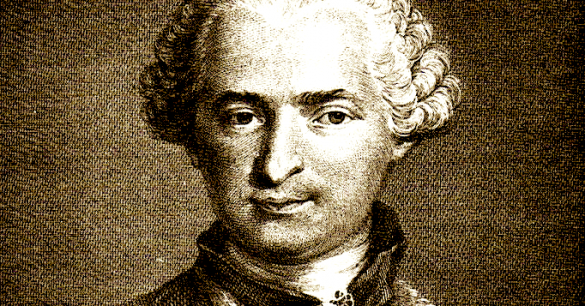
Reclaiming one of history’s most enigmatic figures from the “Prince of Imposters” label and revealing how his life reveals the secret threads of diplomacy, science, initiatic knowledge, and transnational influence that quietly powered the Age of Reason.
- A NOTE ON MISUSE, CONSPIRATORIAL REDUCTIONISM, AND COUNTER-REVOLUTIONARY RHETORIC
- SYMBOLIC UNITY AMONG ESOTERIC ORDERS IN THE EIGHTEENTH-CENTURY
- THE MEANING OF “THE GREAT WORK”
- SUPPORTING MONARCHY, ENLIGHTENED MONARCHY OR CONSTITUTIONAL REPUBLICANISM
- National and institutional context
- Social position and temperament
- Philosophical differences in how the esoteric ideal was understood
- PLURALISM IN THE ORDERS AND HISTORY
- COMTE DE SAINT-GERMAIN IN THE ROSICRUCIAN AND MASONIC NETWORKS OF EIGHTEENTH-CENTURY EUROPE
- EUROPE’S HIDDEN REPUBLIC
- ROSICRUCIANISM AND THE ARCHETYPE OF THE HIDDEN ADEPT
- SAINT-GERMAIN WITHIN THESE NETWORKS
- CONCLUSION ON HIDDEN DIMENSIONS OF THE ENLIGHTENMENT
- REFERENCES
- APPENDIX
A NOTE ON MISUSE, CONSPIRATORIAL REDUCTIONISM, AND COUNTER-REVOLUTIONARY RHETORIC
Before reading the historical analysis that follows, a clear demarcation is necessary. The material presented here examines real 18ᵗʰ century European esoteric and initiatic networks, particularly revived Rosicrucianism and high-degree Freemasonry as complex, historically embedded phenomena involving alchemy, symbolism, intellectual exchange, and informal diplomacy. These networks existed. Some participants held political views, some orders maintained secrecy, and some individuals, including the Comte de Saint-Germain, operated across courts, laboratories, and lodges.
This history does not support, and actively undermines, the conspiratorial frameworks that conspiracy theorists, polemicists, and certain counter-revolutionary ideologues routinely deployed.
The standard move is familiar and intellectually bankrupt: take documented presence and influence, inflate it into a singular, coordinated, malevolent “plot,” then use that invented plot to explain (and delegitimize) the Enlightenment, the French Revolution, liberal constitutionalism, scientific modernity, or any challenge to traditional hierarchies. This tactic recycles the 1790s counter-revolutionary panic literature of the Abbé Barruel and John Robison almost verbatim, full of works that were themselves partisan responses to revolutionary upheaval, not dispassionate scholarship. It substitutes pattern-seeking and hidden-cause reasoning for analysis of actual historical causation: economic crisis, fiscal collapse, intellectual shifts, class tensions, war, and contingent political decisions.
18ᵗʰ century Masonic and Rosicrucian bodies contained monarchists and reformers, Catholics and Protestants, conservatives and liberals, loyalists and critics of absolutism. The Strict Observance claimed descent from the Templars while many of its members served existing crowns. The Order of the Golden and Rosy Cross (Gold- und Rosenkreuzer) orders, founded in the 1750s by alchemist and Freemason Hermann Fictuld, were often explicitly Christian-Hermetic and operated within German court cultures. There was no unified “Masonic” or “Rosicrucian” political program any more than there was a unified “salon” or “philosophe” program, and this internal pluralism is very much often ignored or suppressed by enemies and instigators.
Conflating internal pluralism is exactly what allows both romantic insiders and conspiratorial outsiders to misread the historical record.
In an age of royal censorship, monitored correspondence, and personal-rule diplomacy, discretion was a survival tool for many groups, hence for scientific academies, political factions, religious minorities, and commercial networks alike. The Republic of Letters itself relied on private correspondence that could be intercepted. Treating initiatic secrecy as proof of subversion while ignoring parallel practices elsewhere is too selective.
The Enlightenment and the revolutions it helped shape emerged from broad transformations such as the scientific revolution’s long aftermath, the growth of print culture, fiscal-military state competition, colonial wealth and its contradictions, and the diffusion of ideas about natural rights and rational administration. Secret societies were one vector among many for idea transmission and sociability. These complex events cannot be attributed primarily to “hidden adepts” or “occult networks” and does not hold against an examination of primary records, economic data, and institutional history.
Framing esoteric networks as the hidden engine of unwanted modernity allows polemicists to avoid engaging the substantive arguments of the period, particularly about arbitrary power, religious intolerance, scientific method, and political representation. It substitutes demonology for history and often reveals more about the anxieties of the interpreter than about the 18ᵗʰ century. The adaptability of this rhetorical structure reveals its emptiness as an explanatory tool.
The article that follows treats Saint-Germain and the networks around him as they appear in the sources of their own time, i.e., as one expression of a broader European culture in which Hermetic philosophy, practical chemistry, initiatic tradition, court politics, and informal diplomacy overlapped. It neither romanticizes nor demonizes these currents. It simply restores them to their proper historical weight. Saint-Germain is situated within this order of society as a self-mythologizing polymath and adventurer, which was also often the role of court spies and informal agents who were able to move freely and overhear things in the courts that diplomats could not. Court spies, informal agents, merchant networks, postmasters, cryptographers, and secret societies all functioned like transnational networks. Esoteric groups became important in this period, because members were often scientists, philosophers, military officers and court officials that blended science, mysticism, and politics. They helped shape the Enlightenment, and even the “Republic of Letters” was itself a semi‑esoteric network of intellectuals, or basically esoteric diplomatic networks.
Readers seeking ammunition for anti-Masonic crusades, anti-esoteric moral panics, or nostalgic counter-revolutionary narratives will find no support here. Such readings require systematic distortion, selective quotation, and the projection of modern conspiracy templates onto a period whose actors operated under very different assumptions about knowledge, authority, and social order. The evidence, read honestly, resists reduction to any single hidden hand, whether imagined as benevolent or malevolent. What follows is history, not ammunition.

Subscribe to continue reading
Subscribe to get access to the rest of this post and other subscriber-only content.