ALBERT PIKE CREDITED MASONRY WITH AIDING THE REVOLUTION’S ONSET, particularly moderate phases associated with the Girondists, while later favoring ordered constitutional government under Napoleon as an expression of popular sovereignty rather than restored absolutism. Post-Revolution, French Masonry adapted with some lodges emphasizing republican or liberal values during the nineteenth century, aligning with Pike’s portrayal of the fraternity as a bearer of regulated liberty against both despotism and anarchy.
Pike praised Masonry for advancing beyond earlier systems such as monastic fraternity without political liberty or Christianity’s emphasis on obedience to authority by championing the “three-fold heritage” of liberty (regulated by law), equality (of rights under law), and fraternity (with duties). He credited it with helping introduce these ideas into political life during the late eighteenth century upheavals and sustaining constitutional order afterward. This reflects the documented historical pattern of lodges practicing Enlightenment republicanism through self-rule and civic ethics, influencing participants who carried those habits into larger political arenas.
The connection was one of shared intellectual milieu and practical example, not secret orchestration. Lodges amplified existing currents from philosophes, scientific societies, and political theory. They modeled limited, representative governance and opposition to arbitrary power, which resonated during the shift from absolutist monarchies toward constitutional or republican forms in America and France.
Pike’s interpretation idealizes this legacy to position the Scottish Rite as its philosophical heir, emphasizing balance (law and order alongside liberty) over revolutionary excess. This matches the historical record of Masonry’s role as a prosocial Enlightenment institution that helped normalize republican habits of mind and association in the eighteenth and early nineteenth centuries.
MORALS AND DOGMA
Albert Pike directly engage with and philosophically frame the core motto of the French republican revolutions — “Liberté, Égalité, Fraternité” in Morals and Dogma in his lectures on the degrees about the Fellow Craft and in Degree XIV, Grand Elect, Perfect and Sublime Mason). He presents these ideals as part of Masonry’s mission, with important qualifications that align with ordered republicanism rather than unchecked revolution or anarchy.
Pike states:
“Christianity taught the doctrine of FRATERNITY; but repudiated that of political EQUALITY, by continually inculcating obedience to Caesar, and to those lawfully in authority. Masonry was the first apostle of EQUALITY. In the Monastery there is fraternity and equality, but no liberty. Masonry added that also, and claimed for man the three-fold heritage, LIBERTY, EQUALITY, and FRATERNITY.”
He continues by describing this as a profound development. Man is supreme over institutions, not vice versa. Tyranny and usurpation become enemies of the human race; and creates a broad duty toward free government, free thought, free conscience, and free speech. He notes that this truth, when perverted, can become the “Gospel of Anarchy,” but Masonry comprehended it early and supported constitutional order.
In the 14th Degree material:
“In every age, its device has been, ‘Liberty, Equality, Fraternity,’ with constitutional government, law, order, discipline, and subordination to legitimate authority.”
Pike ties Masonry to these principles while insisting on regulated liberty (by law), equality of rights in the eye of the law, and fraternity with duties and obligations. He credits Masonic influence with aiding the French Revolution in its more moderate phases (e.g., Girondists), then sustaining ordered government under Napoleon as an expression of popular sovereignty rather than restored monarchy.
This is not a casual mention, because Pike is presenting these as central to the philosophical and moral project of the Scottish Rite and its ties to the republican tradition. He positions them as an advance in human development beyond monastic or purely religious fraternity-equality lacking political liberty, and beyond despotism.
REPUBLICANISM AND UNIVERSALISM
This reflects a clear expression of republican thought in the Enlightenment tradition, with opposition to arbitrary power and despotism; emphasis on constitutional government, law, and ordered liberty; and a vision of human progress through moral and civic virtue.
It aligns with the spirit of the French revolutionary motto, which crystallized the aspirations of 1789 and later republics, even if Pike writes as an American post-Civil War thinker in 1871. He rejected both absolute monarchy and aristocracy and anarchic excess, favoring a balanced republican framework. This is consistent with broader Masonic engagement with Enlightenment ideas that influenced both the American and French revolutions.
Morals and Dogma as a whole is universalist in its method as a vast syncretic synthesis drawing from Egyptian, Greek, Jewish, Christian, Kabbalistic, Islamic, and other traditions to teach moral allegory, equilibrium of forces, and the pursuit of LIGHT, or knowledge and virtue. It promotes a philosophical brotherhood that transcends narrow sectarianism, even if 19ᵗʰ century American Masonry practiced racial exclusion in its mainstream bodies.
the Caricature OF PIKE AND ITS LIMITATIONS
Pike (1809-1891) was a Confederate brigadier general who commanded Native American troops in Indian Territory. He supported secession on states’ rights grounds, viewed slavery as a “necessary evil” or defended its place in Southern society, owned slaves (including domestic servants), and post-war opposed Black suffrage, stating views typical of many white Southern elites of the era, e.g., that the white race alone was fit to govern. He also expressed resistance to integrating Prince Hall Masonry.
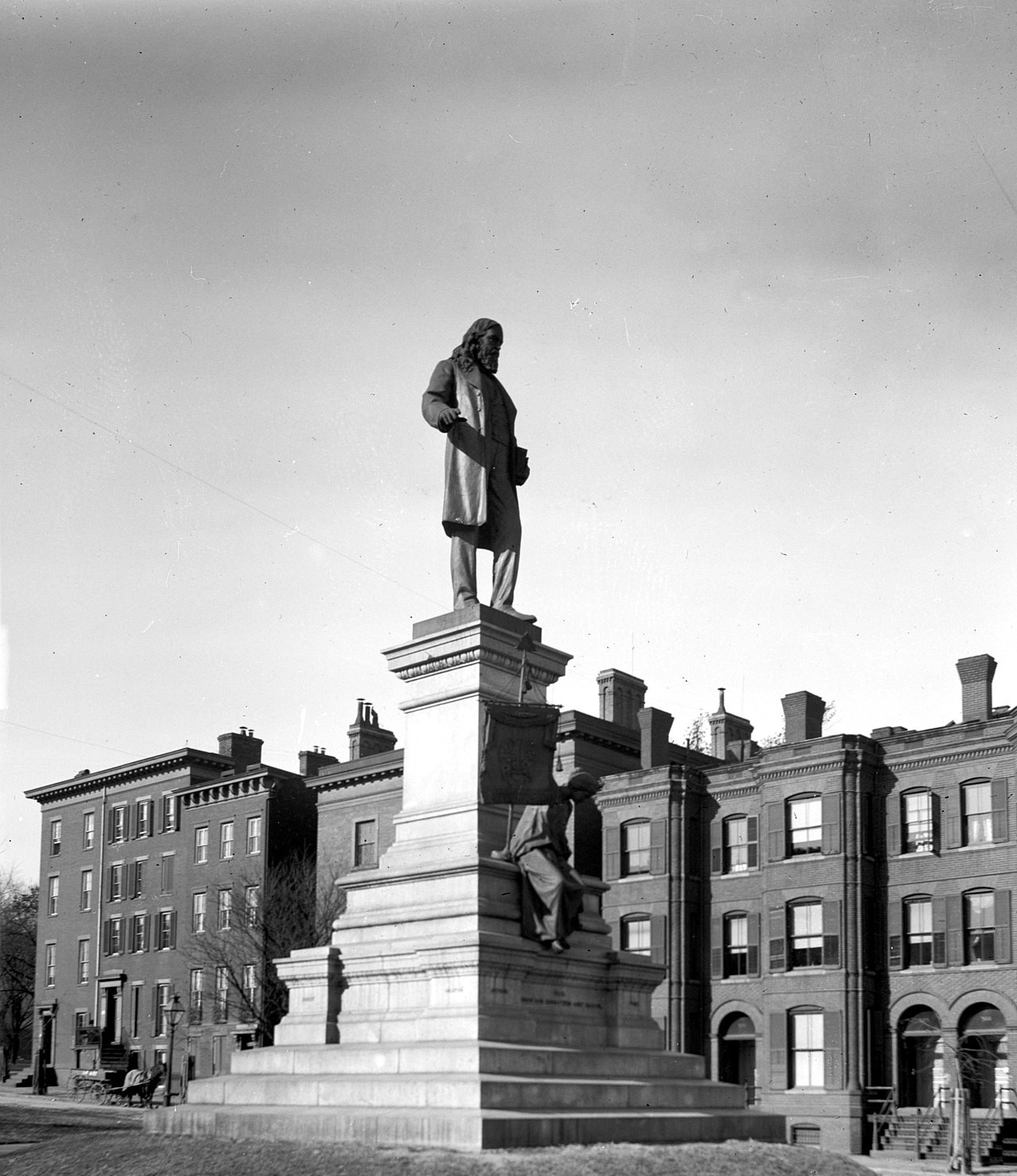
These are documented facts and formed part of the rationale for labeling him during the 2020 protests, when his statue in Washington, D.C.’s Judiciary Square was toppled (though reinstalled by the National Park Service) and burned during the broader push to remove Confederate monuments.
However, reducing him to a “simple Confederate racist” flattens a more complex figure. He was Northern-born (of the Massachusetts area) but Southern by adoption and conviction. As a prominent lawyer, poet, and journalist, he advocated in treaties and relations with Native tribes and became a Sovereign Grand Commander of the Scottish Rite who produced one of the most ambitious philosophical works in American Freemasonry.
Morals and Dogma is not a political tract on race or the Confederacy. It is an esoteric-moral compendium. Many historical figures held contradictory views by modern standards. This side of Enlightenment republican thinkers who were racial hierarchists is no secret. Pike’s political commitments on slavery and Reconstruction coexisted with his Masonic exposition of universal moral and republican principles. This does not erase the former, but it shows the latter was not a superficial or insincere overlay.
The 2020-era portrayal often served contemporary political narratives about monuments and history, prioritizing symbolic condemnation over granular biography. Pike’s engagement with “Liberty, Equality, Fraternity” (qualified by law and order) demonstrates intellectual reach into progressive (for the 19th century) republican and universalist ideas that went beyond a one-note Confederate identity.
Pike does articulate a philosophical grounding for those revolutionary republican ideals in Morals and Dogma, framing them as part of Masonry’s contribution to human advancement. This provides meaningful texture to his legacy and resists simplistic reductions, even while his Confederate service and racial views remain part of the historical record that must be acknowledged honestly. History rarely yields pure heroes or villains, and Pike is a prime example of its contradictions.