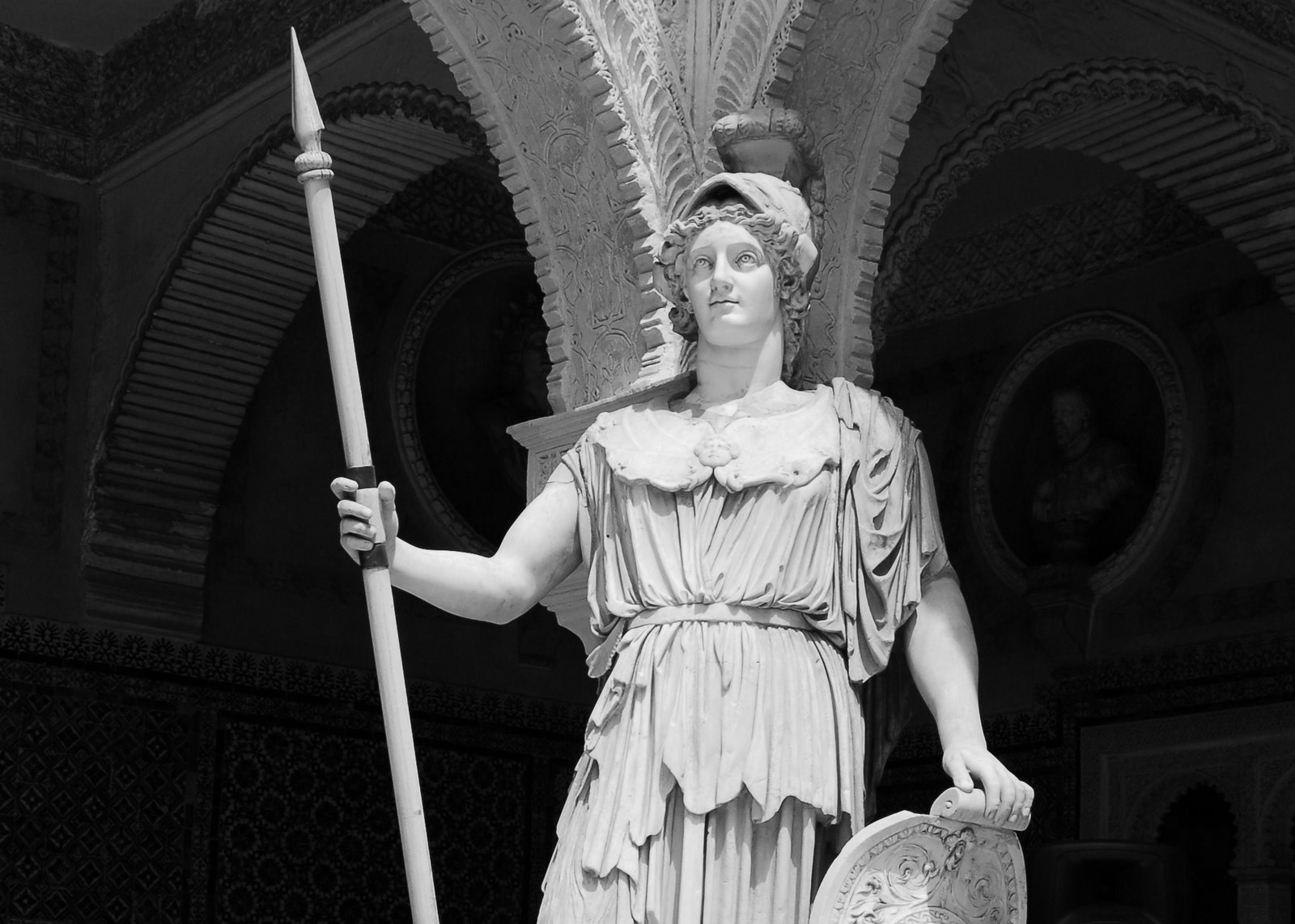

INTRODUCTION TO ZODIACAL SYMBOLISM AND SALVATION IN PRYSE’S INTERPRETATION
We adventure once more into The Restored New Testament (1914) of Theosophist James Morgan Pryse to understand the significance of Athena in Hellenic religion. Pryse’s work reinterprets the New Testament as a Hellenic mystery drama infused with esoteric symbolism, blending Greek mythology, zodiacal astrology, and theosophical ideas. Pryse views Athena as a multifaceted archetype embodying both martial courage (spiritual conquest over lower planes) and noetic enlightenment (inner wisdom unfolding from divine intelligence). Athena with themes of courage as (i) the Goddess of War with dauntless energy and conquest; and (ii) enlightenment as the Goddess of Wisdom, tied to inner unfolding, wisdom, noetic power, and the transmission of fire, knowledge, enlightenment, or illumination. These appear in commentaries on initiatory virtues, zodiacal symbolism, and mythological integrations, positioning Athena as a guardian against false learning and a conduit for the wisdom of the boundless universe, with roots in pre-Socratic philosophy.
CONTENTS
- INTRODUCTION TO ZODIACAL SYMBOLISM AND SALVATION IN PRYSE’S INTERPRETATION
- COURAGE AND ENLIGHTENMENT ON THE ZODIACAL PATH TO POWER
- ATHENA’S GUARDIAN RULERSHIP
- MOUNT OLYMPUS AS THE CELESTIAL WHEEL
- ATHENA’S COUNTERPART: MINERVA IN ROMAN ESOTERIC TRADITIONS AND HER LEGACY
- INTERPRETATION ROOTED IN CLASSICAL HELLENISTIC AND ROMAN ASTROLOGY
- SUMMATION OF ATHENA’S ROLE IN HELLENIC MYSTERY DRAMA
- PRYSE’S INTUITION LEADS TO CLASSICAL COMMENTARY AND ICONOGRAPHY
- ZODIACAL SALVATION IN SIDEREAL MYSTERIES AND THEATRICALITY OF INITIATION

Subscribe to continue reading
Become a paid subscriber to get access to the rest of this post and other exclusive content.