THE LANGUAGE OF REPUBLICAN ICONOGRAPHY

Republican iconography traces a continuous thread from the Roman Republic, where the fasces (a bundle of rods bound around an axe) embodied magisterial imperium, collective strength, and the subordination of individual power to civic order, while the pileus (conical cap of emancipated slaves) signified liberation from bondage through Renaissance humanist revival and Enlightenment appropriation into the visual language of modern anti-monarchical regimes. In the American and French Revolutions this repertoire was radicalized: the soft, forward-curving Phrygian cap (often conflated with the pileus) became the ubiquitous “liberty cap,” mounted on poles, spears, or fasces to declare popular sovereignty and the rejection of crowns; it crowned Marianne, Columbia, and Liberty herself on seals, coins, and revolutionary prints, while the fasces reappeared on the U.S. House mace, Senate seal, and French republican emblems as a reminder that authority resides in the unified people rather than a hereditary ruler. 19ᵗʰ century radical and labour movements further elaborated the vocabulary, with allegorical female personifications, five-pointed stars, and agrarian ploughs in Irish republican flags, preserving the same core insistence on civic virtue, anti-tyranny, and the visual negation of monarchy, even as the American Republican Party independently adopted the elephant in the 1870s through Thomas Nast’s cartoons as a separate, pragmatic emblem of partisan strength.
We will catalogue and go over the history of its iconography and symbolism covering cities, islands, and towns, and advocate for its utilization in our day. This was inspired by my visit to Idra (one of the Saronic Islands of Greece) with my wife, finding there a people and island proud of their proto-republican iconography and its Filiki Eteria (Masonic-linked) heritage memorialized as heroic. I found my discovery of this heritage still alive on this small island a long way from home both inspiring and sad. In my own home country, no one seems to know what I am talking about or seem to care, and then I go to Idra, and a history of struggle and triumph is displayed right in front of my face, and in the bookstores and museum. This history is not merely a history of the struggles of the European people, as you will learn. It belongs to us all.
MINERVA IN AMERICAN REPUBLICANISM, ART AND SYMBOLISM

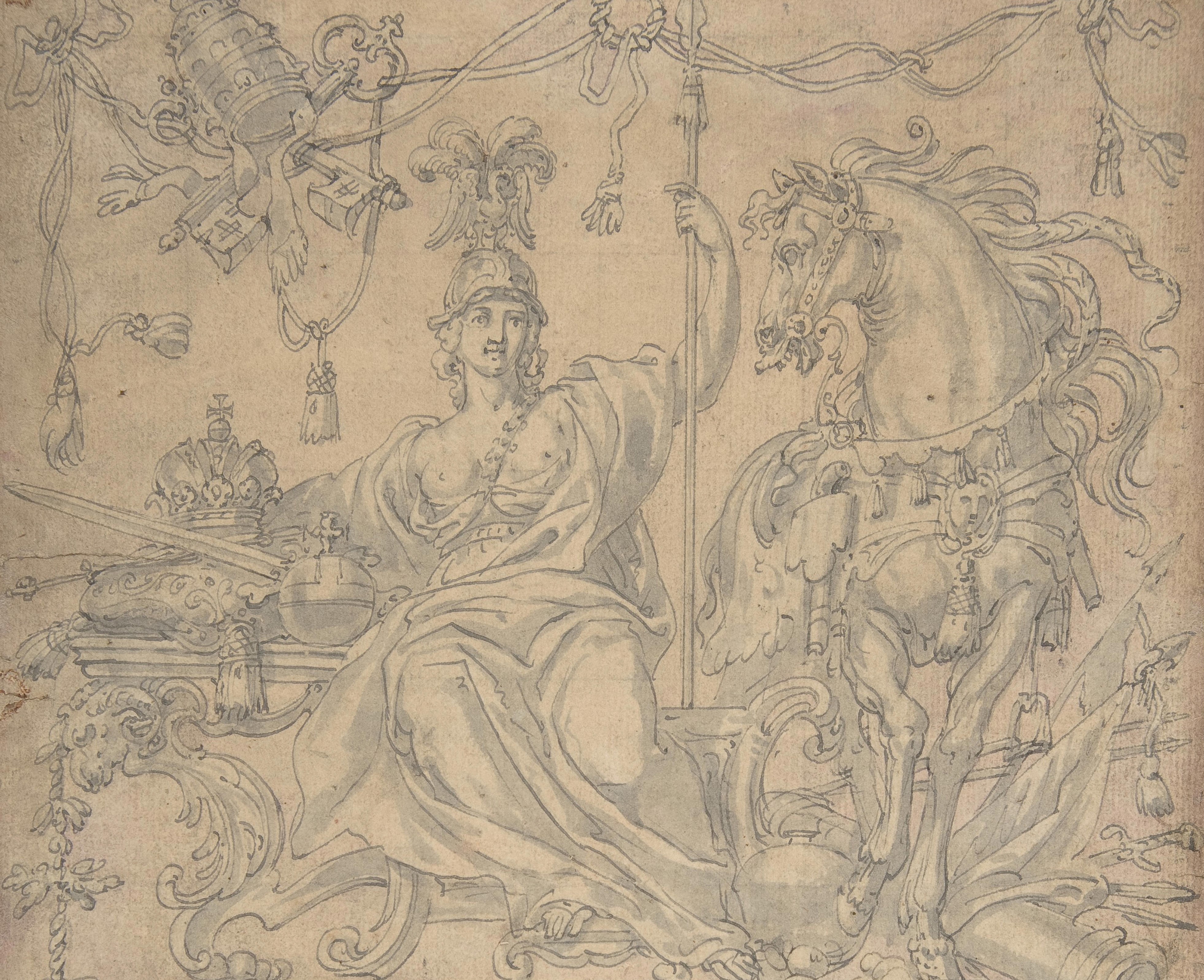
In myth and art, we find MINERVA tempering her opposing principle — the aggressive deity of war, MARS (Ares). The Roman MINERVA was represented in art and myth as a warrior with Valor, Wisdom-Intelligence, and Grace. This Etruscan and Roman goddess was commonly used in early American republican symbolism, inspired by early Graeco-Roman neoclassical art.
The first personification of America was created during the Revolutionary War in a poem by a recently freed woman at the time, an African American woman named Phillis Wheatley (1753-1784).
The Roman MINERVA or Greek Athena in her mythology is a Deity of DIVINE WISDOM (Jove’s INTELLIGENCE, Nous), War, Handcrafts and Art. She is the deliverer, a soteriological (liberator or savior) goddess. Her divine attribute combines Greek meaning of THEOS + SOPHIA.
Where Authority Lies: Republicanism, Liberalism, and Progressive Morality explored how “Early thinkers considered the model of the citizen of Sparta and in Athens when constructing ideals of a New Citizen — the American. “American Romanità: What we lost when we Abandoned Classical Education,” demonstrated that “Americans turned increasingly to the Roman heroes of their youth for pseudonyms, symbols and an iconography that could guide and shape the institutions of their dangerous and unsettling revolution.” Joseph Addison’s 1713 play, Cato embodied the self-sacrificing ideal of liberty that was to represent what the new social virtue of the American would be. This new social virtue was softer than the masculine and martial classical virtues, so that it can be practiced by men and women. This idea of our social virtue is part of the concept of EQUALITY in the Republican motto, which we can actually live up to in our Age more than before and lift each other up.
In Columbia (American Minerva) in Harper’s Weekly “Reconstruction” for Equal Rights 1868, the creator of the symbolism for the Democratic and Republican Party represented another symbol of the Republic, the FASCES as a symbol of Equality and the Abolition of Slavery. FASCES in American republican iconography, as seen on the walls of the chamber of U.S. Congress represents unification, Law, Order, Justice, our constitution and its interdependent institutions, not the Executive Chief as an authoritarian ruler circumventing the Courts. The Chief is an upholder of the Law and a representative of the People and Union, rather than its abuser (The Executive Chief: Unified Role of the Presidential Office in U.S. Government). The sole association in the minds of citizens of the Fasces or the word Republic with authoritarianism, oligarchy, elitism and racism is an abuse and a sign of decay. Vigilantly continue to explain this to the People and educate them as a means to protect the People and Constitution.
Columbia, or Minerva was a symbol of the United States before the Statue of Liberty replaced this, yet both the Statue of Liberty and Columbia represent our values. The image and influence of Minerva as the goddess of wisdom and art survives today used on the seal or logo of many institutes of higher learning (Etruscan Visual Representations of the Birth of Athena and Minerva).