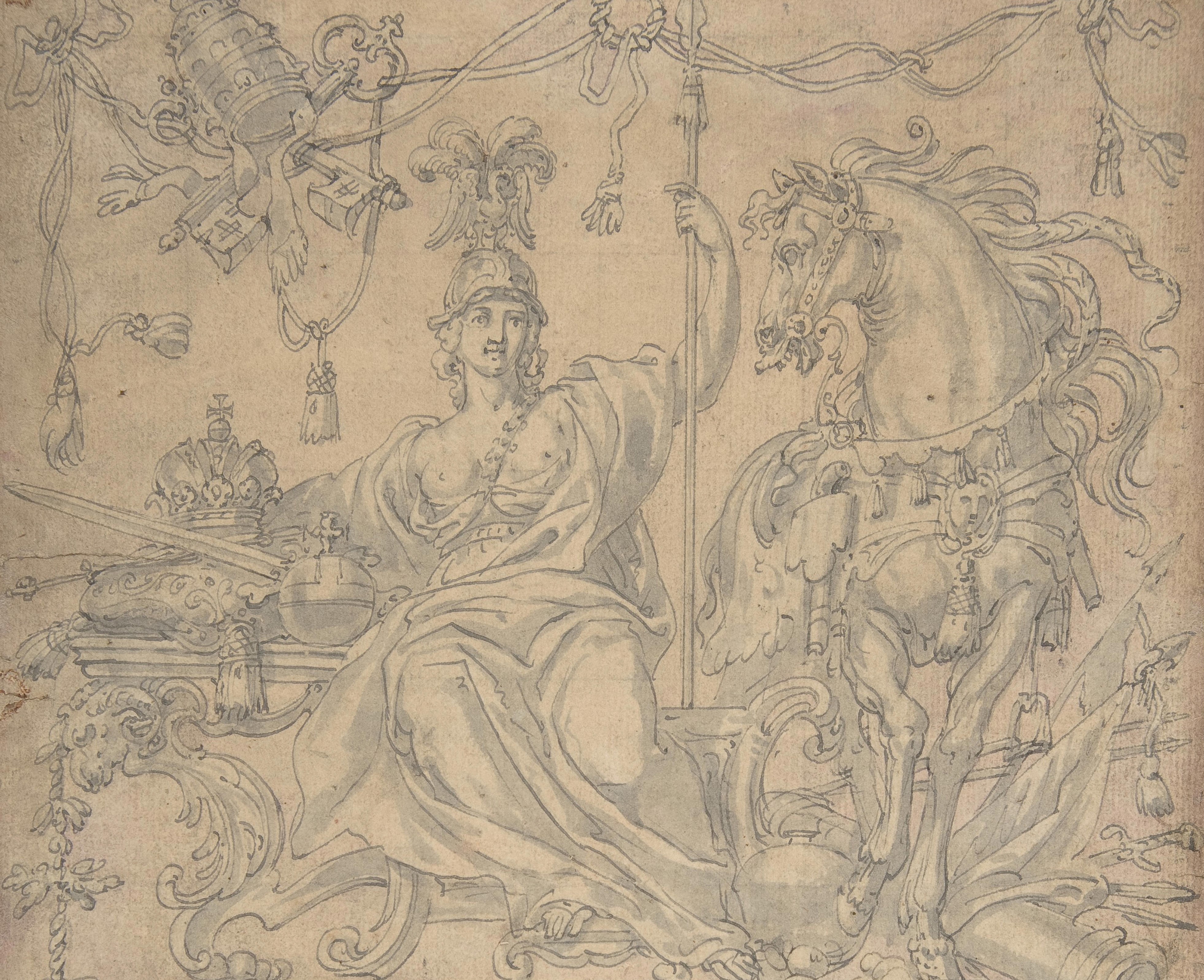
IT IS CALLED THE LIVING REPUBLICAN TRADITION BECAUSE IT IS not bound to any single modern constitution. The ideals recovered in this vision coalesce into a single, coherent one, not limited by modern political assumptions, and advocates the vigor of an essentially pre-liberal (not anti-liberal) republican vocation. Atlas, the Enduring Titan Who Holds the Heavens represents a dense recovery of Atlas as the unwearying bearer of the heavens who keeps the ordered interval open between domination and dissolution, and the constellation of archaic and classical divinities that underwrite non-domination, measure, and civic endurance. It is neither a nostalgic reconstruction of ancient institutions nor a modern ideological program. It is a pre-liberal republican vision of the free city as a continuous labor of upholding an ordered interval, or the space that must be kept open between the collapse of arbitrary domination from above and the dissolution of formless license from below.
It emphasizes the common good under a higher measure that no temporary power may arbitrarily override. Precisely because it precedes and exceeds the later liberal reduction of freedom to individual non-interference or rights-claims alone, I believe it can be strategically applied within the federal and nation-state structures, and particularly in Europe where the republican tradition once possessed greater institutional depth and where its historical memory has not been so thoroughly eroded as it is in the United States.
There has only ever been one revolutionary tradition that actually ended chattel slavery on this continent: the civic-republican tradition of armed citizens refusing domination. Every other ideology is commentary, and even hostile and falsely claim to supersede it. Among the emerging generations, we need a recovery that looks and feels older than the United States itself; speaks with the highest expression of moral authority of Rome, Haiti, and the medieval West combined; and is impossible to dismiss as “right-wing” (too communal) or “left-wing” (too anti-statist). It will aim to produce citizens who are literate, musical, mathematically competent, and utterly incapable of tolerating domination. We seek to root it in the deepest strata of the Western tradition and make it once again the common sense.
The concept is evocative precisely because it sits at the intersection of two classical images that fit the project’s aims unusually well.
The “Atlases of the Republic” paid tier announced on the Support page or Supporting the Living Republican Tradition describe forthcoming roles or identities supporting the ideal — alongside Citizens, Cosmopolitans, Architects, Wielders and Shields of the democratic ideal, Recoverers of Civic Education, and Protectors of the Humanities.
There are two overlapping ideas.
First is the Titan Atlas, the figure who bears the weight of the heavens. In a civic-republican sense, this maps cleanly onto the labor of keeping a tradition of non-domination and civic virtue from collapsing under the weight of materialist, oligarchic, or technocratic pressures. The republican inheritance is public, not private property, but its archival recovery, comparative mapping across centuries and continents, and transmission require sustained material support. Those who underwrite that labor become, in a literal sense, the ones holding the structure up.
Second is the cartographic sense of an atlas: a systematic collection of maps that orients the reader across space and time. Our work is atlas-like in ambition — tracing lineages from Cicero through the Carolingians and Petrarch, the Italo-Atlantic networks, American founding-era republicanism, Haitian revolutionary republicanism, Mazzini, Black republican thought in the United States, and so on. An “Atlas of the Republic” would be someone who helps chart those routes so that the tradition remains navigable rather than becoming a set of disconnected antiquarian fragments.
The practical mechanism allows the denser historical series, full reviews, and longer archival recoveries to continue while keeping the core framing essays free. You, Atlases are the people whose support makes the ongoing mapping and upholding possible.
A living republican tradition cannot survive on goodwill and open-access essays alone. It needs people willing to carry institutional and intellectual weight, and to keep redrawing the map so later generations can still find their way.