Advocating a matured republicanism for a new generation towards a post-partisan, post-Trump U.S. future, and how factionalism in America is starving citizens of real political ideas. This is a rejection of the modern axis (right and leftist frameworks) on the basis of the republican tradition that is older than it and an exposure of its limits in place of the harder effort in civilizational and national regeneration, and the recovery of our political heritage. Both the American left and right increasingly display tendencies that resemble one-party state logic. Some people deflect by saying this is “both-siding” the argument, which is an excuse to ignore this fact and engage in the more psychologically rewarding and gratifying factionalism. This negative partisanship is an exploitable vulnerability, especially from the vantage point of adversaries, foreign or domestic. Recovering the republican tradition in the classical sense of civic virtue, shared responsibility, and primacy of the common good is an antidote and fortification.
━━━━━━
EROSION OF POLITICAL VOCABULARY AND HATRED FOR THE WORD ‘REPUBLICAN’
Americans tend to dislike the word republican or republicanism (in the classical sense) because the term has been absorbed by a modern political party, overshadowing its older meaning. This creates confusion, weakens civic understanding, and makes Americans avoid a foundational concept of their own political system. The dislike and automatic reaction, or assumptions are psychological, but we do not have time for people’s psychological limitations. The limitations must be broken through, and the way to break through this is to present REPUBLICANISM as what it actually is, an inherited tradition. The U.S. Constitution explicitly calls for a republican government (Article IV, Section 4), not pure democracy, to balance popular input with safeguards against both mob rule and oligarchy. The Federalist papers 10 and 51 diagnose factions and ambition counteracting ambition directly.
The erosion of that conceptual vocabulary leaves people cycling between “democracy” as a sacred slogan and frustration when outcomes feel rigged or chaotic. I discussed this sacralization of democracy recently and the imbalance it is contributing to. This has led to the shallowing of public vocabulary around the word “democracy,” the atrophy of civic education, and the reduction of politics to tribal signaling and elite capture.
On stage, none of the current political parties would be capable of competing against one who truly embodied it, calmly, moderately, and maturely. One who did not look down upon the People as incapable of understanding it but raised their head up. The historical context is rich and puts into perspective every division in this country that underpins the choices made during Elections. In the U.S., the word “Republican” is now a partisan identity, not a philosophy of government and civics.
Though the U.S. Constitution is built on classical republicanism, not pure democracy, its classical republican ideas are not taught explicitly; and at the same time, Republican Party (or “GOP”) thinkers abuse both the people’s lack of knowledge of this and the ideas, thus inverting their meanings (e.g., “the Rule of Law”) to support authoritarian approaches to the power of their decisions in office. Americans grow up thinking “democracy” is the only civic ideal, and “republicanism” sounds archaic, old-fashioned or partisan, but this is not true. In our system, the two are a synthesis. You cannot exclude one or the other.
A republic survives only if each generation chooses to become citizens rather than consumers, participants rather than spectators, guardians rather than beneficiaries. Modern consumer society encourages perpetual adolescence, private comfort, avoidance of responsibility, and retreating into entertainment and dependence on institutions (our parents, the planned economy, etc). The recovery of republicanism in general challenges this. In the modern conception of popular democracy, obligations mean oppression, civic expectations mean authoritarian; shared identity leads to exclusion; public virtue means moralizing (preachiness); and limits on wealth leads to envy and limits on behavior mean tyranny. Popular “democratic” freedom is freedom from constraint, which rejects civic discipline, but republican freedom means freedom from domination, which requires civic discipline. So, the two in modern terms become incompatible through redefinitions, and contribute to conflict.
THE SACRALIZATION OF “DEMOCRACY” AND ITS MODERN REDEFINITION
The term “republic” has been most abused and used to cover for U.S. imperial domination but so has democracy to the point that democracy is not only seen as hypocrisy as Malcolm X observed but seen as totalitarian. It is the term the man in the street could not intellectually and philosophically define. It has become a term also equivalent to an excuse for an antinomian-libertinian lifestyle mixed with the right to vote. The word demands nothing, and without the republican vocabulary is unable to defend the purpose underlying our right to vote, which can be taken away by the demos and those that popularly appeal to their vote. The politician and the media say the word “democracy” from sun-up to sun-down and abuse the peoples’ rights in the next breath. It has also lost its meaning to support mass civil uprising of the most disparate, chaotic energy with no true, designated aim, except to leave businesses and cities burned to the ground if need be.
The term “democracy” has become an excuse to unleash all fury on “the system.” It is not concentrated, or focused, nor is it organized and strategic. “Democracy” today functions as applause light for everything from elections to judicial outcomes to protest legitimacy, while excusing poor incentives or majoritarian excesses. At the same time, no serious republicanism dispenses with popular sovereignty or consent, but it channels and constrains it. The inversion of the meaning of “Rule of Law” in the rhetoric of, e.g., the Republican Party is a power play, alongside the use of the word “democracy” licensing destruction, illustrating semantic decay and institutional drift.
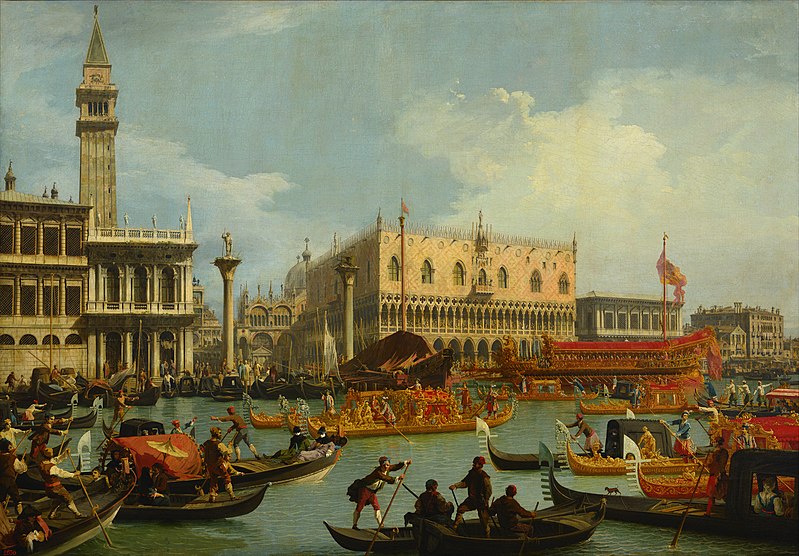
So, this idea that ‘democracy’ is this pristine term to express all of our political hopes and aspirations is an illusion. The older vocabulary of republicanism has faded from public consciousness, and so with it, significant depths of its philosophical, historical and symbolic expression. The history of REPUBLICANISM in Italy, not even Venetian republicanism, but right before and during Italy’s Unification period recovers its ancient moral meaning and demonstrates that this philosophy is the best and only philosophy to enlighten citizens, and the best way to restore the republic and civic education through human-to-human propagation, rather than concentrating all notions and validity of radical tradition into Marxism (and Socialist-adjacent variants). This has provided a boon to Conservatism and the “radical Right.” These are predictable, unnecessary and compromised; and “both sides” take us into hundreds of years of conflict, de-stabilization, new civil wars, balkanization fantasies (on the right) and strategic maneuvering.
A small fraction of those years spent fighting in a predictable game of tables and chairs for other visions could have been spent collectively restoring the philosophical, ethical and spiritual foundations in an increasingly technologically developed society.
━━━━━━
This conversation continues in our newest piece The Sacralization of Democracy and the Erosion of the Republican Tradition so don’t miss where it leads.