Introducing the polis, Aristotle’s citizen who rules and is ruled in turn, Sparta as both model and warning, and the myths the city told about itself.
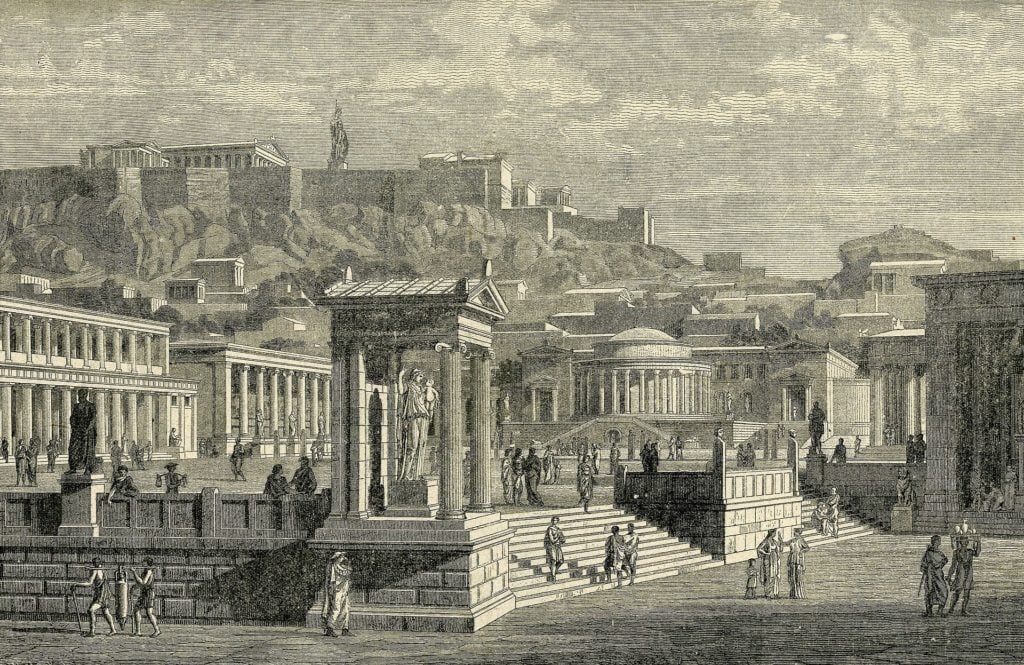
WHEN WE COME ACROSS REFERENCES TO THE POLIS, the polis refers to the association that exists for the sake of living well, not merely living. The Stagirite, Aristotle defines the citizen in the strict sense as the one who shares in deliberative and judicial office1, who rules and is ruled in turn according to the constitution. Also, the definition is constitutional rather than ethnic or residential and marks the boundaries of the polis. Those whose labor or legal status keeps them permanently under another’s direction are excluded from citizenship. So is the king who rules without ever being ruled. The citizen is the person for whom the city’s offices circulate. The alternation distinguishes political rule from the permanent rule of a master over a slave or of a father over children. The free man can both command and obey because he possesses the practical reason that recognizes the common good even when he is not the one deciding. Where that capacity is absent, or where rule is permanent and unshared, the relationship ceases to be political (Aristotle, Politics 3.1-4).
Sparta appears in the same treatise as both the most celebrated example of a mixed constitution and the clearest warning of how such a mixture can fail. Its mixed constitution, the combination of dual kingship, the gerousia (council of elders in ancient Sparta), the ephorate (institution of elected magistrates) of Sparta, and the assembly, was long praised for stability. Aristotle records the defects that followed from its laws on property, on women, and on the recruitment of citizens. The concentration of land, the license of the women, and the failure to maintain numbers turned an intended aristocracy into something closer to an oligarchy that could not survive a single major defeat. The legislator had aimed at warlike virtue and produced a city poor in other excellences and ultimately short of men (Aristotle, Politics 2.9). The model of disciplined equality and the warning against the consequences of unequal property and neglected education stand together. Later writers who invoked Sparta selected one side or the other, but Aristotle’s Politics itself keeps both.
The city also told myths about its own foundation and continuity. Autochthony, the stories of ancient lawgivers, and the claims of particular cults supplied a past that made the present constitution appear as the recovery or the fulfillment of an original order. These myths are part of the education by which citizens learn who belongs, what the city owes the gods, and why the present distribution of honor is legitimate. The philosophical account of the citizen who rules and is ruled in turn sits inside a civic culture that already possessed its own narratives of origin and obligation. It was the criterion by which Aristotle judges both the ordinary city and the most admired exception.
Politics and the model (and warning) of Sparta both taken together state the conditions under which a polis can remain a community of persons who rule and are ruled in turn. The citizen is defined by participation and by the capacity for alternation. Sparta shows how a constitution designed to secure that alternation can be undermined by the distribution of property, by the education of women, and by the failure to replenish the citizen rolls. HELLAS is the foundation because every later recovery of the republican tradition returns to this definition of citizenship and mythic self-understanding, and to this analysis of how a mixed regime can lose the material and educational conditions that make mixture real. It is not a pause between better periods. It is the first full articulation of the problem the later periods inherit.
FOOTNOTES
- This concept is very important to modern discourse against oligarchy, for those that govern or rule the citizens in the republic or commonwealth in-fact rule with the governed and must depend on each other. This is forgotten by both the governed and the officials in the present abuses of power, or those that maintain privately or publicly that the multitude are not fit to rule nor are capable of ruling. ↩︎