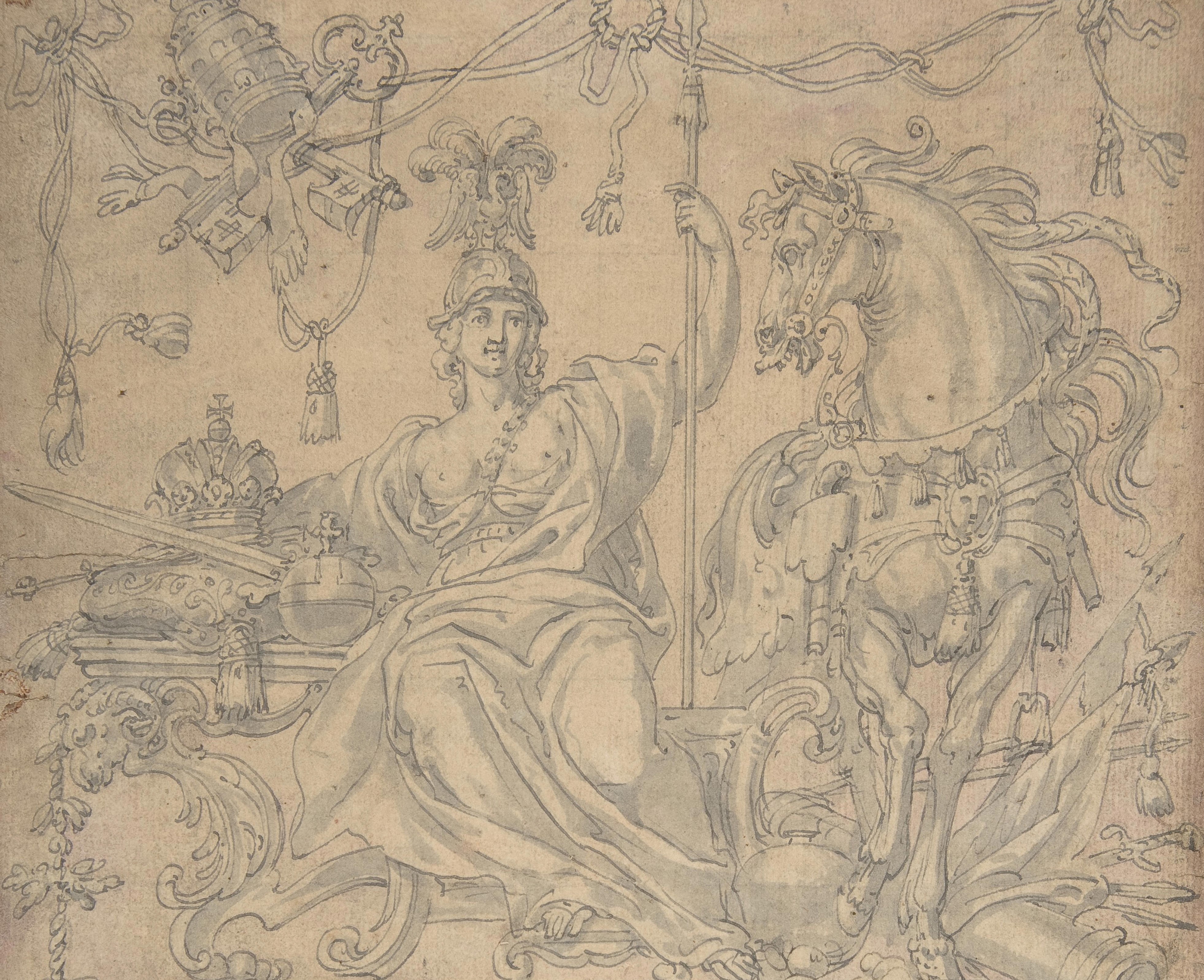
Roman civic excellence was courage joined to duty toward parents, gods, and city, not a personality trait. The ancient concept of virtue was always collective, and began to transform through Renaissance humanism, into Enlightenment period ideas on autonomy and Victorian beliefs about respectability. Here, it is separated from the ideas that involve Victorian notions of “virtue” and modern authenticity through liberal individualism.
VIRTUS IN THE ROMAN SENSE NAMED THE QUALITY that fitted a man for the public burdens the city required of him. It was not an inner excellence visible only to the self, nor a private moral score. It was the demonstrated capacity to act for the res publica under the constraints of pietas and the inherited practices of the maiores (ancestors). Ancestors were treated as guardians of Rome’s greatness, and the qualities of the ancestors were not just “ideals,” but obligations binding each Roman to the collective destiny of the city. By honoring the maiores, Romans believed they were honoring the gods. Cicero places the two together when he treats the duties of the citizen. The man of VIRTUS recognizes obligations to parents, to the gods of the household and the state, and to the city that gave him standing (Cicero, De officiis 1.57-58, 2.11). Pietas is the disposition that keeps those obligations from becoming optional. Without it, courage becomes private ambition and the common utility dissolves into competing wills.
The mos maiorum supplied the concrete content, and it was not a written code but the remembered pattern of what free men of standing had done in comparable circumstances. In Livy’s early books like the Ab urbe condita (refer to Bk. 1-5), he presents the pattern through illustrative cases or examples: the consul who lays down the fasces, the dictator who returns to the plow, the father who executes a son for military disobedience. These stories trained judgment rather than supplied rules. A later reader could ask what the maiores would have required in a new case because the stories had fixed a recognizable standard of public conduct. The standard was external, because it could be cited in the Senate, in a contio, or in a family council. It was not authenticated by the sincerity of the agent’s feelings.
This differs sharply from later notions of virtue. Victorian moralists often treated virtue as a settled character trait that could be cultivated in private and then displayed in public. The Roman usage reversed the order. Public office and public danger formed the character that private life then reflected. Authenticity, understood as fidelity to an inner self independent of inherited roles, finds no place in the vocabulary. A Roman who abandoned the duties of pietas in the name of personal truth would have been described as lacking virtus, not as having discovered it. The institutions of the republic presupposed citizens who could be counted on to subordinate private inclination to the recognized claims of parents, gods, and city. Where that reliability failed, the mixed constitution lost the human material it required.
Sallust made the dependence explicit. While fear of the enemy (metus hostilis) disciplined the city, virtus and the mos maiorum held. Once the external fear receded, avarice and luxury displaced them, and the same men who had once competed for public honor began to compete for private wealth (Sallust, Bellum Catilinae 10-12). The narrative is not a complaint about individual hypocrisy. It is an account of what happens when the character the institutions presupposed is no longer produced. Early modern republicans (1500s-1700s) who recovered the language understood the point, but the citizen of the twenty-first century recoils, because the foundations of its notion of the highest good is not tied to collective destiny and obligations, but to individual autonomy. Individual autonomy is often celebrated as the pinnacle of modern freedom, but civilizations don’t advance because everyone pursues only private inclination. They progress because people accept that their fate is collective, therefore bound up with obligations to family, community, and shared institutions. The res publica did not ask citizens to be authentic but instead asked whether the laws and the education of the city still generated the virtus and pietas without which rotation of office and popular constraint became empty forms.