CITIZEN OF THE CITY OF CHICAGO AND THE STATE OF ILLINOIS
CHICAGO, OCTOBER 17, 2026
TO THE PUBLIC
“Nothing can be sweeter than liberty.
Yet if it isn’t equal throughout, it isn’t liberty at all.”
—CICERO, De Re Publica, Bk. I.
“Thou madest self-sufficiency thy rule
Eschewing haughty wealth, O godlike Zeno,
With aspect grave and hoary brow serene.
A manly doctrine thine: and by thy prudence
With much toil thou didst found a great new school,
Chaste parent of unfearing liberty.
And if thy native country was Phoenicia,
What need to slight thee? came not Cadmus thence,
Who gave to Greece her books and art of writing?”
—ZENODOTUS THE STOIC (Diogenes of Babylon, the fifth scholarch of the Stoic school speaking of Zeno of Citium the founder of Stoicism); Diogenes Laërtius, Lives, Bk. VII , §30.
Inquiry I.—Of the Lineage and the Grammar and Whether the Long Tradition Can Be Recovered Once Its Words Have Been Sacralized or Darkened
PREFACE
The civic republican tradition is an ancient and continuous philosophy of the free citizen and the self-governing commonwealth. It is not the property of any modern party. LIBERTY, in this lineage, is freedom from arbitrary domination, secured by mixed institutions, civic virtue, and the perpetual formation of character. In the present age the word “democracy” has been sacralized while “republic” has been darkened; the older grammar of res publica, civis, and civitas has been worn thin by careless use. Recovery begins with the restoration of these meanings.
INQUIRIES
- Is the long republican tradition the same as the modern Republican Party?
- Why has “democracy” been elevated and “republic” diminished?
- What must be reclaimed if the tradition’s vocabulary is to regain its force?
EXAMINATION
The civic republican tradition stretches from the mixed constitutions of antiquity through the Renaissance recovery of Roman liberty, the Atlantic experiments, and the free national commonwealths of the nineteenth century. It is an eclectic synthesis of classical learning, civic humanism, and the duty of association. It does not belong to the Republican Party of the present United States, nor to any single partisan banner. To identify the two is to collapse centuries of moral and institutional wisdom into the accidents of a modern electoral label.
“Democracy” has been raised to a sacred term while “republic” has been made to sound narrow or suspect. Yet the older writers understood pure democracy as prone to faction and instability; they sought instead the balanced commonwealth in which citizens rule and are ruled in turn under law. The res publica is the common property of the people bound by justice, not the unchecked will of a momentary majority. Linguistic deterioration has obscured this distinction. Reclamation of the original meanings restores the grammar of non-domination, civic virtue, and mixed government. Only then can the tradition speak clearly against both arbitrary power and the reduction of politics to faction.
Inquiry II.—Of the Parties That Bear the Name, and How Far They Have Departed from the Substance They Claim
INTROUCTION
The modern Republican Party bears the name of the tradition yet stands at a marked distance from its civic humanist core. Where the older lineage sought mixed government, citizen virtue, and resistance to oligarchy in every form, the present party has often accommodated concentrated wealth, reduced virtue to private success, and treated the commonwealth as an instrument of faction rather than the common good.
INQUIRIES
- In what precise respects does the modern Republican Party fail to embody the long civic republican tradition?
- How does its relation to oligarchy and commercial concentration diverge from classical and humanist correctives?
- Does its rhetoric of liberty recover non-domination, or merely the absence of certain restraints?
- Where has civic humanism in its emphasis on education, association, and moral formation, been subordinated within the party?
- What would recovery of the tradition require of those who still bear its name?
EXAMINATION
The modern Republican Party inherits the name yet rarely the substance of the long tradition. Classical and civic humanist writers located domination in arbitrary power whether public or private; they corrected oligarchy by dispersing authority, protecting independence, and forming citizens through education and association. The party has frequently defended concentrated commercial power as the natural fruit of liberty, treating inequality of condition as self-justifying and civic virtue as secondary to private enterprise. Non-domination is narrowed to the absence of selected regulations rather than the positive condition of citizens free from both state and oligarchic will.
Civic humanism involved the cultivation of character, the duty of association, the elevation of the common good above faction, and has been subordinated to electoral machinery and donor interest. The older mixed constitution is invoked selectively, often to restrain one form of power while leaving another unchecked. Recovery would require those who claim the name to restore the full grammar: resistance to oligarchy as much as to centralization, the formation of independent citizens, and the subordination of private gain to the res publica. Absent that restoration the party remains a faction bearing a borrowed title.
Inquiry III.—Of the Parties That Sacralize the Will, and the Danger That Follows When Mixed Restraints Are Treated as Obstacles
PREFACE
The Democratic Party likewise stands at a remove from the civic republican lineage. Where the tradition sought balanced institutions, citizen virtue, and the common good against both oligarchy and pure majoritarian will, the party has often sacralized an unbounded democracy, subordinated mixed government to administrative expansion, and reduced the citizen to a client of redistributive or identity claims.
INQUIRIES
- How does the Democratic Party’s elevation of democracy diverge from the republican preference for mixed government?
- In what ways has it subordinated civic virtue and association to administrative or group claims?
- Does its approach to inequality recover the older correctives, or replace them with stage-theory expectations?
- Where has the language of the common good been displaced by factional or materialist analysis?
EXAMINATION
The Democratic Party has frequently raised pure democracy to a sacred status while treating the restraints of mixed government and constitutional balance as obstacles to be overcome. The older tradition feared the unchecked will of the majority no less than the will of the few, and sought institutions that force deliberation across differences and form citizens capable of self-restraint. Administrative expansion and the redefinition of the people by class or identity have often hollowed those restraints, substituting clientage for independent citizenship.
Inequality is addressed less by the dispersal of power and the cultivation of virtue than by expectations that structural rearrangement will produce equity. The language of the common good is displaced by factional claims or by materialist diagnoses that treat republican forms as provisional. Recovery of the tradition would require restoration of mixed institutions, the formation of citizens rather than clients, and resistance to both oligarchic concentration and unbounded majoritarian or administrative will.
Inquiry IV.—Of the Several Kinds of Republicans, and Which Among Them Preserve the Mixed Order and Which Dissolve It
PREFACE
The republican tradition is not a single doctrine but a long eclectic lineage containing distinct types. Stoic moralists, civic humanists, Atlantic radicals, Jacobin enthusiasts, and later national republicans all claimed elements of the inheritance, yet they differed sharply in their anthropology, their attitude toward virtue, and their willingness to restrain power.
INQUIRIES
- How do Stoic republicans differ from later radical or Jacobin types?
- What separates the civic humanist recovery from the revolutionary enthusiasm of 1793?
- Why must these types be distinguished if the tradition is to be recovered intact?
- Which elements remain usable, and which must be refused?
EXAMINATION
Stoic republicans grounded liberty in self-mastery and natural law, and sought the mixed constitution precisely because they knew the permanence of human failings. Civic humanists of the Renaissance recovered Roman liberty as a living resource against princely tyranny, insisting on education, association, and the armed citizen. Atlantic radicals adapted these resources to commercial societies while retaining the fear of corruption. Jacobin types, by contrast, elevated popular will and continuous purification, often dissolving the very mixed forms that had secured non-domination.
These distinctions matter. Recovery of the tradition requires the Stoic and humanist insistence on character and institutional balance, not the Jacobin expectation that virtue will follow from the destruction of residual forms. Usable elements include the mixed constitution, civic education, and resistance to arbitrary power in every guise. What must be refused is the reduction of the res publica to the momentary will of a redefined people or the liquidation of independent association.
Inquiry V.—Of Civic Humanism and Virtù, and Whether Free Commonwealths Can Endure Without Some Elevation of the Citizen
PREFACE
Civic humanism carried within it a religious dimension: the conviction that the citizen bears the inner resource (strength, capacity and skill) to practically and effectively act in the world, and that moral perfectibility is possible through cultivation by education and association, and that the commonwealth is bound by duties higher than interest. This was not sectarian dogma but the classical and Renaissance elevation of humanity itself.
INQUIRIES
- What is the civic humanist religious tradition, and how does it differ from confessional religion?
- How did it shape the moral anthropology of free commonwealths?
- Why does its recovery matter against modern disenchantment?
EXAMINATION
The civic humanist religious tradition affirmed that every person bears a divine spark capable of moral elevation through virtue, learning, and participation in the common good. Others within the tradition, instead of depending on divine favor or inner enlightenment as a metaphysical fragment of God, defined the potential capacities within man to be the human ability to act with courage and prowess in the world in a practical sense. The tradition is essentially not a confessional system claiming exclusive revelation, but the classical and Renaissance conviction transmitted through humanists, early Christian social teaching, and the ethical currents of Renaissance philosophy, that liberty requires character oriented toward duties beyond the self. Mixed institutions and voluntary association were understood as the practical vessels of this elevation. We must move into the next centuries together with this understanding of combined historical struggle.
Against modern disenchantment, which reduces politics to interest and power, this tradition restores the possibility of civic friendship grounded in a shared moral anthropology. Recovery does not demand uniformity of creed. It demands the elevation of the citizen as a moral personality and the commonwealth as the sphere in which that personality is formed and exercised. Without it the res publica becomes merely an arena of competing claims.
Inquiry VI.—Of Pluralism and the Common Good, and How Diversity May Be Held Without Dissolving into Permanent Faction
PREFACE
The republican tradition has always been pluralist in its sources and in its institutional design. It absorbed classical, humanist, and Atlantic elements without reducing them to a single national myth or a single identity. The future of free commonwealths depends on whether this pluralism can be sustained against both fragmentation and imposed uniformity.
INQUIRIES
- How does the tradition’s pluralism differ from modern identity fragmentation?
- What institutional and moral conditions allow pluralism to serve the common good?
- Can free commonwealths endure if pluralism is reduced to competing claims without civic friendship?
EXAMINATION
Republican pluralism is the capacity of mixed institutions and civic education to hold diverse faculties, faiths, and associations within a shared grammar of non-domination and the common good. It is not the modern reduction of politics to competing identity claims that dissolve the res publica into permanent faction. Classical and humanist writers understood that pure uniformity breeds tyranny while pure fragmentation breeds instability; the remedy was balanced government and the formation of citizens able to deliberate across differences.
The future of free commonwealths requires the recovery of that middle path. Voluntary association, civic education in the sources of the tradition, and institutional checks that prevent any single faction from monopolizing power remain the conditions. Without civic friendship, the willingness to see fellow citizens as partners rather than permanent rivals, pluralism becomes merely the prelude to new forms of domination.
Inquiry VII.—Of the Counter-Revolution in Its Several Forms, and Why Each Seeks to Subordinate the Republican Anthropology
PREFACE
From the moment free commonwealths were established, counter-revolutionary currents have sought to subordinate or reverse them. These currents have taken monarchical, clerical, oligarchic, and later materialist forms, each treating the republican anthropology of character and mixed government as a threat to ordered hierarchy or to historical necessity.
INQUIRIES
- What forms has the counter-revolution taken against the republican tradition?
- How does it differ from legitimate reform within the tradition?
- Why does the recovery of civic virtue remain the coherent answer?
EXAMINATION
Counter-revolutionary currents have opposed the republican tradition by restoring arbitrary power under older titles or by inventing new ones. Monarchical and clerical restorations treated mixed government and citizen virtue as seeds of disorder. Later oligarchic and materialist currents treated the same forms as incomplete stages to be superseded. In each case the anthropology of freedom as moral agency under law was denied; hierarchy or historical necessity was substituted for the perpetual struggle against domination.
Legitimate reform presses the tradition’s own principles against its failures. Counter-revolution denies those principles. The coherent answer remains the recovery of civic virtue, mixed institutions, and voluntary association, and this is the unfinished work of constructing free commonwealths capable of resisting domination in every age, whether it arrives under ancient or modern banners.
Inquiry VIII.—Of Democratic Socialism in Popular Form and in History, and Whether the Softer Path Escapes the Logic of Supersession
PREFACE
In the present United States, a current styling itself democratic socialism has gained a measure of popular favor, especially among the young. It presents itself as a gentler path than the violent revolutions of the past. Yet the actual history of social democracy and democratic socialism, as seen in the Italian experience and elsewhere, reveals both the persistence of stage-theory logic and the repeated subordination of republican forms.
INQUIRIES
- How does the present popularity of democratic socialism differ from the historical record of social democracy?
- Did older social-democratic parties preserve or displace republican institutions?
- What remains of the older claim once the stage theory is examined?
OBSERVATIONS
The present popularity of democratic socialism in America often softens the language of seizure while retaining the deeper claim that republican institutions and ordered property are transitional. Historical social democracy, as in the Italian Socialist Party and kindred movements, frequently staffed successor republics after older monarchies fell, yet treated those republics as incomplete stages. Parliamentary forms were used to expand administrative and economic power until constitutional limits were hollowed. Class redefinition of “the people” and the moral inversion of duty and independent property as masks for exploitation continued beneath electoral forms.
The distinction is therefore not absolute. Softer versions may retain private property and civil society for a season, yet the underlying logic remains: mixed government and civic virtue are provisional, to be superseded once material conditions are transformed. Historical practice shows the same pattern of centralization and the eclipse of the older vocabulary. Recovery of the republican tradition requires refusal of that pattern, whether it arrives by violence or by gradual hollowing.
Inquiry IX.—Of Faction, Party, and the Ancient Remedies That Still Apply When Organized Interests Capture the Offices
PREFACE
From the earliest writers the republican tradition has regarded faction as a permanent danger born of human nature and the diversity of interests. Parties may arise as instruments of association, yet they easily become engines of capture. The present age multiplies this ancient worry.
INQUIRIES
- Why does the tradition treat faction and party with caution?
- Can parties serve the common good without becoming instruments of domination?
- What remedy does the older wisdom offer against present party capture?
EXAMINATION
The causes of faction lie in human nature and cannot be removed without extinguishing liberty. The remedy has always been to control the effects through an extended republic, separation of powers, and the cultivation of citizens who can rise above private impulse. Parties, when they form, may organize deliberation, yet they tend toward the capture of office and the subordination of the common good to organized interest. The older writers studied the English experience of court factions precisely so as not to reinstall a single magistrate or a permanent party as the solvent of corruption.
Present worries about party discipline, donor capture, and the reduction of politics to electoral machines are therefore continuous with ancient republican diagnoses. The remedy is not the abolition of association but the regeneration of independent citizens, voluntary societies, and institutional checks that prevent any single faction from monopolizing the res publica. Virtue and mixed government remain the only durable controls.
Inquiry X.—Of the Religion of Humanity and the Enchanted Sources, and What Is Lost When These Are Reduced to Disenchanted Interest
PREFACE
The republican tradition was never a purely disenchanted politics. From classical humanism through the Renaissance it carried a religion of humanity: the conviction that man bears a divine spark, that moral perfectibility is possible through education and association, and that the commonwealth is bound by duties higher than interest. Early Christian humanist teaching, the prisca theologia of the Renaissance, and the ethical side of occult philosophy supplied intellectual resources for this vision. Early Masonic and Rosicrucian circles of a librarian and academic character often served as vessels for the same civic ideal. Modern disenchantment, identity fragmentation, and the reduction of all to power have obscured these sources.
INQUIRIES
- Why does the tradition require an elevation of a religion of humanity?
- What place do theology, prisca theologia, and the ethical occult philosophy of the Renaissance hold within it?
- How do these sources answer modern disenchantment and fragmentation?
EXAMINATION
A religion of humanity elevates the citizen as bearer of a divine spark capable of moral perfectibility through education, virtue, and voluntary association. It is the classical humanist conviction, recovered in the Renaissance, that liberty is not merely the absence of restraint but the fruit of character oriented toward the common good. Early Christian humanist and social teaching ideas, the prisca theologia that sought a primordial wisdom beneath later divisions, and the deeply ethical side of Renaissance occult philosophy all fed this vision. They supplied a language of duty, illumination, and ordered freedom that resisted both arbitrary power and pure materialism.
Early Masonic and Rosicrucian circles of a scholarly character often transmitted these resources, linking fraternal association to civic virtue and the recovery of ancient learning. Against modern disenchantment, which reduces politics to interest and identity, and against fragmentation that dissolves the common good into competing claims, these sources restore the possibility of civic friendship grounded in a shared moral anthropology. Recovery of the tradition therefore includes the elevation of this religion of humanity; and not as sectarian dogma, but as the living conviction that free commonwealths are sustained by character, association, and the perpetual struggle against domination.
Inquiry XI.—Of the Stage Theory and the Displacement, and How Republican Revolutions Were Reduced to Provisional Episodes
PREFACE
A single error has long shadowed the memory of free commonwealths: the claim that every republican revolution was merely an incomplete stage awaiting materialist completion. Against this stage theory the tradition stands as an independent moral anthropology. It was never a temporary waypoint. Its recovery is the unfinished labor of those who still prefer the common good to the dictatorship of a class or a vanguard.
INQUIRIES
- Why are the older republican revolutions treated as unfinished stages?
- How were figures of duty and association dismissed by later materialist currents?
- Does present corruption license a new radical break?
EXAMINATION
The stage theory reduces the long arc of republican struggle to a mere prologue for economic expropriation and the rule of a redefined people. Political liberty is declared provisional; and only the supersession of the older forms can complete history. The tradition itself, however, was forged in the observation of monarchy’s decay, aristocracy’s corruption, and pure democracy’s faction. It sought durable non-domination through balanced powers and the moral formation of citizens.
Thinkers of the materialist school dismissed the language of duty, virtue, and association across classes as obsolete idealism or empty rhetoric. Constituent assemblies and mixed constitutions were treated as inferior masks for class rule and were dissolved when they refused submission. What was displaced was not a failed experiment but a distinct anthropology of freedom as character under law. Oligarchy and corruption are ancient dangers, yet they do not license a new cultural rupture. The path that remains is the regeneration of mixed institutions and citizen virtue.
Inquiry XII.—Of the Two Anthropologies, and Why the Expectation That Virtue Follows from Rearranged Ownership Has Failed
PREFACE
At the root of every political order lies an anthropology: a vision of what man is and what freedom requires. The republican tradition holds that liberty is the fruit of character in self-mastery, public-spiritedness, and the capacity to rule and be ruled in turn, secured against arbitrary will by law and mixed government. Materialist frameworks reverse the sequence, expecting virtue to follow the rearrangement of ownership. History has repeatedly tested both claims.
INQUIRIES
- What is the fundamental difference between the republican and the materialist view of freedom?
- Why does recovering character and civic education matter more than another structural seizure?
- Does the failure of past revolutions to produce the “new man” discredit materialist expectations?
EXAMINATION
Republican freedom is non-domination: the condition in which no citizen is subject to the arbitrary will of another, public or private. It demands moral personality; and that being, virtue cultivated through education, association, and the discipline of self-government. Materialist anthropology relocates the source of domination from the soul to the structure alone. Transform the ownership of the means of production, it promises, and free persons will appear. The sequence is reversed: character is treated as epiphenomenal.
No rearrangement of property relations abolishes the permanent human tendencies toward ambition, vanity, and corruption. Bolshevik and Maoist practice demonstrated the contrary result with new managers unconstrained by the old limits, the liquidation of independent associations, and moral collapse. The res publica begins from the realistic premise that these failings must be managed through character formation, independence, and institutional checks. It does not promise that correct economic relations will automatically produce virtue. The recovery of civic education and voluntary association therefore remains the coherent antidote. Where materialist supersession produced new arbitrary powers, the republican path regenerates the moral capacity of citizens to sustain free institutions.
“It has appeared to me more fitting to go directly to the effectual truth of the thing than to the imagination of it. And many have imagined republics and principalities that have never been seen or known to exist in truth.”
— Niccolò Machiavelli, Il Principe, Chapter XV
Inquiry XIII.—Of Civic Friendship and Equal Standing, and Whether Racial Faction Dissolves the Commonwealth or Can Be Corrected Within It
PREFACE
Citizenship in the republican tradition is a status of equal moral and political standing under law. Citizens are called to subordinate private passions and group interests to the common good so that civic friendship may exist across differences. Racial hierarchy violates that standard, and does not define the tradition’s essence. The same lineage that produced the Declaration also produced Black republican streams that pressed its principles against its practices.
INQUIRIES
- Does systemic racism or “racial capitalism” prove the American republican order is constitutively oppressive?
- Why is the gap between ideal and practice not evidence that the founding was a fraud?
- How does the tradition answer the claim that Black struggle requires a far-left alternative?
EXAMINATION
The civic republican tradition locates the primary sources of oppression in concentrated, unchecked power and in faction, majority or minority, not in the founding principles themselves. Racism is a moral and cultural failure that violates the standard of equal citizenship. The tradition supplies internal resources for its correction: the Declaration’s universal claims, constitutional amendment, equal protection, civic education, and moral reform. Historical self-correction from abolition through the civil-rights statutes shows that principles can be pressed against practices.
To treat the gap between ideal and practice as proof the project was fraudulent from the start replaces the hope of civic friendship with permanent group conflict. Socialist diagnoses often reverse the diagnosis, locating racial hierarchy in private property and markets and proposing replacement by collective ownership and group-based equity. History of such regimes shows hierarchy transferred to new managers, frequently accompanied by fresh ethnic persecutions. The Black republican lineage from Phillis Wheatley and David Walker to Frederick Douglass already existed within the tradition, demanding its own standard of equal standing. Soft racial essentialism that treats attitudes as almost inescapable products of “Western society” undermines individual moral agency and the possibility of genuine civic friendship. The unfinished work of equal citizenship remains the republican path.
“In civil strife, when virtue is of greater importance than numbers, I think the citizens ought to be weighed rather than counted.”
— Cicero, De Re Publica
Book XIV.—Of Property and Independence, the Commercial Republic, and the Point at Which Concentrated Fortune Becomes a Form of Domination
PREFACE
From antiquity the republican tradition has feared domination through concentrated wealth and dependency no less than through the state. Ordered property is a condition of independence and moral personality, not the root of oppression. Inequality of condition is expected under liberty. Pure leveling dissolves the very independence that free government requires.
INQUIRIES
- Is private property the root of domination that must be abolished?
- Does capitalism’s inequality prove revolution is the only solution?
- How does the tradition correct oligarchic concentration without materialist seizure?
OBSERVATIONS
Property, properly ordered, supports independence and moral personality. Ancient thinkers feared the domination of concentrated wealth and the dependency it creates; they did not therefore abolish property. Inequality of outcome follows from differences in talent, effort, luck, and choice. Correctives remain internal: dispersing power, protecting rights (including property as a basis of independence), civic education, and associations that form citizens capable of resisting both public and private arbitrary will.
Materialist revolution externalizes responsibility onto “the system” and promises that rearranging ownership will produce free persons. Practice showed the opposite: new managers unconstrained by the old limits, destruction of independent associations, and moral collapse because character was treated as secondary. No structural seizure abolishes human tendencies toward corruption. The commercial republic’s dangers of oligarchic concentration and the erosion of virtue are real republican concerns. Its resources against them are the same resources that have always opposed monarchy and pure democracy: mixed institutions, moral reform, and the cultivation of independent citizens.
“The man who never thinks of lands, houses, or stores of gold as ‘goods,’ because he sees that their enjoyment is slight, their ownership uncertain, and that the vilest often possess them in abundance—how fortunate is he to be esteemed.”
“The man who never thinks of lands, houses, or stores of gold as ‘goods,’ because he sees that their enjoyment is slight, their ownership uncertain, and that the vilest often possess them in abundance—how fortunate is he to be esteemed.”
Cicero, De Re Publica I
Inquiry XV.—Of the Models of Supersession, and What the Dissolution of Republican Forms in 1917 and 1949 Demonstrates
PREFACE
The Bolshevik seizure of 1917 and the Chinese Communist victory of 1949 are frequently romanticized as models of necessary rupture. In both cases republican or proto-republican forms were deliberately displaced and replaced by vanguard party dictatorships that produced new arbitrary power, mass violence, and the liquidation of independent civic life.
INQUIRIES
- What did the Bolshevik Revolution specifically do to republican institutions?
- How did the Chinese Communist Revolution parallel or extend that pattern?
- Why do softer “democratic socialist” models still carry the same logic of displacement?
EXAMINATION
The Bolsheviks dissolved Russia’s Constituent Assembly when it refused to submit, banned opposition, and established one-party rule, treating parliamentary forms as inferior to soviet power. The Chinese path under Mao combined protracted civil war, violent land reform, and later the Great Leap Forward and Cultural Revolution, subordinating residual institutions to continuous purification and producing new hierarchies and mass death. In both cases the claim was that a higher democracy required the liquidation of the older republican forms.
Softer democratic-socialist models retain private property and civil society for a time, yet the underlying stage-theory logic remains: republican institutions are transitional, “the people” may be redefined by class or identity, and constitutional limits can be hollowed by expanding administrative and economic power. Formal façades may persist while real power centralizes. The historical pattern is consistent: supersession replaces one form of arbitrary power with another rather than securing durable free citizens. Recovery of the republican tradition means refusing that pattern, not adapting it.
Inquiry XVI.—Of the Unfinished Work, and the Practical Course That Remains Once Rupture Has Been Refused
PREFACE
The tradition was never fully tried in its depth after the initial revolutionary achievements but was subordinated and abandoned. Its recovery is not nostalgia but the deliberate regeneration of civic education, voluntary association, and the moral anthropology of non-domination in the unfinished construction of free commonwealths capable of resisting domination in every age.
INQUIRIES
- What practical stance follows for citizens facing calls for revolutionary upheaval?
- How do civic education and association differ from cultural-revolutionary purification?
- Why is the recovery of this tradition the coherent antidote to oligarchy and cultural decay?
EXAMINATION
Citizens facing far-left calls for upheaval modeled on 1917 or 1949 should refuse the stage-theory dilution of republican history, study the concrete tactics by which republican forms were liquidated, and devote themselves to the regeneration of mixed institutions, citizen virtue, and voluntary associations. Cancel culture, purity tests, and continuous struggle against residual “bourgeois” culture echo the purification logic of the Cultural Revolution; they erode deliberation and character. Republican education forms citizens in the sources of the tradition; republican association builds the intermediate bodies that resist both state and market capture.
Oligarchy, inequality, and cultural decay are symptoms of moral and institutional failure, not proof that the principles were fraudulent. The resources against them already exist within the long lineage: dispersal of power, protection of independence, civic education, and the cultivation of public-spiritedness. Recovery of that moral anthropology, freedom as character and non-domination under law, remains the coherent path. It is slower than rupture and harder than denunciation; it is also the only path that has ever produced durable free commonwealths.
Inquiry XVII.—Of the Signs and the Images, and How Fasces, Liberty Caps, and the Figures of Virtue and the People Lose or Retain Their Force
PREFACE
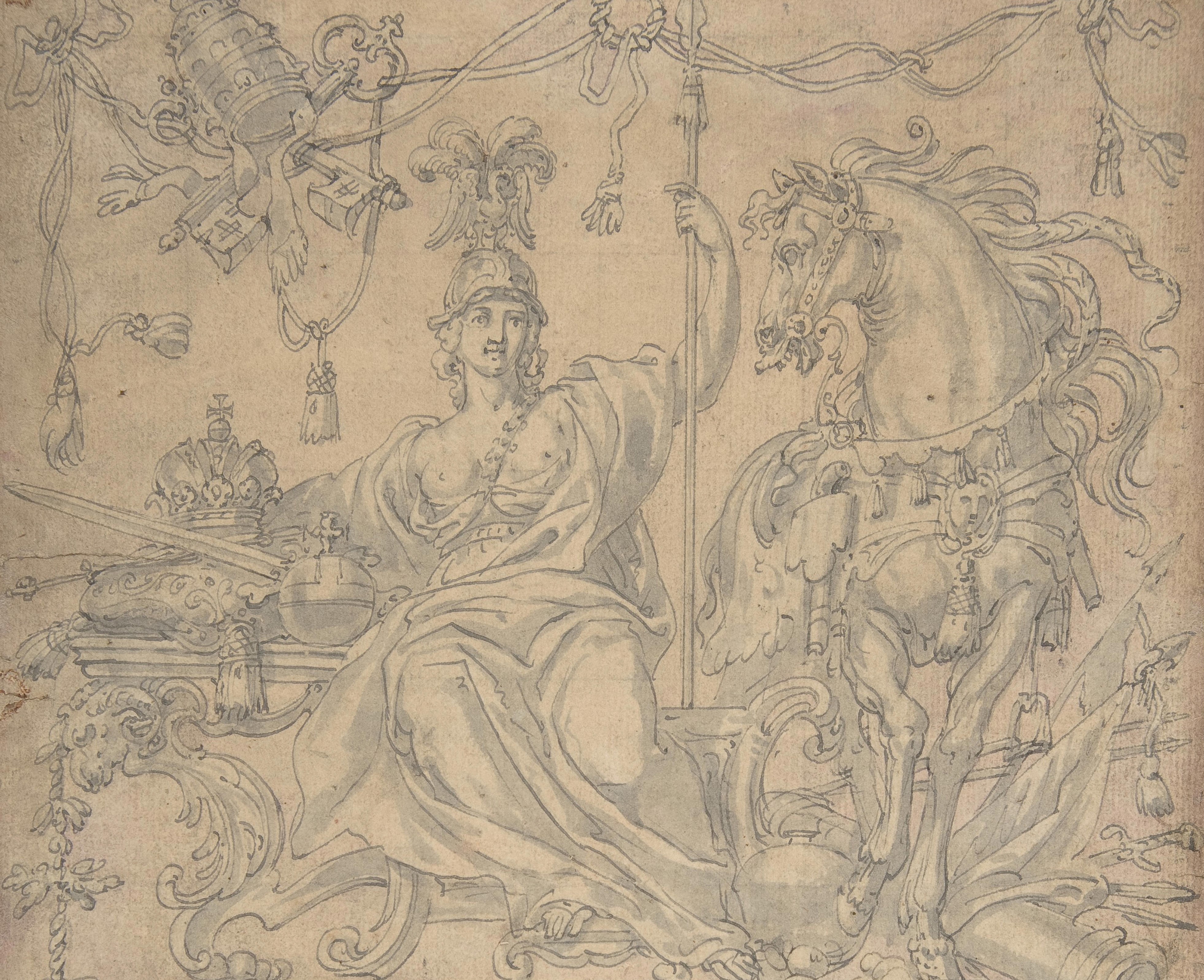
The republican tradition has always spoken through signs. FASCES, liberty caps, the figures of Virtue and the People, the Phrygian cap, the bundle of rods, the oak and the laurel — these were never mere ornaments. They condensed the grammar of non-domination, mixed authority, and citizen standing into forms that could be seen and remembered. Romantic and neoclassical revivals recovered them as living emblems of free commonwealths. Modern use has often emptied or inverted them. Recovery of their proper meanings belongs to the recovery of the tradition itself.
INQUIRIES
- What did the fasces originally signify, and how was that meaning altered?
- What does the liberty cap properly represent within the republican lineage?
- How were allegorical figures of Virtue and the People understood?
- Why does the recovery of these signs matter against both neglect and misuse?
EXAMINATION
The FASCES, rods bound around an axe, signified lawful authority that could both correct and, when necessary, punish, yet remained bound by the collective will of the magistrates and the people. It was the emblem of imperium tempered by collegiality and law, not of unchecked command. Later appropriations that treated it as a symbol of singular WILL inverted the original restraint.
The liberty cap, derived from the pileus of the freed Roman slave, marked the passage from domination to civic standing. It was worn or displayed to recall that citizenship is a status won and maintained against arbitrary power, not a gift of nature or of a party. Allegorical figures of Virtue (often armed or bearing a sword and scales) and of the People (frequently a collective or feminine form holding fasces or a cap) embodied the dual requirement of character and common authority. Romantic painters and neoclassical sculptors restored these as public reminders that free government rests on both moral formation and institutional balance.
Neglect reduces them to decoration, and misuse turns them into badges of faction. Recovery restores them as a visible grammar: authority bound, liberty as non-domination, virtue as the condition of both. Without the signs, the tradition’s meanings grow harder to transmit across generations, and its meanings are soiled by association with that of the totalitarian regimes of the prior century.
Counsel I.—Of Those who hold Power and Office
ADDRESSED TO THOSE WHO HOLD POWER
To the governor or mayor who faces calls to treat the existing order as a fraud requiring rupture
The city already possesses its republican forms.
Those who promise a new foundation by dissolving or affecting them
will dissolve the instruments by which you govern.
Rule: retain the mixed authorities you have;
Instruct and counsel each other,
correct abuses by law and by the formation of citizens,
not by inviting a power that recognizes no limit once it is seated.
“Seldom through the boughs
Doth human worth renew itself; for such
The will of Him who gives it, that to Him
We may ascribe it.”— DANTE, Purg. vii.
To the wealthy and the business class who see concentrated fortune as proof of merit alone
Fortune that captures the councils and leaves the many dependent invites a counter-power that will not distinguish your property from the state’s. Rule: disperse the occasions of dependence; support the independence of citizens through ordered property and association or expect the many to seek a master who promises to master you.
To the national politician who borrows the name “republic” while defending every concentration that serves his faction
The name without the restraints is a liability. Those who hear only the defense of private gain will answer with the demand for public seizure. Rule: if you will keep the name, keep the substance — resist oligarchy as you resist centralization, or surrender the word to those who will redefine it.
To the statesman courted by those who would redefine the people by class or identity
Once “the people” means only a part, every institution that once mediated becomes an obstacle to be removed. Rule: refuse the redefinition. Govern through forms that force the parts to deliberate; the alternative is a vanguard that will not need you once it holds the offices.
To the mayor or governor pressed to expand administration until constitutional limits are formal only
Power that hollows its own restraints cannot later appeal to them. Rule: keep the intermediate bodies and the electoral checks alive. An unbound administration invites an unbound reaction.
To the business and middle classes alarmed by cultural purification campaigns
Campaigns that treat residual independence as guilt will not stop at symbols. Rule: defend the associations and the schools that form citizens rather than clients, spectators and consumers. If you yield the intermediate bodies, you will have no ground left on which to stand.
To any who hold office and hear that corruption justifies a new beginning
Every new beginning that destroys the old restraints has produced a tighter domination. Rule: the corruption you see is the argument for restoring virtue and balance, not for handing authority to those who claim exemption from both.
Glossary of the Res Publica
ANACYCLOSIS. The classical cycle of constitutional decay (monarchy to tyranny, aristocracy to oligarchy, democracy to ochlocracy) described by Polybius and others; the mixed constitution was offered as the means to slow or interrupt it.
CIVIS. The free citizen, bearer of rights and duties, formed for participation in the commonwealth.
CIVITAS. The self-governing commonwealth itself; the ordered association of citizens under law.
CIVIC FRIENDSHIP. The disposition by which citizens regard one another as partners in a shared political project rather than as permanent rivals for status or resources.
CIVIC HUMANISM. The Renaissance and early-modern recovery of classical republican thought that joined the study of letters to the formation of active citizens and the defense of free cities or commonwealths.
COUNTER-REVOLUTION. Any sustained effort, monarchical, clerical, oligarchic, or materialist, to subordinate or reverse republican forms and the anthropology of non-domination.
DISPLACEMENT. The intellectual and institutional process by which the republican tradition was reduced to a provisional “bourgeois” stage awaiting supersession.
EFFECTUAL TRUTH (verità effettuale). The truth of political things as they actually operate and produce effects, rather than as they are imagined in untried republics or in moral professions that have never been realized. Machiavelli contrasts it with the “imagination of it”: many have conceived principalities and republics that were never seen. He who neglects what is done for what ought to be done learns his ruin rather than his preservation (Il Principe, XV). It is the knowledge of necessity that guides action for the maintenance of the state and of liberty.
FASCES. The bound rods (with or without the axe) signifying lawful, collegial authority under the res publica, not personal or party command.
FACTION. A number of citizens united by passion or interest adverse to the rights of others or to the permanent good of the community (Madison).
LIBERTY (republican). Non-domination: the condition of not being subject to the arbitrary will of another, public or private.
LIBETY CAP (PILEUS). The cap of the freedman, emblem of release from domination into civic standing.
MIXED CONSTITUTION. The balanced distribution of authority among monarchical, aristocratic, and popular elements (or their modern analogues) so that no single will predominates.
NON–DOMINATION. Freedom from dependence on the uncontrolled will of others; the core republican conception of liberty.
OLIGARCHY. Rule by the few, especially when concentrated wealth captures institutions and reduces citizens to dependence.
PRISCA THEOLOGIA. The Renaissance notion of a primordial wisdom underlying later religious and philosophical traditions; a resource for civic humanist elevation of humanity.
RELIGION OF HUMANITY. The conviction, classical and Renaissance, that the citizen bears a divine spark capable of moral perfectibility through virtue, education, and association; distinct from confessional exclusivity.
RES PUBLICA. The public thing; the commonwealth as the common property of the people bound by justice and law.
SECURITY (securitas, sicurezza). In the republican sense, the stable condition of the commonwealth in which citizens are free from arbitrary domination, internal faction, and external threat, so that virtue and liberty may be exercised. It is not the mere absence of fear, nor the private tranquility of the subject, but the public order that permits the civitas to endure. Cicero treats it as inseparable from the duties of those who govern. Machiavelli treats it as the effect that must be secured by whatever means necessity requires.
STAGE THEORY. The claim that republican revolutions and institutions are incomplete phases destined to be superseded by materialist reorganization.
VIRTUE (VIRTUS). Combination of Practical intelligence and Civic excellence: self-mastery, public-spiritedness, and the capacity to rule and be ruled in turn.
VOLUNTARY ASSOCIATION. Intermediate bodies (societies, lodges, educational circles, local commonwealths) that form independent citizens and resist both state and market capture.
Examined Inquiries
INQUIRY I
The words of the tradition have been sacralized or darkened. Whether the long grammar of the res publica can still be recovered, and by what historical examples it may be shown.
INQUIRY II
Parties now bear the name of republic while departing from its substance. How far this departure has proceeded, and what the older correctives against oligarchy demonstrate.
INQUIRY III
Parties sacralize the popular will and treat mixed restraints as obstacles. What follows for the commonwealth, as earlier pure democracies and their corrections make plain.
INQUIRY IV
Several kinds of republicans have claimed the inheritance. Which of them preserved the mixed order and which dissolved it, shown by the contrast of Stoic, humanist, and Jacobin practice.
INQUIRY V
Civic humanism affirmed a divine spark in the citizen. Whether free commonwealths can endure once this elevation is set aside, considered through the Renaissance recoveries and their later eclipse.
INQUIRY VI
Pluralism may serve the common good or dissolve into faction. Under what conditions the former has held, as the extended republic and its intermediate bodies illustrate.
INQUIRY VII
Counter-revolution has taken monarchical, clerical, oligarchic, and materialist forms. Why each subordinates the republican anthropology, demonstrated by successive restorations and supersessions.
INQUIRY VIII
Democratic socialism presents itself as the softer path. Whether it escapes the logic of stage-theory displacement, judged by the historical record of social-democratic parties in power.
INQUIRY IX
Faction and party arise from human nature and capture offices. What remedies the older writers applied, and whether those remedies still control the effects.
INQUIRY X
A religion of humanity and its enchanted sources once sustained civic elevation. What is lost when these are reduced to disenchanted interest, shown by the contrast of Renaissance and modern practice.
INQUIRY XI
Stage theory reduced republican revolutions to provisional episodes. How this displacement occurred, and what the subordination of constituent assemblies and mixed forms reveals.
INQUIRY XII
Two anthropologies contend: one locates freedom in character, the other in rearranged ownership. Why the latter expectation has failed wherever it has been tried.
INQUIRY XIII
Racial faction threatens civic friendship and equal standing. Whether the tradition’s internal resources can correct it, or whether the gap between principle and practice proves the order fraudulent.
INQUIRY XIV
Property may secure independence or become a means of domination. At what point concentrated fortune invites a counter-power, as both ancient and commercial republics have shown.
INQUIRY XV
The models of 1917 and 1949 dissolved republican forms in the name of a higher democracy. What those dissolutions produced, and why the pattern remains instructive.
INQUIRY XVI
Rupture having been refused, the work of recovery remains unfinished. What practical course follows for those who would regenerate virtue, association, and mixed institutions.
INQUIRY XVII
The signs of the tradition in, e.g., the fasces, liberty caps, figures of Virtue and the People, have been neglected or inverted. How their original force may be restored, and what public memory requires.
INQUIRY XVIII
Of Those Who Hold Power and Office, and whether they will correct the commonwealth by its own remedies or surrender it to those who promise a new foundation.
“The latent causes of faction are thus sown in the nature of man; and we see them everywhere brought into different degrees of activity, according to the different circumstances of civil society.”
— James Madison, Federalist No. 10