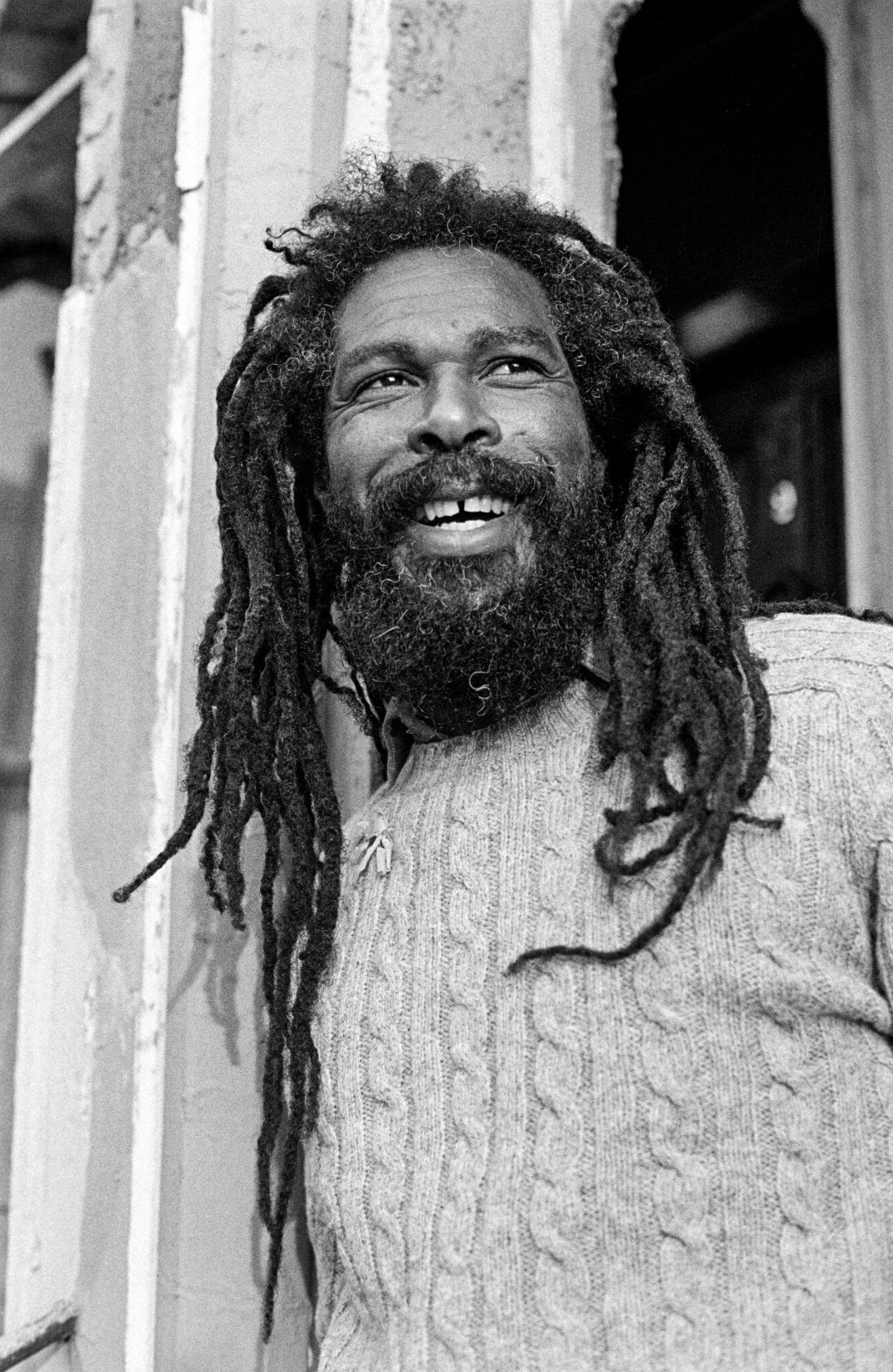
Bob Andy teaches about the sufficiency of free and natural goods, and the concern for moderation against the corrupting force of luxury. “Sun Shines For Me” reflects the rural Jamaican memory of independent provision, the older African insistence on living in harmony with what the earth freely gives, and bares the philosophical similarity to Stoic ideas of living according to nature, temperance, and indifference to excess wealth.
“I am rich ’cause the sun shines for me
I never cry ’cause I know that the rain falls for me
I feel like a king, though the salary I earn is thin, thin
I realise money’s not all, there are other things”
He is already rich because the sun shines for him, the rain falls for him, and everything free belongs to him: the birds, the fish, the stars, the breath itself. The salary may be thin, yet he feels like a king; money is not all, and all he needs is to be free and left alone to be simply himself. This contentment with what nature supplies, and this refusal to measure worth by accumulation, finds a direct counterpart in the Stoic demand for living according to nature. Seneca’s reminder that it is not the man who has too little but the man who craves more that is poor, and Marcus Aurelius’s counsel to receive prosperity without arrogance and to be ready to let it go, both rest upon the same distinction the lyrics enact: the free gifts of the cosmos are already sufficient, while the pursuit of superfluity places one under the power of what can be taken away. Temperance and the reduction of desire secure the inner independence that no thin wage can diminish and no surplus can complete.
That same independence is rooted in the rural life Bob Andy knew as a child in Westmoreland. Sent at seven to live with his grandmother in the country, he experienced the peasantry’s post-emancipation provision grounds and the ordinary self-reliance of those who drew their living from the land rather than from the wage alone. The Jamaican rural order after slavery cultivated the small plot, the shared yard, and the knowledge that rain and sun, not the market, determine whether one eats. In that setting the free things, the sun that shines and the rain that falls, are actual conditions of life. The song’s assurance that these blessings will always be there names the rural fact that the earth’s gifts remain when the salary is thin, and that a man who counts them as his own already possesses the substance of a free existence.
This rural memory itself carries forward older African philosophical habits of thought. Across many traditional African systems, the good life is measured by right relation to the land, the ancestors, and the community rather than by private excess. The earth and its free productions are held in common trust; individual accumulation beyond need disrupts the balance that sustains all. Harmony with the natural order, the recognition that one belongs to the whole rather than owns it, and the preference for sufficiency over luxury appear repeatedly in the ethical outlooks that survived the Middle Passage and re-emerged in the Caribbean. Rastafari livity later gave these habits a Jamaican form: the Ital way of natural living, the rejection of Babylon’s manufactured excess, and the insistence that true richness lies in the vital, unspoiled gifts of creation. Bob Andy, a devotee of that path, places the same recognition in the lyrics: everything free belongs to him precisely because it cannot be monopolized, and the thin salary leaves him free to be himself.
Andy does not wish to be rich, lest he loses his soul, remaining happy as he is. The rain falls for him, the moon and sun are assured, and the thin salary is no bar to a kingly self-possession.
This stance belongs to the long republican insistence that civic virtue and independent self-rule require frugality and the restraint of desire. From the Spartan model that Montesquieu and others recovered, through Rousseau’s warning that luxury softens manners, multiplies dependence, and erodes the capacity for public liberty, to the founders’ insistence that republics rest upon private simplicity rather than the pursuit of superfluities, the tradition holds that excess wealth corrupts the citizen. It binds him to particular interests, weakens the preference for the common good, and replaces self-reliance with the need for ever more. Moderation, whether in the form of sumptuary restraint, agrarian simplicity, or the deliberate limitation of appetite, preserves the free person who is not dominated by the chase for riches.
In the Stoic, the Jamaican rural, and the older African philosophy, Andy affirms that moderation is not deprivation, but the condition of independence. The man who needs only the sun, the rain, and the air cannot be dominated by the chase for more, and the free things he already counts as his own secure the self-rule that republican thought has long required of the citizen.
He does not call for redistribution or ascetic renunciation of the world but simply records the richness that already belongs to the free man once money is no longer taken as the measure of all. The free things require no mastery over others and no accumulation that would enslave the owner to his possessions. In that sense the thin salary and the free blessings sustain the same independence that republican thought has long regarded as the condition of liberty: the man who needs little cannot be easily dominated, and the man who counts the sun as his own has already the substance of a king. It keeps the citizen from the dependency that luxury breeds, and it leaves him free to be simply himself.