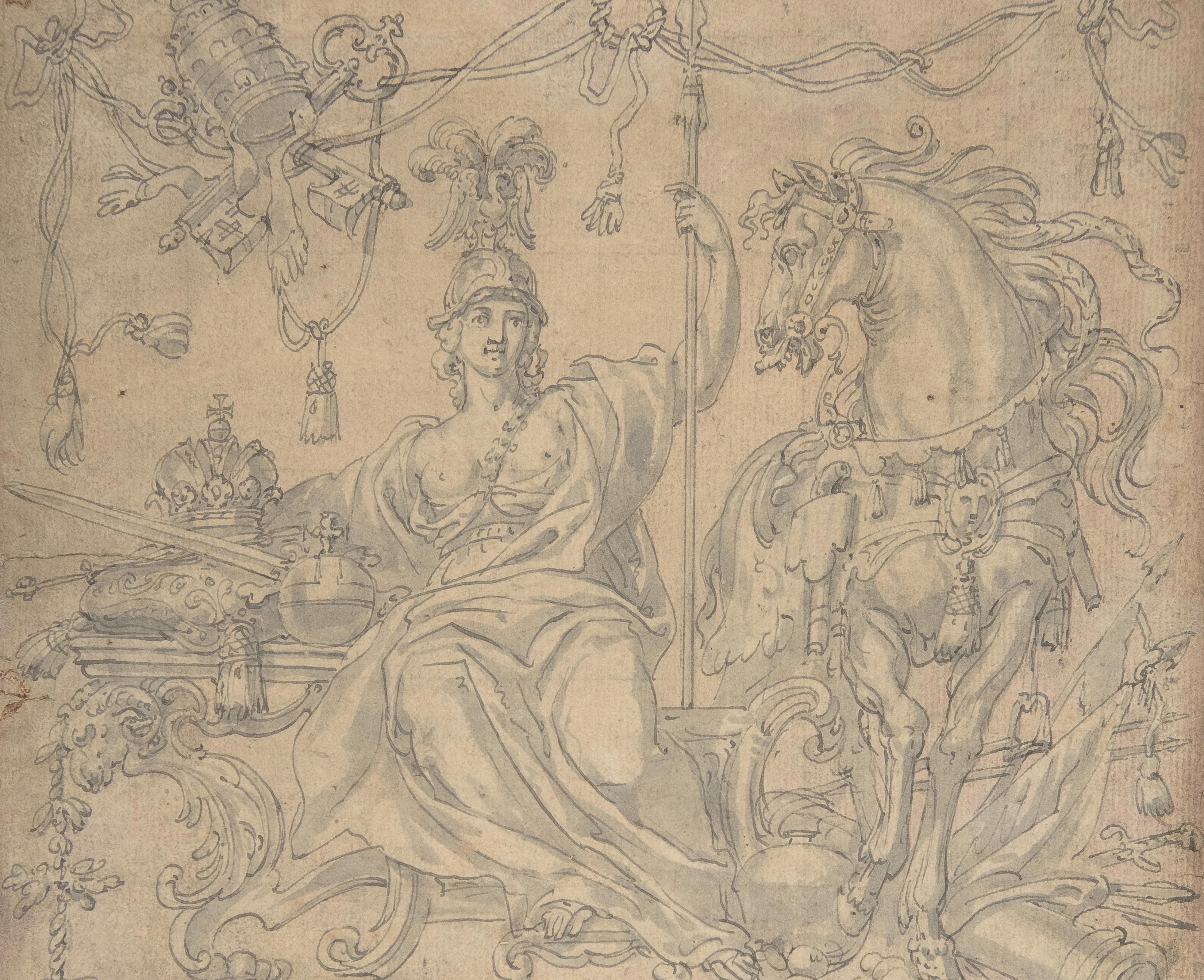
A different focused list than Comparative Civic Humanism: Seven Regional Currents and Lineages with sources as a guidepost accompanying this project and research on how classical republicanism and civic humanism formed a shared European heritage of mixed government, civic virtue, liberty under law, and resistance to arbitrary will, circulating well beyond Rome and Italy before the eighteenth-century neo-classical and Enlightenment revivals.
ANCIENT GREEK FOUNDATIONS
These thinkers supplied the core concepts of the polis, mixed constitutions, civic virtue, and the cycle of regimes that later Europeans adapted. Aristotle, in the Politics, described the polity as a mixed government in which political participation is essential to human flourishing (eudaimonia) and a large middle class stabilizes the regime. Polybius analyzed the Roman Republic’s mixed constitution of consuls, Senate, and people as a practical check against the anacyclosis, or cycle of regimes. Plato emphasized civic and personal virtue in The Republic, linking moral character to the peace and order of the political community. Other classical authors such as Isocrates, Demosthenes, and Xenophon supplied rhetorical and ethical models of active citizenship that humanists later reused.
- Cary J. Nederman, John of Salisbury: Policraticus. Cambridge University Press, 1990.
- Malcolm Schofield, Saving the City: Philosopher-Kings and Other Classical Paradigms. Routledge, 1999.
MEDIEVAL EUROPE
Medieval political thought already defended communal self-rule, mixed regimes, and limits on arbitrary power, drawing on Cicero, the newly recovered Aristotle, and Roman law. John of Salisbury, writing in twelfth-century England, presented the body politic as an organic whole in the Policraticus, insisted on princely moderation as a mean between excess and deficiency, and justified resistance to tyranny in the service of the common good. Marsilius of Padua, active in Paris, argued in the Defensor pacis that the people or their weightier part constitutes the legislator, that law and government derive from the citizen body, and that the priesthood must be subordinated to temporal authority. Ptolemy (Bartholomew) of Lucca completed Thomas Aquinas’s De regno while defending republican government and the autonomy of the Tuscan communes, reaffirming Roman republican values such as patriotism against Augustinian reservations. Broader scholastic and canon-law traditions supported limited or communal government in city-states and against papal or imperial overreach, while free imperial cities and Hanseatic League towns practiced forms of burgher self-rule.
- Cary J. Nederman, John of Salisbury: Policraticus, Cambridge University Press, 1990.
- Cary J. Nederman, Community and Consent: The Secular Political Theory of Marsiglio of Padua’s Defensor Pacis, Rowman & Littlefield, 1995.
POLISH-LITHUANIAN COMMONWEALTH
The Polish-Lithuanian Commonwealth developed a major comparative current of mixed monarchy (respublica mixta) with a weak elective king, a powerful nobility, the Sejm, and a strong emphasis on liberty under law, virtue, and the common good (bonum publicum). Andrzej Frycz Modrzewski, in De Republica emendanda, advocated equality before the law, reforms that would open participation to townsfolk, and the idea that law is the foundation of true freedom. The work was widely read across Europe and placed on the Index. Wawrzyniec Grzymała Goślicki, in De optimo senatore, located the safeguards of a free commonwealth in the virtue and character of rulers and citizens, treated the senate as a mediator between king and people, and defended ordered liberty including freedom of religious conscience. Stanisław Orzechowski, Marcin Kromer, and later writers such as Łukasz Górnicki, Andrzej Wolan, and Stanisław Konarski continued to present the Commonwealth as a Roman-style republic and to resist stronger monarchical power. The tradition treated law, liberty, and virtue as interlocking elements of a free political community.
- Dorota Pietrzyk-Reeves, Polish Republican Discourse in the Sixteenth Century, trans. by Teresa Bałuk-Ulewiczowa, Cambridge University Press, 2020.
- Edward Opaliński, “Civic Humanism and Republican Citizenship in the Polish Renaissance,” Republicanism: A Shared European Heritage, edited by Martin van Gelderen and Quentin Skinner, Vol. 1, Cambridge University Press, 2002, pp. 147-66.
GERMAN AND CENTRAL EUROPEAN CIVIC HUMANISM
Germany and Central Europe showed strong engagement with Cicero, second only to Italy in early printed editions of De officiis, alongside the self-governing practices of free imperial cities and Lutheran-humanist syntheses. Philip Melanchthon yoked Lutheran civil order to classical officium, commented extensively on Cicero, and connected eloquence, wisdom, and the distinction of law and gospel with Plato, Aristotle, and Cicero. Johannes Althusius, in Politica methodice digesta, theorized the commonwealth as a symbiotic association of associations (families, collegia, cities, provinces) rather than the product of a single sovereign will, offering a consociational and federal vision of shared life under law. Broader civic culture in free imperial cities and among urban magistrates framed public office in Ciceronian terms of citizen-virtues and public duty. Early modern German and Habsburg urban traditions recovered non-domination and mixed government as resources against arbitrary will.
- Mads Langballe Jensen, A Humanist in Reformation Politics: Philipp Melanchthon on Political Philosophy and Natural Law, Brill, 2020.
- Thomas O. Hueglin, Early Modern Concepts for a Late Modern World: Althusius on Community and Federalism. Wilfrid Laurier University Press, 2006.
DUTCH AND NETHERLANDISH CURRENTS
The Netherlands developed civic-humanist and republican arguments both before and after the Revolt. Early civic humanism and republican citizenship appeared in the Burgundian-Habsburg Netherlands in the late fifteenth and sixteenth centuries. In the seventeenth century Johan and Pieter de la Court critiqued monarchy as illegitimate tyranny and defended the Dutch Republic against monarchical tendencies of the stadholderate. Elements of classical republicanism also appear in Hugo Grotius and in monarchomach writings, adapted to a commercial, confederal, and often Calvinist context of provincial liberties and civic militias. These currents maintained close comparative links with English republicanism in the same period.
- Martin van Gelderen, “Aristotelians, Monarchomachs and Republicans: Sovereignty and respublica mixta in Dutch and German Political Thought, 1580-1650.” Republicanism: A Shared European Heritage, ed. Martin van Gelderen and Quentin Skinner, Vol. 1, Cambridge University Press, 2002, pp. 195-217.
- Jonathan Scott, “Classical Republicanism in Seventeenth-century England and the Netherlands.” Republicanism: A Shared European Heritage, edited by Martin van Gelderen and Quentin Skinner, Vol. 1, Cambridge University Press, 2002, pp. 61-81.
FORGOTTEN AND NEGLECTED IBERIAN AND SPANISH TRADITIONS
Iberian thought contained both Castilian civic-humanist and Aragonese contractual strands. In the later fifteenth century the Aristotelian school of Salamanca, represented by Alonso de Madrigal (El Tostado), Pedro de Osma, and Fernando de Roa, developed a civic humanism centered on civic virtue, law, ethics, customs, and city government, drawing heavily on Aristotle and Cicero. The Aragonese and Catalano-Aragonese traditions emphasized contractual limited monarchy, provincial privileges (fueros), and a political order that contemporary observers described as living “almost in liberty and in republic” under one king, in contrast to the more authoritarian trajectory of Castile. Additional republican elements appear in fifteenth-century “converso republican thought,” exemplified by Alonso de Cartagena.
- Cirilo Flórez Miguel, “El humanismo cívico castellano: Alonso de Madrigal, Pedro de Osma y Fernando de Roa,” Res Publica: Revista de Historia de las Ideas Políticas, no. 18, 2007, pp. 107-39.
- Xavier Gil, “Republican Politics in Early Modern Spain: The Castilian and Catalano-Aragonese Traditions,” Republicanism: A Shared European Heritage, edited by Martin van Gelderen and Quentin Skinner, vol. 1, Cambridge University Press, 2002, pp. 263-88.
ENGLISH AND FRENCH CURRENTS
England and France developed both early humanist and later classical-republican arguments. In England, Thomas More’s Utopia contained republican and communal elements, while Sir Thomas Smith and others explored mixed or law-bound monarchy; the seventeenth century then produced a full classical republican literature in the works of John Milton, James Harrington (Oceana), and Algernon Sidney, emphasizing mixed government, civic virtue, and the free commonwealth. In France, monarchomach and resistance theorists such as François Hotman and Théodore de Bèze defended mixed or limited government and the right of resistance to tyranny, receiving Italian and classical civic idioms into French legalism. Earlier medieval French engagement with Cicero and communal ideas prepared the ground for these later developments.
- Markku Peltonen. Classical Humanism and Republicanism in English Political Thought, 1570-1640, Cambridge University Press, 1995.
- Martin Dzelzainis, “Anti-monarchism in English Republicanism,” Republicanism: A Shared European Heritage, edited by Martin van Gelderen and Quentin Skinner, Vol. 1, Cambridge University Press, 2002, pp. 27-41.
COMPARATIVE AND OTHER EUROPEAN NOTES
Swiss cantonal practices of local self-rule, armed citizenship, and confederated liberty offered a living model of mixed peoples governing themselves without a single cultivated court. The Hanseatic League and other northern urban leagues functioned as practical republican or communal experiments. Italian civic humanism traveled northward through print, universities (notably Padua’s popularity among Polish nobles), and humanist networks rather than remaining an Italian monopoly. Northern humanists such as Erasmus and Melanchthon frequently fused the classical active life with Christian ethics. Across these regions the common themes were liberty as non-domination or freedom under law, civic virtue and the common good, mixed constitutions, the active life of the citizen, and the republic understood as res publica — the public thing or property of the people. These traditions were often practical, tied to free cities, noble republics, or resistance to Habsburg, papal, or imperial power, and frequently operated inside monarchical frameworks as respublica mixta.
- Martin van Gelderen and Quentin Skinner, editors. Republicanism: A Shared European Heritage. 2 Vols., Cambridge University Press, 2002.
- James Hankins, editor, Renaissance Civic Humanism: Reappraisals and Reflections. Cambridge University Press, 2000.
REFERENCES AND RECOMMENDED SOURCES
- Cary J. Nederman, Community and Consent: The Secular Political Theory of Marsiglio of Padua’s Defensor Pacis, Rowman & Littlefield, 1995.
- Cary J. Nederman. John of Salisbury: Policraticus. Cambridge University Press, 1990.
- Cirilo Flórez Miguel, “El humanismo cívico castellano: Alonso de Madrigal, Pedro de Osma y Fernando de Roa,” Res Publica: Revista de Historia de las Ideas Políticas, no. 18, 2007.
- Dorota Pietrzyk-Reeves, Polish Republican Discourse in the Sixteenth Century, trans. by Teresa Bałuk-Ulewiczowa, Cambridge University Press, 2020.
- Edward Opaliński, “Civic Humanism and Republican Citizenship in the Polish Renaissance.” Republicanism: A Shared European Heritage, edited by Martin van Gelderen and Quentin Skinner, vol. 1, Cambridge University Press, 2002.
- James Hankins, editor, Renaissance Civic Humanism: Reappraisals and Reflections. Cambridge University Press, 2000.
- Jonathan Scott, “Classical Republicanism in Seventeenth-century England and the Netherlands,” Republicanism: A Shared European Heritage, edited by Martin van Gelderen and Quentin Skinner, Vol. 1, Cambridge University Press, 2002.
- Mads Langballe Jensen, A Humanist in Reformation Politics: Philipp Melanchthon on Political Philosophy and Natural Law, Brill, 2020.
- Malcolm Schofield. Saving the City: Philosopher-Kings and Other Classical Paradigms. Routledge, 1999.
- Markku Peltonen, Classical Humanism and Republicanism in English Political Thought, 1570-1640, Cambridge University Press, 1995.
- Martin Dzelzainis, “Anti-monarchism in English Republicanism,” Republicanism: A Shared European Heritage, edited by Martin van Gelderen and Quentin Skinner, Vol. 1, Cambridge University Press, 2002.
- Martin van Gelderen, “Aristotelians, Monarchomachs and Republicans: Sovereignty and respublica mixta in Dutch and German Political Thought, 1580-1650,” Republicanism: A Shared European Heritage, edited by Martin van Gelderen and Quentin Skinner, Vol. 1, Cambridge University Press, 2002.
- Martin van Gelderen and Quentin Skinner, ed. Republicanism: A Shared European Heritage. 2 Vols., Cambridge University Press, 2002.
- Thomas O. Hueglin, Early Modern Concepts for a Late Modern World: Althusius on Community and Federalism, Wilfrid Laurier University Press, 2006.
- Xavier Gil, “Republican Politics in Early Modern Spain: The Castilian and Catalano-Aragonese Traditions.” Republicanism: A Shared European Heritage, ed. by Martin van Gelderen and Quentin Skinner, Vol. 1, Cambridge University Press, 2002.